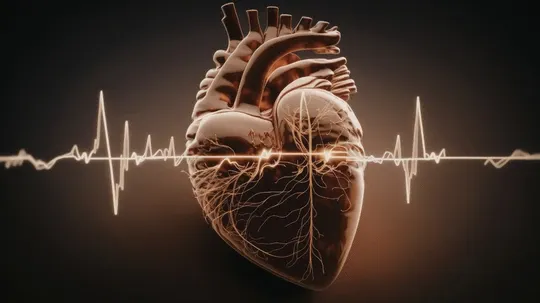
Why All Clear Reports Can Still Lead To A Heart Attack
A 44-year-old Bengaluru executive walked out of his cardiac checkup six months ago with a clean ECG and no red flags. Last week, he had a heart attack.
He is not an outlier, he is becoming a pattern. Across India's cities, seemingly healthy professionals are collapsing with cardiac events that routine tests completely failed to predict, raising an urgent question: if the report said all clear, what exactly did it miss?
The ECG Problem Nobody Talks About
The electrocardiogram has been the cornerstone of cardiac screening for decades. Go for a routine checkup, get an ECG, hear 'everything looks fine,' and leave reassured. But leading cardiac surgeons are now calling the resting ECG 'the most useless test for detecting heart disease,' warning that it only shows changes when a patient is already in pain or has had a previous heart attack, and that a person can have a critical arterial blockage with no symptoms whatsoever and still produce a clean ECG.
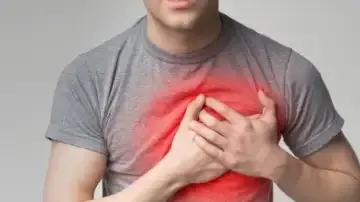
An ECG records the heart's electrical activity at a given moment. It does not detect dangerous plaque buildup in the arteries or predict an impending blockage, especially if the event hasn't yet caused muscle damage. In some cases, severely restricted blood flow can exist without any ECG changes, a condition known as unstable angina, meaning a person can be at high risk even when routine tests appear normal.
The Cholesterol Myth
Many people take comfort in a normal lipid panel. But cholesterol numbers, it turns out, tell only part of the story. Research demonstrates that perfectly controlled cholesterol doesn't eliminate heart attack risk if inflammation remains elevated, the landmark CANTOS trial enrolled over 10,000 patients whose LDL cholesterol was already well-managed, yet their high inflammation markers kept their cardiac risk dangerously high.
The markers that matter more are rarely ordered in a standard checkup. Doctors now look at Apolipoprotein B (ApoB), high-sensitivity C-reactive protein (hs-CRP), and Lipoprotein(a), together, these help estimate heart attack risk even before symptoms appear. Yet most annual health packages don't include a single one of them.
Stress: The Silent Accelerant
For India's urban professional class, the executives, doctors, startup founders, and managers working 12-hour days, chronic stress may be the most underestimated risk factor of all. Stress hormones like adrenaline and cortisol increase heart rate, blood pressure, blood sugar, cholesterol, and triglycerides. Sudden surges, especially in the early morning hours between 3 and 6 am, can dislodge arterial plaques, forming clots that block blood flow. Studies show that people with high stress or depression are 2.5 times more likely to suffer a heart attack.
Physical activity alone contributes only 15-20% to heart health. The remaining 80% depends on various risk factors that may silently damage the heart, factors like sleep deprivation, chronic inflammation, smoking, unmanaged blood sugar, and sustained psychological pressure.
What You Should Actually Be Asking For
The good news is that better screening exists. A coronary calcium scan measures calcium deposits inside the coronary arteries, indicating that plaque is forming, often years before symptoms appear, and is especially helpful for individuals with cardiovascular risk factors but no symptoms. A stress test (treadmill test) evaluates how the heart performs under exertion, exposing blockages invisible at rest. An hs-CRP blood test flags chronic low-grade inflammation, one of the key triggers behind plaque rupture.
None of these are exotic or expensive. They are simply not routine, yet. India accounts for roughly one-fifth of the world's heart attack deaths, and Indians suffer cardiac events a full decade earlier than Europeans or Americans. MedicalVault The burden is growing, and it is increasingly landing on people who thought they had nothing to worry about. A clean ECG is not a clean bill of health. It is, at best, one piece of a much larger puzzle, and for too many Indians, it's the only piece anyone ever checks.
Contact to : xlf550402@gmail.com
Copyright © boyuanhulian 2020 - 2023. All Right Reserved.