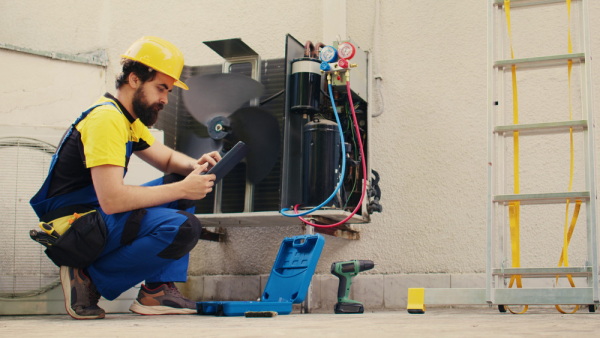

Most homeowners focus on outdoor projects and gardening activities, and the tradition of spring cleaning when the temperature rises, and the first spring flowers bloom. People find pleasure in completing both floor cleaning and closet organization, but they often forget the necessary air conditioner coil cleaning. The absence of this simple procedure results in multiple mechanical failures at the most critical time for your cooling system. The most effective way to ensure your home stays cool during the summer is to include this task in your preventive HVAC maintenance.
The Science of the Coil
The coils perform their functions, making cleaning an essential task that must be completed. Your air conditioner operates by removing heat from indoor spaces instead of producing cold air. The indoor evaporator coil in your home extracts heat from the indoor air. The outdoor unit contains a condenser coil that transfers heat to the outdoor environment.
The heat exchange process between the two systems depends entirely on the coil surface area. The coils become insulated when dust, pollen, grass clippings, and spider webs accumulate on their surfaces. The cooling system inside the coils cannot achieve its intended purpose because this material prevents proper heat absorption and release through the coils. The air conditioner requires double the energy to transfer the same volume of thermal energy because of this situation.
The Cost of Overworking Your System
When coils are dirty, the entire system struggles. Because the heat exchange is inefficient, the compressor, the “heart” of your AC, must run longer and harder to reach the temperature set on your thermostat. This extra strain leads to several negative outcomes.
First, your energy bills will skyrocket. An air conditioner with dirty coils can consume up to 30% more electricity than a clean one. Second, the increased runtime leads to premature wear and tear on sensitive components. Capacitors can blow, fan motors can burn out, and most significantly, the compressor itself can overheat and fail. Replacing a compressor is one of the most expensive repairs in the industry, often rivaling the cost of a new unit. By performing simple spring cleaning, you are essentially buying insurance against catastrophic failures.
Preventing the “Freeze-Up”
One of the most common mid-summer service calls involves an air conditioner that has literally frozen into a block of ice. While it seems counterintuitive for a cooling system to fail because it got “too cold,” this is exactly what happens when the indoor evaporator coil is dirty.
If the coil is covered in dust, it cannot absorb enough heat from your home’s air. As a result, the refrigerant stays too cold, and the condensation that naturally forms on the coil turns to ice. Once a layer of ice forms, it blocks all airflow, and your system stops cooling entirely. Thawing a frozen unit can take hours, leaving you in a sweltering house while you wait for the ice to melt and for HVAC maintenance services to arrive and diagnose the underlying grime.
Improving Indoor Air Quality
Beyond the mechanical benefits, spring coil cleaning has a direct impact on your family’s health. The evaporator coil is a damp environment, which makes it a breeding ground for mold, mildew, and bacteria. As air blows across these coils and into your living spaces, it can carry allergens and unpleasant odors with it. A thorough cleaning ensures that the air circulating through your bedrooms and living rooms is as fresh and clean as possible, which is particularly important during the high-pollen months of spring.
Conclusion
It is easy to ignore your air conditioner when it is working, but the best time to care for it is before the heat becomes an emergency. A small amount of attention in the spring pays massive dividends in July and August through lower utility bills, better air quality, and a significantly longer lifespan for your equipment. While some homeowners feel comfortable rinsing their outdoor condenser with a garden hose, the most thorough results come from professional preventive HVAC maintenance. By taking care of the “lungs” of your home now, you can enjoy a worry-free summer, knowing that your system is prepared to handle whatever the record-breaking temperatures might bring.
Contact to : xlf550402@gmail.com
Copyright © boyuanhulian 2020 - 2023. All Right Reserved.