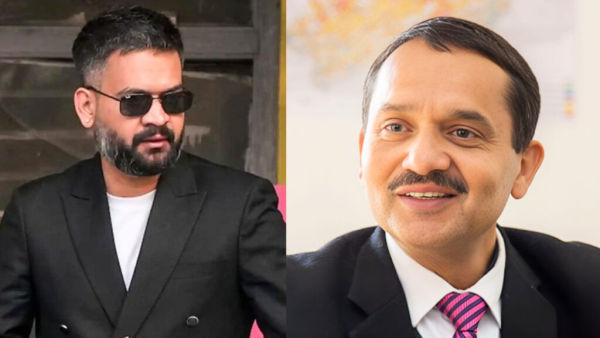
New Delhi: Recently, Balen Shah government of Nepal has implemented a new rule. Now you will have to pay custom duty on bringing goods worth more than Rs 100 from India. The biggest impact of this decision is on daily wage laborers and the poor class. People are protesting in many parts of the country.
There is an open border between India and Nepal and people come and go without visa or passport. Therefore, the effect of this rule is visible on both sides. Indian businessmen in the border areas have also suffered a setback. Meanwhile, a Nepali economist Dr. Govind Raj Pokharel has also presented his side in this matter.
Nepali economist gave this explanation
Dr. Govind Raj Pokharel, former vice-chairman of the National Planning Commission of Nepal and economist, while talking to a renowned media agency of India recently, said that the workers will be most affected by this rule. He said, "What is available for Rs 100 today? It is very difficult for a laborer who earns Rs 500-600 a day. This limit should be at least Rs 1000."
He also said that farmers also bring fertilizers or essential commodities from India, the burden on them will also increase. Dr. Govind said that Nepal collects more than 40% of its revenue from custom duty, VAT and excise duty. The biggest contribution in this is from India-Nepal border points like Birgunj, Bhairahawa and Biratnagar. Nepal earns less than 5% from tourism, so the government’s focus is always on customs. As revenue falls, the government looks towards increasing customs.
Nepali poor will face problems
According to Dr. Govind, the poor section of Nepal is facing a lot of problems due to this strict decision of the Balen Shah government. This may further increase poverty in the country. His suggestion is to increase the current limit of Rs 100 to Rs 1000. This will provide relief to farmers in bringing fertilizers or essential commodities from India and the government will also not suffer any loss. As soon as this rule is implemented, its effect is clearly visible in those eight districts of Madhes province, whose border is completely open with India.
old condition changed
It is noteworthy that earlier Chinese goods used to come to Nepal and Indian people used to buy from Nepal. But after liberalisation, goods became cheaper in India and now Nepali people started shopping from India. Dr. Govind said that the government did not develop other sources of revenue, hence dependence on customs duty increased.
The immediate effect of this rule is visible in those 08 districts of Madhes province whose border is open with India. Earlier people used to transport goods freely, now there is strictness on the border. Dr. Govind warns that this will further increase poverty.
Contact to : xlf550402@gmail.com
Copyright © boyuanhulian 2020 - 2023. All Right Reserved.