It’s very safe to say that the automotive industry is going through a rough patch in the United States. Particularly for manufacturers producing its cars outside the country, the 2025 tariffs have added even more strain on top higher average prices and slowing demand in certain segments. Prices for new cars also haven’t decreased in a little while, with Kelley Blue Book reporting an average price of $49,353 at the start of 2026, ostensibly leading to fewer people buying new models overall.
That’s not to say that some nameplates aren’t still doing well, with Ram trucks still performing better than most alongside already-popular SUVs like the RAV4, despite sales being down overall for the Japanese giant. At the start of the decade, many manufacturers inside and out of the U.S. set out plans to shift to electrification, but with demand for EVs slowing faster than expected, it’s left quite a few of these brands to make tough decisions regarding its future, as well as what to do with the EVs already released. Some of these cars unfortunately find themselves seriously struggling to sell anything at the moment, but they’re not entirely alone. Here’s at look at the 10 worst selling cars in the U.S. so far in 2026.
Lexus LC
Lexus has built itself quite a reputation in recent years for being one of the most reliable brands on the market, particularly in the luxury segment. That’s no doubt a perk of being the premium brand of Toyota, but Lexus itself also deserves the credit for being the most reliable brand in J.D. Power‘s 2025 Dependability Study. While some of Lexus’s cars have had a solid start to the year, the same can’t be said for the Lexus LC. Within the current electrified fleet, it’s the SUVs like the UX and NX that are keeping the sales numbers up, with the more expensive, niche models like the LC falling to the wayside. In the first quarter, it sold a total of 324 units nationwide (via Good Car Bad Car).
Sports cars don’t usually shift massive amounts of units, especially when compared to the much more consumer-friendly nameplates that Lexus has in its lineup at the moment. After the 2026 model year, the LC will somewhat unsurprisingly be dropped from the lineup, with the last one rolling off the production line in August. There’s no news at the moment for a potential replacement, but it’s not out of the picture with Toyota still very much active in the two-door sports car segment.
Dodge Charger Daytona
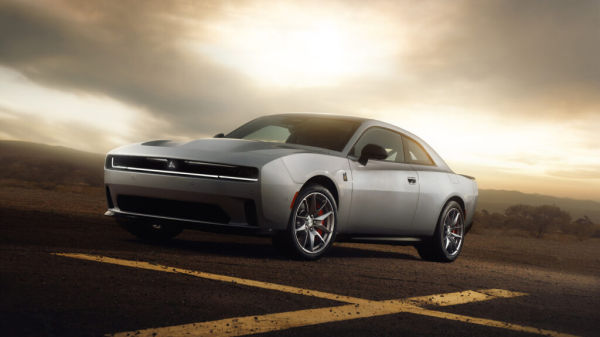
Since the all-electric Charger Daytona was unveiled back in 2024, it’s struggled to gain the traction that the American manufacturer would have hoped. Essentially merging the old Charger and Challenger into one car, the electrification of an iconic nameplate was mainly to reach emission goals and say how effective batteries could be at offering muscle-like performance. We found the 2026 Charger Daytona’s performance to be just as impressive as you’d expect a high-powered EV to be in the new four-door version, but that doesn’t seem to be enough to attract the masses to the dealerships.
The Daytona had 2025 to settle in, but so far in 2026 the electric muscle car has only sold 240 units in the first quarter, according to Car and Driver. While overall demand for EVs has tanked recently, the price tag of more than $60,000 isn’t exactly cheap. Luckily, Dodge now has the Sixpack version of the car to help rescue the Daytona’s low sales, which brings gas power back under the hood. It’s just over $10,000 cheaper than the Daytona in its base R/T guise at $49,995, but still comes with 470 horsepower courtesy of a standard combustion engine, which will hopefully bring buyers back to Dodge.
Alfa Romeo Tonale
Alfa Romeo isn’t by any means a budget manufacturer, but it has a reputation for offering unmistakable Italian style for decades at a much less expensive price than the likes of Ferrari and Maserati. The latter brands offer more for the money, but if you’re looking for levels of luxury and performance that leading German manufacturers provide, cars like the Alfa Romeo Tonale quickly become attractive. Yet despite ticking those boxes on paper, a few elements keep it from being as successful as its rivals.
According to Car and Driver, the Alfa Romeo Tonale has only sold 238 units, becoming another disappointing model in the ever-growing Stellantis fleet. This covers the standard gas-powered model as well as the hybrid models, with the former producing 268 horsepower and the latter 285, though this model has since been discontinued for 2026 and won’t be around next year. You’ll have to spend over $40,000 to buy either of the two, though, being another vehicle to be affected by a high price tag. Reliability is also a potential issue with the Tonale, with the electronics being the common culprit for the still-relatively new compact crossover. Also, if you don’t mind losing out on some Italian luxury, the Dodge Hornet shares the same platform. It’s discontinued now like the Tonale hybrid, but its $30,000 average price for the 2025 model still gives a more affordable version of what’s mechanically the same car as the Alfa Romeo.
Jeep Wagoneer S
The next vehicle on this list is, unfortunately, another one under the Stellantis banner. One of the juggernauts of the American automotive industry, Jeep has been the benchmark for off-roading capabilities but has also seen success with its more luxury-focused SUVs. Moving into 2026, the standard Wagoneer has been discontinued, leaving the Grand Wagoneer and the all-electric Wagoneer S to carry the torch in 2026. The latter is the car we’re focusing on here though, with the EV not managing to catch on compared to its gas-powered counterparts.
In a similar situation to the Charger Daytona, the Jeep Wagoneer S has only sold 175 units (via Car and Driver). While the overall demand for EVs certainly plays a factor, Jeep’s electric SUV has had no shortage of reliability issues, being recalled in March 2026 for problems with the tailgate. This only builds on the software issues that owners have faced in the SUV’s short lifespan, unsurprisingly affecting its reputation nationwide. With a starting price of $65,200, this is where we felt the SUV missed the mark in our review of the Wagoneer S, locking a well-put-together EV behind steep up-front costs.
Lexus ES Hybrid
Similar to its parent company, Lexus offers a wide range of vehicle types alongside its more performance-oriented nameplates. At the more affordable end of the sedan lineup has long been the Lexus ES, keeping the brand well within the mid-size mix for decades. However, as per Toyota‘s first-quarter sales report, the ES Hybrid in particular has only sold a total of 149 units, a staggering 95.8% decrease compared to last year.
This entry does deserve some slack, though, due to the all-new eighth-generation of the ES Hybrid set to be made available Stateside in June 2026. The brand is taking a very bold approach to the design of the new iteration of the ES, but hopefully there will still be enough demand for the sedan without a traditionally gas-powered option to bring the numbers back up to the highs of 2025. Sales including the gas-only model that was just discontinued come in at 3,044 units in 2026 so far, making the choice to drop the traditional combustion ES a brave one.
Lexus LS
As well as offering competitive mid-size luxury sedans, Lexus also has a presence in the full-size segment with the flagship LS. The largest of the pack, the LS falls in line with industry standards by showing off most of the brand’s capabilities when it comes to comfort and refinement, with solid performance to boot. Producing 416 horsepower from its twin-turbocharged V6, it’s not far behind the likes of the industry-leading Mercedes-Benz S-Class. Still, the sales numbers just aren’t high enough to keep the car alive.
After the 2026 model year, the LS will leave the Lexus lineup. Unlike the outgoing ES, the LS can still be purchased brand new from Lexus’ website, but so far in 2026 Toyota reports it’s only sold a total of 143 examples. 2025 wasn’t much better, selling 420 units throughout the entire year and making it only a matter of time before it was ultimately axed. With a starting price of $99,280, this isn’t a car expected to move a whole lot of units. Profit margins being what they are, it’s likely a better financial move for Toyota to say goodbye to the LS and invest elsewhere.
Genesis GV60
Genesis has put a tremendous amount of effort into making its mark on the luxury segment in the U.S. especially, which looks to be paying off. In April of 2026, Genesis has announced 22 new vehicles to be produced between now and 2030 after reaching 1 million sales faster than any other brand, as per CEO José Muñoz in an accompanying press release. Amidst the success, though, the Hyundai-owned luxury division has an outlier in the mix: the all-electric GV60 crossover. There’s a trend forming on this list with EVs not doing great so far this year, with the GV60 adding to that pile.
Throughout 2026 so far, the Genesis GV60 has sold just 117 units according to Good Car Bad Car, representing an 83.5 percent decrease in sales compared to 2025. Other SUVs like the Infiniti QX55 might have sold even fewer at 86 units, but as you can’t buy a QX55 new anymore, this makes the GV60’s figures more relevant here. While we enjoyed our time with the GV60, it seems there’s still some work to do on the EV front to become a true rival to both American and European nameplates who are already so established, leading to more confidence for a vehicle type that doesn’t always get the best reputation.
Maserati Grecale
Maserati’s reputation for luxury still stands strong, but recent changes to the lineup haven’t garnered to results that the Italian legend had hoped. Like quite a few premium European manufacturers, Maserati decided to invest heavily into EVs, dropping V8 engines entirely along with cars like the Quattroporte and Levante. The Grecale is now the only SUV the brand produces and subsequently becomes the primary focus, but with only 104 examples sold in March according to CarEdge, Maserati is facing one of its most turbulent periods ever.
Updates for the Grecale for 2026 saw the inline-four engine get dropped in favor of a twin-turbocharged V6, producing a healthy 385 horsepower. The more powerful Trofeo model produces a higher 523 horsepower, and the electric Folgore leads the pack at 542 horsepower. At the moment, Maserati is facing just about every challenge a luxury car could face, with the added 25 percent tariffs on European cars only adding to the pain. It’s also quite expensive, with the low-end Grecale Modena coming with an MSRP of $84,500, well above plenty of American-made rivals that approach Maserati’s level when it comes to luxury.
Acura ZDX
Another one of the main Asian subsidiary brands selling its cars in the U.S. is Acura. However, unlike manufacturers like Lexus, Honda created Acura primarily for the U.S. market, with a very limited presence anywhere else in the world. While other brands on this list are still trying to push their electric models, Acura’s venture into the technology did not last long at all. Released in 2024, the ZDX SUV was the brand’s first all-electric vehicle, but it has already been discontinued for a couple of key reasons.
The first of which is sales numbers. While it ceased production at the end of 2025, the car still feels new and comes with plenty of competitive features, yet Honda’s first quarter sales report shows only 73 sales for the SUV so far in 2026. Acura was offering some very attractive deals at the end of the life for the ZDX, but it still struggled to continue its initial momentum. Also, the $7,500 federal tax credit that the vehicle was eligible for ended in September 2025, very close to when the plug was officially pulled. To boot, Acura’s low customer satisfaction ratings by outlets such as Consumer Reports wouldn’t have led to buyers rushing to dealerships.
Toyota Mirai
Seeing Toyota on this list may be a bit of a surprise, considering how successful some of its current cars are. The likes of the RAV4 and Camry are industry favorites, but with how many cars it has in its lineup, it would be incredibly difficult to have that success across the board. However, there’s one model in particular that is so unsuccessful at the moment, other manufacturers would have ditched it long ago. This is the Mirai, which Toyota says has sold just 63 examples in 2026 so far.
The Mirai is one of Toyota’s more unique cars in production at the moment. Instead of following what’s now the traditional architecture for electric cars, the four-door sedan is powered by a fuel cell, combining hydrogen and oxygen to power the motor. This means that you’ll need to find a hydrogen fueling station, which are few and far between in the U.S. to say the least. At the start of 2025, there were less than 100 in the entire nation, most of which are in California. With an MSRP of $51,795, the Mirai is also fairly expensive for a car that’s only really practical on the West Coast, leading to some pretty staggering depreciation numbers as well.