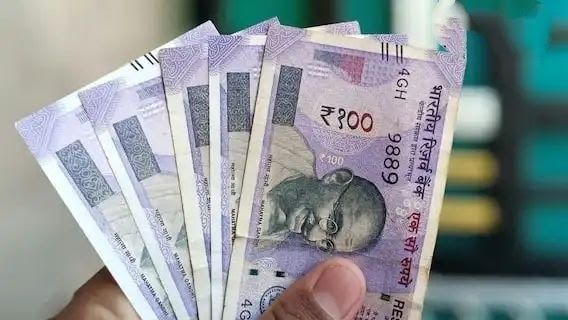
Today Mahatma Gandhi is the identity of Indian currency, but it is not that his face has been printed on the notes since independence. In fact, in the story of Indian currency notes, faces have changed, decisions have changed and behind this change is hidden the thinking and identity of the country. Let us know whose face was printed on the notes before Mahatma Gandhi.
Changing history of photographs on Indian notes
Paper currency in India started during the colonial period. At that time, notes were not only a medium of transaction, but were also considered a symbol of power, hence during the British rule, photographs of British rulers were printed on Indian notes.
Whose pictures were printed before independence?
The picture of King George V was first printed on Indian notes issued during the British Raj. After him, notes with the picture of King George VI came into circulation. These notes were printed in Britain and were sent to India for circulation. The clear imprint of the British monarchy was visible on these notes, which reflected the political reality of that period.
Big decision after independence
After independence in 1947, an important question before the Indian government was whether the currency of the new India should also have a person's picture? At that time it was decided that there would be no picture of any person on the notes. This decision was taken so that the new Indian identity is not linked to any one person, but to the spirit of the entire nation. For this reason, the Reserve Bank of India gave prominence to the lion symbol of the Ashoka Pillar on its notes. Also, pictures related to agriculture, industry, science and development were made the identity of the notes.
When did Gandhiji enter for the first time?
Mahatma Gandhi's picture first appeared on notes in 1969. This was the occasion of his birth centenary. On the commemorative note issued at that time, Gandhiji is seen sitting and a glimpse of Sevagram Ashram is visible behind. However, this note was for limited purpose and was not considered a regular currency.
1987 and 1996 became turning points
When the Rs 500 note was re-issued in 1987, Mahatma Gandhi's picture was placed on it, but the real change came in 1996, when RBI started the Mahatma Gandhi Series. After this, Gandhiji's face started compulsorily being printed on all the notes issued in India. The logic behind this decision was clear that Mahatma Gandhi was not only the biggest symbol of the freedom struggle, but was also considered a representative of peace and truth in the whole world.
Why did RBI choose Gandhiji?
According to RBI, Mahatma Gandhi's face is recognized internationally and his image is considered above political controversies. This is the reason why he was made the permanent identity of the Indian currency. Also for security reasons, keeping the same face on all the notes maintains uniformity in design and identity.