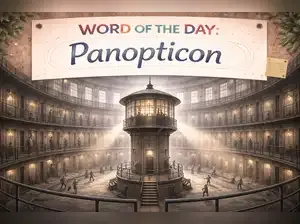
Word of the Day: Panopticon
In an age defined by constant connectivity and digital footprints, certain words from the past acquire startling relevance. One such dramatic and intellectually rich term is panopticon, a word that once described a radical prison design but has since evolved into a powerful metaphor for surveillance, control, and social behavior. With its philosophical undertones and historical roots, the panopticon stands out as a compelling addition to the lexicon of thinkers, writers, and observers of modern society.
In contemporary usage, panopticon is often used metaphorically to describe societies, workplaces, or digital ecosystems where monitoring is pervasive and often invisible.
/ˌpænˈɒptɪkɒn/
(Pan-OP-ti-kon)
The stress falls on the second syllable, giving it a rhythmic and authoritative tone that matches its conceptual weight.
The term panopticon was coined in the late 18th century by English philosopher and social theorist Jeremy Bentham. It is derived from Greek roots:
1. Literary Usage
“The city unfolded like a panopticon, its inhabitants moving under unseen scrutiny, their secrets dissolving into the watchful air.”
2. Journalistic Usage
“In the era of social media, experts argue that digital platforms function as a panopticon, where users willingly participate in their own surveillance.”
3. Academic/Philosophical Usage
“The panopticon serves as a metaphor for modern disciplinary societies, where power is internalised rather than externally imposed.”
4. Everyday Conversation
“Sometimes it feels like the office is a panopticon—someone is always watching what you’re doing.”
5. Creative Writing
“He lived in a glass house of expectations, a personal panopticon where even his thoughts felt monitored.”
Though rooted in an 18th-century architectural experiment, panopticon has found renewed relevance in the digital age. With CCTV cameras, workplace monitoring tools, and data tracking algorithms, the idea of constant observation is no longer theoretical.
The psychological impact of a panopticon-like system lies in its subtlety. Individuals alter their behaviour not because they are being watched, but because they might be. This internalisation of surveillance creates self-discipline, often without external enforcement.
From corporate environments to social media platforms, the panopticon metaphor helps explain why people curate their identities, censor their opinions, and conform to perceived norms.
Unlike simpler words for “watching” or “monitoring,” panopticon carries a layered meaning. It is not merely about observation, it is about power dynamics, control, and the psychological transformation of those being observed.
The word often appears in discussions about privacy rights, government policies, and ethical debates surrounding technology. Its dramatic tone makes it particularly appealing in opinion pieces, essays, and intellectual discourse.
For instance, describing a workplace as a “panopticon” suggests more than supervision, it implies a culture of constant, perhaps oppressive, visibility.
As societies continue to grapple with questions of privacy and surveillance, panopticon remains a powerful linguistic tool, dramatic, evocative, and deeply insightful.
What Does “Panopticon” Mean?
The word panopticon refers, in its original sense, to a type of institutional building designed so that all inmates can be observed by a single watchman without them knowing whether they are being watched. More broadly, it has come to signify a system of constant surveillance where individuals regulate their own behavior due to the possibility of being observed.In contemporary usage, panopticon is often used metaphorically to describe societies, workplaces, or digital ecosystems where monitoring is pervasive and often invisible.
Panopticon Pronunciation
Panopticon is pronounced as:/ˌpænˈɒptɪkɒn/
(Pan-OP-ti-kon)
The stress falls on the second syllable, giving it a rhythmic and authoritative tone that matches its conceptual weight.
Word of the day Origin and Etymology
The term panopticon was coined in the late 18th century by English philosopher and social theorist Jeremy Bentham. It is derived from Greek roots:- pan meaning “all”
- optikon meaning “seeing”
Synonyms and Antonyms
Synonyms:- Surveillance system
- Observation hub
- Monitoring structure
- Watchtower model
- Control apparatus
- Privacy
- Anonymity
- Seclusion
- Isolation
- Confidentiality
Usage in Different Contexts
1. Literary Usage“The city unfolded like a panopticon, its inhabitants moving under unseen scrutiny, their secrets dissolving into the watchful air.”
2. Journalistic Usage
“In the era of social media, experts argue that digital platforms function as a panopticon, where users willingly participate in their own surveillance.”
3. Academic/Philosophical Usage
“The panopticon serves as a metaphor for modern disciplinary societies, where power is internalised rather than externally imposed.”
4. Everyday Conversation
“Sometimes it feels like the office is a panopticon—someone is always watching what you’re doing.”
5. Creative Writing
“He lived in a glass house of expectations, a personal panopticon where even his thoughts felt monitored.”
Why “Panopticon” Matters Today
Though rooted in an 18th-century architectural experiment, panopticon has found renewed relevance in the digital age. With CCTV cameras, workplace monitoring tools, and data tracking algorithms, the idea of constant observation is no longer theoretical.The psychological impact of a panopticon-like system lies in its subtlety. Individuals alter their behaviour not because they are being watched, but because they might be. This internalisation of surveillance creates self-discipline, often without external enforcement.
From corporate environments to social media platforms, the panopticon metaphor helps explain why people curate their identities, censor their opinions, and conform to perceived norms.
Nuances and Connotations
Unlike simpler words for “watching” or “monitoring,” panopticon carries a layered meaning. It is not merely about observation, it is about power dynamics, control, and the psychological transformation of those being observed.The word often appears in discussions about privacy rights, government policies, and ethical debates surrounding technology. Its dramatic tone makes it particularly appealing in opinion pieces, essays, and intellectual discourse.
How to Use “Panopticon” Effectively
Writers are advised to use panopticon in contexts where surveillance is not just physical but psychological or systemic. Overuse in casual contexts may dilute its impact, but when used thoughtfully, it can elevate both tone and depth.For instance, describing a workplace as a “panopticon” suggests more than supervision, it implies a culture of constant, perhaps oppressive, visibility.
As societies continue to grapple with questions of privacy and surveillance, panopticon remains a powerful linguistic tool, dramatic, evocative, and deeply insightful.