
Listen to this article in summarized format
Loading...
××
Subscribe to

Unlock AI Briefing and Premium Content
New Year Offer 24 Hours Left
Subscribe NowAlready a member? Sign In
What's Included
- Exclusive Stories
- Daily ePaper Access
- Smart Market Tools
- Curated Investment Ideas
- Ad-lite Experience
Subscription

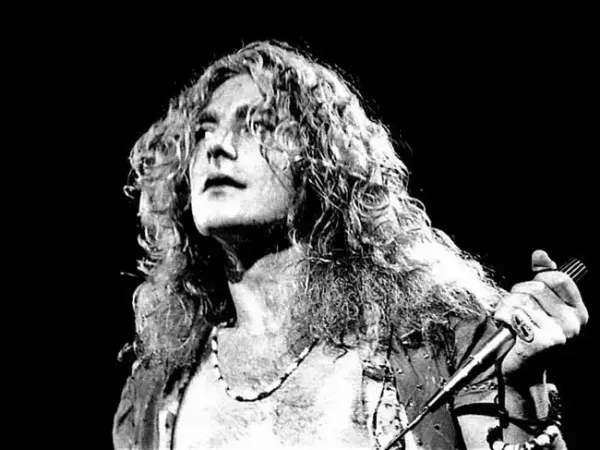
When people talk about classic rock songs that still get quoted today, Led Zeppelin’s 'Stairway to Heaven' almost always finds a place in the conversation. The song has been discussed, analysed, and reinterpreted for decades, but one particular line written by the band’s lead singer Robert Plant still stands out for its simple message about life choices and change. It comes from the final part of the 1971 track 'Stairway to Heaven', a song that has become one of the most iconic pieces in rock history.
The quote of the day reads: "Yes, there are two paths you can go by, in the long run, but there's still time to change the road you are on."
'Stairway to Heaven' was written by Led Zeppelin guitarist Jimmy Page along with Robert Plant, who penned the lyrics. The song was released on November 8, 1971, as part of the band’s untitled fourth album, commonly known as Led Zeppelin IV.
Before its official release, the song was already gaining attention. It was first performed live on March 5, 1971, at Ulster Hall in Belfast, Ireland, long before audiences had heard the studio version.
The line about “two paths” appears in the final verse of the song, which slowly builds toward its emotional conclusion. Over the years, this part of the lyrics has often been highlighted in discussions about the meaning of the song and Robert Plant’s writing style.
According to Reddit analysis, the lyrics are frequently seen as a reflection on choice and direction in life. The idea is straightforward on the surface, but the way it is placed in the song gives it a deeper emotional weight. Jimmy Page, who composed the music, built the song in a way that gradually builds intensity, which is part of why the final verse stands out so strongly.
The second part of the quote, “there's still time to change the road you are on,” carries the main emotional message. It suggests that even if someone feels stuck or uncertain about where their life is going, change is still possible. The idea is not limited to age or situation. It presents time as something flexible, not final.
In many interpretations, this part of the lyric is seen as a gentle warning as well as encouragement. It quietly points out that people can drift into habits, lifestyles, or decisions without noticing, but it also suggests that awareness can lead to change. That balance between reflection and hope is what makes the line stay relevant even decades after it was written.
The placement of this line in 'Stairway to Heaven' also matters. It arrives near the end of the song, when the music is building toward its final emotional release. Because of this, listeners often associate it with a moment of realization, almost like a final message being delivered before the song closes.
Plant’s early life was not initially directed toward music. He left school as a teenager and became deeply interested in blues artists, which eventually pulled him into performing with small local bands. Before Led Zeppelin, he went through several musical groups and struggled to find a stable breakthrough. His career changed when Jimmy Page discovered him and invited him to join what would become Led Zeppelin.
The band’s rise was extremely fast. Within a few years, they were filling large venues and producing albums that became benchmarks in rock music. Albums like Led Zeppelin II and Led Zeppelin IV brought global attention, with songs such as 'Whole Lotta Love,' 'Kashmir,' and 'Stairway to Heaven” becoming part of music history.
How did Led Zeppelin Disband
Despite their success, Led Zeppelin disbanded in 1980 after the death of drummer John Bonham. After that, Plant continued with a solo career, exploring different styles from blues to folk and even world music influences. He also collaborated with several artists over the years, showing that his musical path did not remain fixed in one direction.
Even though the lyric was written more than five decades ago, it continues to appear in conversations about life decisions and personal direction. Part of the reason is that it does not feel tied to a specific era or situation. It applies just as easily to someone thinking about changing careers today as it did to listeners in the 1970s.
It also fits into how people now talk about growth and change in general. In a fast-moving world where people switch jobs, interests, and lifestyles more frequently, the idea of being able to change direction still feels relevant. The line does not promise success or guarantee outcomes, but it leaves space for possibility, and that is often enough for people to relate to it.
The quote of the day reads: "Yes, there are two paths you can go by, in the long run, but there's still time to change the road you are on."
'Stairway to Heaven' was written by Led Zeppelin guitarist Jimmy Page along with Robert Plant, who penned the lyrics. The song was released on November 8, 1971, as part of the band’s untitled fourth album, commonly known as Led Zeppelin IV.
Before its official release, the song was already gaining attention. It was first performed live on March 5, 1971, at Ulster Hall in Belfast, Ireland, long before audiences had heard the studio version.
The line about “two paths” appears in the final verse of the song, which slowly builds toward its emotional conclusion. Over the years, this part of the lyrics has often been highlighted in discussions about the meaning of the song and Robert Plant’s writing style.
According to Reddit analysis, the lyrics are frequently seen as a reflection on choice and direction in life. The idea is straightforward on the surface, but the way it is placed in the song gives it a deeper emotional weight. Jimmy Page, who composed the music, built the song in a way that gradually builds intensity, which is part of why the final verse stands out so strongly.
Meaning Behind the Quote: Life Choices and Direction
At its core, this line speaks about decision-making. It suggests that life does not move in a single fixed direction. Instead, there are different paths a person can take depending on the choices they make. The phrase “two paths you can go by” is often interpreted as a reminder that people are constantly standing at crossroads, whether they realise it or not.The second part of the quote, “there's still time to change the road you are on,” carries the main emotional message. It suggests that even if someone feels stuck or uncertain about where their life is going, change is still possible. The idea is not limited to age or situation. It presents time as something flexible, not final.
In many interpretations, this part of the lyric is seen as a gentle warning as well as encouragement. It quietly points out that people can drift into habits, lifestyles, or decisions without noticing, but it also suggests that awareness can lead to change. That balance between reflection and hope is what makes the line stay relevant even decades after it was written.
The placement of this line in 'Stairway to Heaven' also matters. It arrives near the end of the song, when the music is building toward its final emotional release. Because of this, listeners often associate it with a moment of realization, almost like a final message being delivered before the song closes.
Robert Plant and the World Behind the Song
Robert Plant, born in 1948 in West Bromwich, England, became widely known as the powerful voice of Led Zeppelin. Alongside Jimmy Page, John Paul Jones, and John Bonham, he helped form one of the most influential rock bands in history. The group came together in 1968 and quickly built a reputation for blending blues, rock, and folk influences into a heavier sound that helped shape what later became hard rock and early heavy metal.Plant’s early life was not initially directed toward music. He left school as a teenager and became deeply interested in blues artists, which eventually pulled him into performing with small local bands. Before Led Zeppelin, he went through several musical groups and struggled to find a stable breakthrough. His career changed when Jimmy Page discovered him and invited him to join what would become Led Zeppelin.
The band’s rise was extremely fast. Within a few years, they were filling large venues and producing albums that became benchmarks in rock music. Albums like Led Zeppelin II and Led Zeppelin IV brought global attention, with songs such as 'Whole Lotta Love,' 'Kashmir,' and 'Stairway to Heaven” becoming part of music history.
How did Led Zeppelin Disband
Despite their success, Led Zeppelin disbanded in 1980 after the death of drummer John Bonham. After that, Plant continued with a solo career, exploring different styles from blues to folk and even world music influences. He also collaborated with several artists over the years, showing that his musical path did not remain fixed in one direction.Even though the lyric was written more than five decades ago, it continues to appear in conversations about life decisions and personal direction. Part of the reason is that it does not feel tied to a specific era or situation. It applies just as easily to someone thinking about changing careers today as it did to listeners in the 1970s.
It also fits into how people now talk about growth and change in general. In a fast-moving world where people switch jobs, interests, and lifestyles more frequently, the idea of being able to change direction still feels relevant. The line does not promise success or guarantee outcomes, but it leaves space for possibility, and that is often enough for people to relate to it.