With the rollout of the new tax regime, the way salaried individuals save tax has changed significantly. In a surprising yet strategic twist, even those earning up to ₹15.85 lakh annually may legally end up paying zero income tax—but only if their salary is structured carefully.
This isn’t a loophole or shortcut. Instead, it’s a combination of deductions, employer contributions, and tax rebates that bring taxable income below a critical threshold, ultimately wiping out the tax liability.
How the Zero-Tax Calculation Works
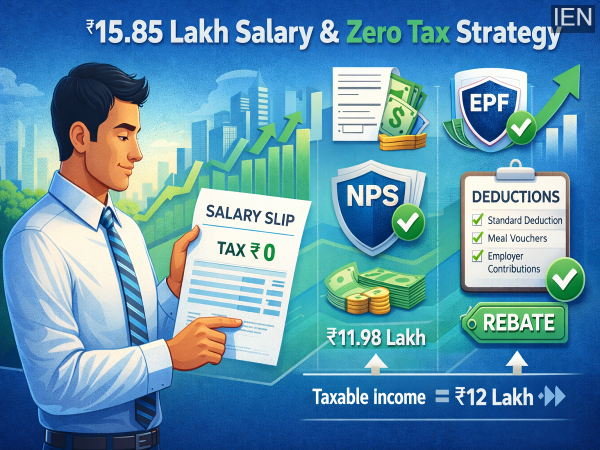
The entire strategy revolves around reducing your taxable income to below ₹12 lakh, which makes you eligible for a full rebate under the new tax regime.
Here’s how a sample salary structure achieves this:
| Gross Salary | 15,85,000 |
| Deductions | |
| Standard Deduction | 75,000 |
| Employer EPF Contribution | 95,100 |
| Employer NPS Contribution | 1,10,950 |
| Meal Vouchers | 1,05,600 |
| Total Deductions | 3,86,650 |
| Net Taxable Income | 11,98,350 |
| Tax Liability | 59,835 |
| Rebate | 60,000 |
| Final Tax Payable | 0 |
After applying all eligible deductions and benefits, the taxable income falls below ₹12 lakh. At this level, the government rebate cancels out the entire tax liability.
Why Salary Structuring Matters More Than Ever
Earlier, tax-saving strategies heavily relied on investments under sections like 80C or 80D. However, the new tax regime has removed many of these deductions, shifting the focus toward salary design.
Today, components like:
- Employer contributions to EPF and NPS
- Meal vouchers and reimbursements
- Flexible benefit plans
play a much bigger role in reducing taxable income. If your compensation package is designed efficiently, tax savings become much easier.
Key Conditions to Qualify for Zero Tax
This strategy is not automatic—it comes with specific requirements:
- Your salary structure must be planned in advance by your employer
- All benefits and reimbursements must be properly documented
- Contributions to EPF and NPS must stay within prescribed limits
- Your taxable income must remain below ₹12 lakh
Missing even one of these conditions could result in a tax liability.
Not a Universal Benefit for All Salaried Employees
While the idea of paying zero tax on a ₹15.85 lakh salary sounds appealing, it’s not achievable for everyone. Most standard salary packages do not include such optimized components.
Employees can only benefit if their employer offers a customized compensation structure. Without that flexibility, individuals cannot independently restructure their salary to this extent.
Beyond Numbers: It’s About Strategic Planning
This approach is not just about calculations—it’s about holistic tax planning. Every component of your salary must be aligned with tax efficiency.
Even small elements like meal vouchers or reimbursements can significantly impact your final taxable income. However, incorrect declarations or poor planning may lead to TDS issues or compliance problems.
What This Means for the Future of Tax Planning
The new tax regime signals a clear shift in financial strategy. Instead of relying on last-minute investments, individuals must now focus on designing their salary smartly from the beginning.
Both employees and employers will need to adapt to this evolving system. Going forward, tax planning will be less about where you invest and more about how your income is structured.
Final Takeaway:
Earning more doesn’t necessarily mean paying more tax—if you plan wisely. But remember, this zero-tax scenario is achievable only with the right structure, compliance, and professional guidance.
You May Also Read:
- New income tax rules explained for FY 2026–27
- EPF and NPS benefits under the new tax regime
- Smart salary structuring tips to reduce TDS
Contact to : xlf550402@gmail.com
Copyright © boyuanhulian 2020 - 2023. All Right Reserved.