New Delhi: As Baisakhi 2026 approaches on 14 April 2026, the vibrant spirit of Punjab comes alive with joyous celebrations marking the harvest season and the Sikh New Year. This sacred festival, also known as Vaisakhi, fills homes and gurdwaras with folk dances like bhangra, traditional music, and feasts that honour abundance and community. Families gather to express gratitude for the earth’s bounty, donning festive attire and participating in processions that echo the historical significance of Guru Gobind Singh Ji’s formation of the Khalsa in 1699. Amidst the festivities, the aroma of special sweets wafts through the air, promising sweetness and blessings for the year ahead.
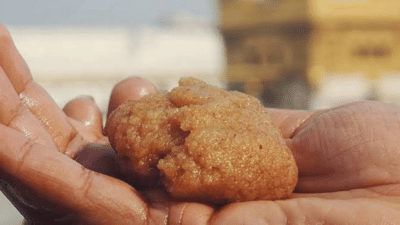
Kada Prasad, a hallmark of Baisakhi prasad, embodies the simplicity and sanctity of Punjabi traditions, often savoured warm as a divine offering in gurdwaras. This rich, halwa-like delicacy, made with humble ingredients, symbolises equality and devotion, shared freely during the festival’s langars. Preparing it at home for Baisakhi 2026 allows you to infuse your celebrations with authentic flavours, bringing the gurudwara experience to your kitchen.
What is Kada Prasad and its significance for Baisakhi?Kada Prasad, also called Karah Prasad or atte ka halwa, is a traditional Sikh sweet prepared fresh in gurdwaras and distributed as prasad after prayers. For Baisakhi 2026, it holds special reverence as a symbol of unity and blessings, reflecting the festival’s themes of harvest joy and spiritual renewal. Its smooth, ghee-infused texture and subtle sweetness make it an irresistible Baisakhi special recipe that devotees eagerly anticipate.
Ingredients for authentic Kada Prasad recipe-
1 cup whole wheat flour (atta)
-
1 cup ghee (clarified butter)
-
1 cup sugar
-
2.5 to 3 cups water
-
Optional garnishes
The classic 1:1:1 ratio (atta:ghee:sugar) with extra water ensures the signature soft, velvety halwa.
How to make Kada Prasad at homePrepare the sugar syrup. In a saucepan, combine sugar and water. Bring to a boil on medium heat until sugar dissolves fully. Keep hot on low flame—no need for thread consistency.
Heat ghee in a heavy-bottomed kadhai or pan over low-medium heat until melted. Add whole wheat flour and stir continuously to avoid lumps.
Keep roasting on low heat for 10-15 minutes, stirring nonstop until the mixture turns deep golden-brown and aromatic, with ghee separating. This is crucial for authentic flavour.
Carefully pour hot sugar syrup in 2-3 batches into the roasted atta, stirring vigorously as it splutters. Continue cooking on low, stirring until the mixture thickens, leaves pan sides, and ghee releases again (about 8-10 minutes).
Switch off heat, mix in cardamom if using. Let it cool slightly before serving warm as Baisakhi prasad.
Pro Tip: Maintain low heat and constant stirring for lump-free, smooth traditional Kada Prasad.
This authentic Kada Prasad recipe captures the essence of Baisakhi 2026 on 14 April, blending tradition with ease for your celebrations. With minimal ingredients and straightforward steps, it’s an SEO-friendly favourite for Punjabi festival recipes. Whip it up to share blessings and joy!
Contact to : xlf550402@gmail.com
Copyright © boyuanhulian 2020 - 2023. All Right Reserved.