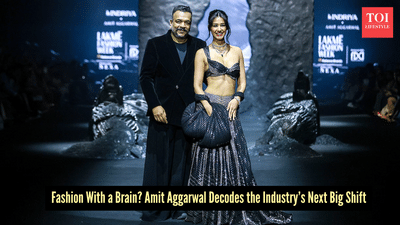
Beyond the bling: Fashion mogul Amit Aggarwal says the future of fashion is conscious
Rooted in craft-driven design with a futuristic charm, Indian fashion designer Amit Aggarwal returned to the Lakmé Fashion Week 2026 runway with a collection that felt deeply Indian with an avant-garde grace. The designer is known for his sculptural textile vision, which almost feels otherworldly, and has time and again blurred the lines between innovation, heritage, and art.
Proving that reimagined craftsmanship can be the most powerful form of modern-day luxury, in this exclusive conversation, he delved into the philosophy behind his latest line, shared views on the future of fashion, and offered a compelling glimpse into what lies ahead with his label. Let’s take a closer look at his insights.
1. There’s a strong focus on light and reflection in your ‘Orizon’ collection. How important is the idea of “illumination” in your design process?
Amit: Illumination sits at the emotional core of Orizon. For me, light is not merely a visual element but a metaphor for transformation, a quiet yet powerful moment when something shifts within before it becomes visible outwardly. The collection traces this movement from shadow to light, reflecting an inner journey that moves from introspection toward clarity and confidence. Rich kaarigari is layered with handloom fabrics, vintage Banarasi textiles, and contemporary mirror work, allowing surfaces to interact dynamically with light rather than simply reflect it. As the wearer moves, the garments reveal changing dimensions, moments of softness, brilliance, and depth.
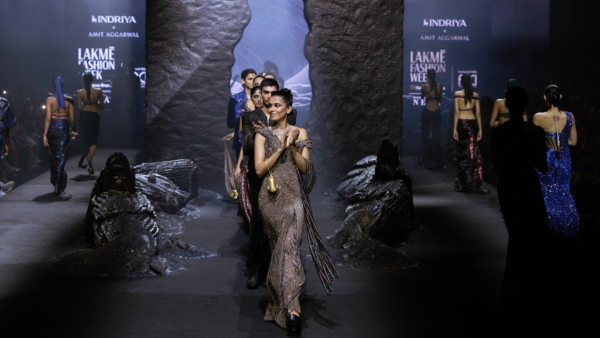
2. This collection highlights a strong dialogue between garments and jewellery. How did you ensure both elements complemented each other without overpowering the look?
Amit: It felt like building a shared narrative. The collection moves through stages of light, and the jewellery becomes an extension of that journey. We allowed both media to evolve together. The garments explored transformation through material, and the jewellery responded through brilliance and reflection. It became one continuous expression.
3. Has the rise of stylists and digital fashion platforms changed the way collections are conceptualised? What are your thoughts on this matter?
Amit: Fashion today exists within a more dynamic ecosystem than it once did. Stylists and digital platforms have expanded how collections are seen, interpreted, and experienced, allowing garments to live multiple lives beyond the runway. A look is no longer defined by a single presentation; it evolves through different perspectives, contexts, and audiences. At the same time, I believe the core of conceptualisation remains unchanged. Digital visibility can amplify a vision, but with intention. Styling expands the dialogue around fashion, while the responsibility of creating something honest and enduring still rests with design itself.
4. Your work often feels rooted in craft but driven by innovation. How do you keep evolving while staying connected to Indian heritage?
Amit: My work has always explored how tradition can transform. In Orizon, “heritage in motion” is about reinterpreting Indian craftsmanship through experimentation with sculptural forms, engineered textiles, and unconventional techniques. India is evolving rapidly, and our identity is expanding with it. I believe heritage survives not by constantly evolving, but by adapting, absorbing new influences, and continuing to inspire new narratives.

5. What’s the next big disruption you foresee in the fashion industry?
Amit: The next disruption in fashion will come from a shift in how we value design rather than how it looks. The focus is moving toward intelligent creation where material innovation, sustainability, and adaptability become integral to the design process itself. Fashion is evolving from producing moments to creating meaning. Garments will be expected to respond to changing lifestyles while carrying emotional and environmental consciousness. I believe the future of fashion lies in thoughtful evolution, where innovation and intention redefine what luxury truly means.
6. How do you see this collection shaping what comes next for you?
Amit: This collection feels like a moment of transition. While it remains rooted in Indian heritage and craftsmanship, it allowed us to explore a more confident and expressive energy, unapologetically being ourselves. In our design language, where craftsmanship and structure flow, emotion becomes more visible in the silhouette itself. It opens the door to a direction that feels stronger and more experimental while continuing to evolve tradition as a core point for transformation.
Proving that reimagined craftsmanship can be the most powerful form of modern-day luxury, in this exclusive conversation, he delved into the philosophy behind his latest line, shared views on the future of fashion, and offered a compelling glimpse into what lies ahead with his label. Let’s take a closer look at his insights.
1. There’s a strong focus on light and reflection in your ‘Orizon’ collection. How important is the idea of “illumination” in your design process?
Amit: Illumination sits at the emotional core of Orizon. For me, light is not merely a visual element but a metaphor for transformation, a quiet yet powerful moment when something shifts within before it becomes visible outwardly. The collection traces this movement from shadow to light, reflecting an inner journey that moves from introspection toward clarity and confidence. Rich kaarigari is layered with handloom fabrics, vintage Banarasi textiles, and contemporary mirror work, allowing surfaces to interact dynamically with light rather than simply reflect it. As the wearer moves, the garments reveal changing dimensions, moments of softness, brilliance, and depth.
2. This collection highlights a strong dialogue between garments and jewellery. How did you ensure both elements complemented each other without overpowering the look?
Amit: It felt like building a shared narrative. The collection moves through stages of light, and the jewellery becomes an extension of that journey. We allowed both media to evolve together. The garments explored transformation through material, and the jewellery responded through brilliance and reflection. It became one continuous expression.
3. Has the rise of stylists and digital fashion platforms changed the way collections are conceptualised? What are your thoughts on this matter?
Amit: Fashion today exists within a more dynamic ecosystem than it once did. Stylists and digital platforms have expanded how collections are seen, interpreted, and experienced, allowing garments to live multiple lives beyond the runway. A look is no longer defined by a single presentation; it evolves through different perspectives, contexts, and audiences. At the same time, I believe the core of conceptualisation remains unchanged. Digital visibility can amplify a vision, but with intention. Styling expands the dialogue around fashion, while the responsibility of creating something honest and enduring still rests with design itself.
4. Your work often feels rooted in craft but driven by innovation. How do you keep evolving while staying connected to Indian heritage?
Amit: My work has always explored how tradition can transform. In Orizon, “heritage in motion” is about reinterpreting Indian craftsmanship through experimentation with sculptural forms, engineered textiles, and unconventional techniques. India is evolving rapidly, and our identity is expanding with it. I believe heritage survives not by constantly evolving, but by adapting, absorbing new influences, and continuing to inspire new narratives.
5. What’s the next big disruption you foresee in the fashion industry?
Amit: The next disruption in fashion will come from a shift in how we value design rather than how it looks. The focus is moving toward intelligent creation where material innovation, sustainability, and adaptability become integral to the design process itself. Fashion is evolving from producing moments to creating meaning. Garments will be expected to respond to changing lifestyles while carrying emotional and environmental consciousness. I believe the future of fashion lies in thoughtful evolution, where innovation and intention redefine what luxury truly means.
6. How do you see this collection shaping what comes next for you?
Amit: This collection feels like a moment of transition. While it remains rooted in Indian heritage and craftsmanship, it allowed us to explore a more confident and expressive energy, unapologetically being ourselves. In our design language, where craftsmanship and structure flow, emotion becomes more visible in the silhouette itself. It opens the door to a direction that feels stronger and more experimental while continuing to evolve tradition as a core point for transformation.
Contact to : xlf550402@gmail.com
Copyright © boyuanhulian 2020 - 2023. All Right Reserved.