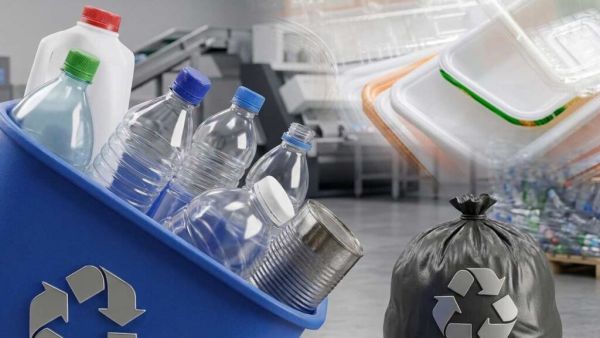
To eradicate the problem of plastic pollution in India, the government had made solid plastic waste management rules for the first time in the year 2016. In the last 10 years, companies never took these rules seriously and the mountains of waste kept increasing. In view of this negligence, now the government has made major and stringent changes in the ‘Plastic Waste Management Rules 2026’ which are being fully implemented from April 1, 2026. This time the government has made it clear that companies that take the rules lightly will not only be fined heavily but their licenses can also be cancelled. The biggest strength of this new law has been EPR (Extended Producer Responsibility) i.e. ‘Extended Producer Responsibility’, which means that now companies will have to clean up their own mess.
These rules are very important for our environment and the health of future generations. Every year millions of tonnes of plastic waste is produced in India, which never ends and pollutes the air, water and land around us. The government aims to increase this target of recycling to 60% by the year 2027-28. When companies reuse old plastic due to fear of law, there will be less garbage on the roads and the need for crude oil to make new plastic will also be reduced. This will promote ‘circular economy’, which means that instead of being thrown away, goods will be taken back to the factory and made into new ones.
What has changed?
Now the accounting of plastic waste will be completely digital so that old mistakes are not repeated. Now there will be a special ‘QR Code’ on every plastic bottle or packet, which after scanning will know where this plastic is made and which company is responsible for collecting it back from the garbage. Till now, more than 35,000 companies have got their names registered in the government records. Apart from this, the distinction between factory waste and waste thrown by people has also been made clear so that companies cannot fudge on papers. Now every company will have to give complete information about its plastic use on the online portal.
Where is the system failing?
Despite such good rules, there are some shortcomings in the system which are weakening this entire work. The biggest problem is that those companies which had not met their recycling targets in previous years, have now been given the facility of ‘carry forward’. That means they can postpone their old incomplete work to next year. Due to getting time again and again, the fear of law in the minds of companies has reduced. Also, there is no strong system to check on the ground the information that the companies themselves fill on the portal.
Old negligence and poor records of companies
It is clear from the reports of Central Pollution Control Board (CPCB) and CSE that the 2016 rules failed miserably. According to statistics, out of 4,953 big units producing plastic waste in the country, almost half the companies had not even registered themselves. The surprising thing is that every year about 34 lakh tonnes of plastic waste is generated in India, but companies could recycle only 9% to 10% of it. The rest of the waste was either thrown into dumping grounds or burnt. To save their profits, the companies did not create any system for garbage collection and kept avoiding their accountability by taking advantage of repeated extensions of deadlines by the government.
The biggest hindrance in properly implementing the rules is the weak garbage collection system. There is currently no way for companies to get their empty packets or bottles returned to customers’ homes after use. Even today, in small towns and villages, there is no facility to keep wet and dry waste separately. In such a situation, companies show their reports correct only on paper but in reality the plastic waste is found lying in drains and rivers.
difficulty monitoring
There are many difficulties in terms of monitoring also. In India, millions of small factories make plastic, which is very difficult for government officials to reach. Although now there has been talk of getting the investigation done by outsiders, but due to collusion it is difficult to get the correct report. Without testing in a lab, it is very difficult to find out whether old plastic is really mixed in an item or the company is lying by just using new plastic.
cost of compliance
It is very costly for companies to follow these rules. Making new plastic is cheaper, while collecting old waste, cleaning it and making it as good as new again costs 15% to 20% more money. In the pursuit of profit, many companies secretly break the rules.
Moreover, it is the waste pickers in our country who actually convert the plastic into usable form but there is no plan in these new rules to help those poor people. Unless recycled plastic becomes cheaper, this system will not be completely successful.
Contact to : xlf550402@gmail.com
Copyright © boyuanhulian 2020 - 2023. All Right Reserved.