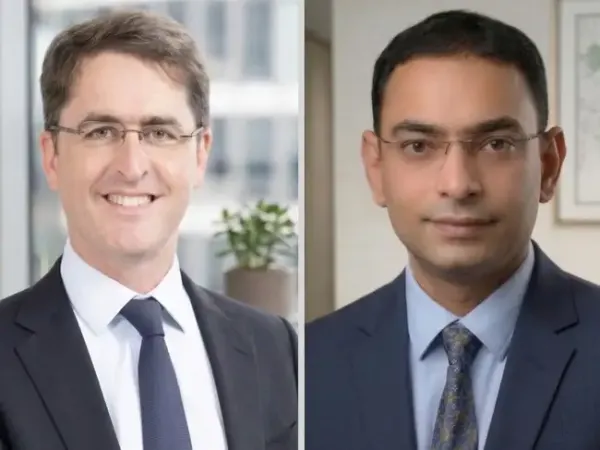
Asia-focussed secondary private equity (PE) firm TR Capital will deploy $1 billion in India over the next five years, across consumer, financial services, and healthcare, while selectively evaluating opportunities at the intersection of software and artificial intelligence (AI), managing partner Frederic Azemard told ET today.
The PE firm has also appointed Umang Agarwal, former principal at Eight Roads, as managing director to lead its India strategy, alongside expanding its local presence with a new office in Bengaluru and senior hires to tap the rising deal flow.
“India has been a core market for us over the last 17 years. You can think of it (deployments going ahead) as roughly $200 million per year. That reflects how we see the opportunity evolving in India,” Azemard said. He added that the firm is accelerating its existing strategy rather than changing course.
The firm has backed companies such as Flipkart, Lenskart, Fibe, and BigBasket through secondary transactions.
“Over the next five years, we also see high-tech manufacturing as an important segment for us,” said Agarwal. In June 2025, TR Capital acquired stake in three Eight Roads portfolio companies — MoEngage, Shadowfax, and Whatfix — for roughly $50 million.
Azemard said secondaries are emerging as a credible exit option alongside initial public offerings (IPOs) and mergers and acquisitions, especially as exit timelines stretch given the geopolitical situations.
“Globally, secondaries are already well-established, especially in Europe and the US. Asia developed later, so the secondary market has lagged. But we are now seeing it ramp up quickly, and that is where the opportunity lies for us,” Azemard said.
TR’s commitment to India comes in the backdrop of slowing IPO markets. General partners at venture firms are increasingly turning to secondary transactions to generate distributions to paid-in (DPI) capital for limited partners, the executives said.
“Funds in years four or five are looking to demonstrate performance and return capital as they prepare for their next fundraise,” Azemard said, adding that DPI has historically been a challenge in Asia. He noted that secondary funds that can solve for it will have a stronger growth trajectory.
Big deals
TR Capital is currently evaluating several large transactions in India, with multiple deals at advanced stages of diligence. These include portfolio deals involving three to eight assets and could close over the next one or two quarters, Azemard and Agarwal said.
“While we continue to back existing portfolio companies, the focus is more on new opportunities given the scale of capital deployment. The mix will be skewed towards new opportunities going forward,” Agarwal explained.
On valuations, Azemard said the firm remains cautious and focussed on fundamentals. “There was a disconnect between buyer and seller expectations in 2021-22 when valuations were high, which slowed deal activity in 2023. As valuations have corrected and companies matured, deal flow has picked up again,” he said.
Speaking of expanding its footprint beyond its existing Mumbai base, the firm said in a press release that Bengaluru is home to a growing pool of late-stage startups and PE-backed companies, and is a strategic location as venture capital and PE funds seek alternative exit routes.
Since inception (2007), TR Capital has closed five flagship funds, managed total capital commitments of $1.5 billion, and completed over 50 secondary investments across Asia.
The PE firm has also appointed Umang Agarwal, former principal at Eight Roads, as managing director to lead its India strategy, alongside expanding its local presence with a new office in Bengaluru and senior hires to tap the rising deal flow.
“India has been a core market for us over the last 17 years. You can think of it (deployments going ahead) as roughly $200 million per year. That reflects how we see the opportunity evolving in India,” Azemard said. He added that the firm is accelerating its existing strategy rather than changing course.
The firm has backed companies such as Flipkart, Lenskart, Fibe, and BigBasket through secondary transactions.
“Over the next five years, we also see high-tech manufacturing as an important segment for us,” said Agarwal. In June 2025, TR Capital acquired stake in three Eight Roads portfolio companies — MoEngage, Shadowfax, and Whatfix — for roughly $50 million.
Azemard said secondaries are emerging as a credible exit option alongside initial public offerings (IPOs) and mergers and acquisitions, especially as exit timelines stretch given the geopolitical situations.
“Globally, secondaries are already well-established, especially in Europe and the US. Asia developed later, so the secondary market has lagged. But we are now seeing it ramp up quickly, and that is where the opportunity lies for us,” Azemard said.
TR’s commitment to India comes in the backdrop of slowing IPO markets. General partners at venture firms are increasingly turning to secondary transactions to generate distributions to paid-in (DPI) capital for limited partners, the executives said.
“Funds in years four or five are looking to demonstrate performance and return capital as they prepare for their next fundraise,” Azemard said, adding that DPI has historically been a challenge in Asia. He noted that secondary funds that can solve for it will have a stronger growth trajectory.
Big deals
TR Capital is currently evaluating several large transactions in India, with multiple deals at advanced stages of diligence. These include portfolio deals involving three to eight assets and could close over the next one or two quarters, Azemard and Agarwal said.
“While we continue to back existing portfolio companies, the focus is more on new opportunities given the scale of capital deployment. The mix will be skewed towards new opportunities going forward,” Agarwal explained.
On valuations, Azemard said the firm remains cautious and focussed on fundamentals. “There was a disconnect between buyer and seller expectations in 2021-22 when valuations were high, which slowed deal activity in 2023. As valuations have corrected and companies matured, deal flow has picked up again,” he said.
Speaking of expanding its footprint beyond its existing Mumbai base, the firm said in a press release that Bengaluru is home to a growing pool of late-stage startups and PE-backed companies, and is a strategic location as venture capital and PE funds seek alternative exit routes.
Since inception (2007), TR Capital has closed five flagship funds, managed total capital commitments of $1.5 billion, and completed over 50 secondary investments across Asia.