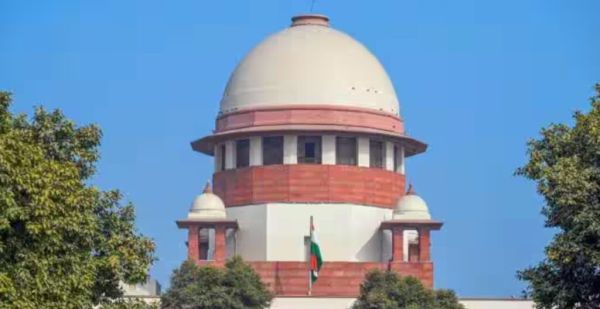
The Central government on Tuesday urged the nine-judge Constitution bench of the Supreme Court to reconsider its 2018 decision that allowed women of all ages to enter the Sabarimala temple. Solicitor General Tushar Mehta, appearing for the central government, argued that the decision was “wrongly given” and needed to be reconsidered.
Mehta said Indian society has historically held women in a “high status” with reverence and respect, both in spiritual and public life. He stressed that Western concepts like “patriarchy” and “gender stereotypes” are alien to Indian traditions. “India is not as patriarchal or gender-stereotyped as the West thinks,” he told a bench headed by Chief Justice of India Surya Kant.
The Solicitor General highlighted the prominent role of women in the Constituent Assembly as “founding mothers” and emphasized that India has always treated women with equality and dignity. He objected to comments made in the 2018 judgment that compared age-based restrictions to “untouchability” under Article 17; He clarified that this practice at Sabarimala is based on the unique celibate nature of Lord Ayyappa and applies only to this temple and not universally.
Mehta stressed the importance of Article 26, especially the phrase “any section thereof” used therein, which protects the rights of various sects and sub-groups to manage their religious affairs freely. He argued that questions of faith and essential religious practices should remain largely outside the scope of close judicial review, and that the work of social reform should be left primarily to the legislature.
In this nine-judge bench, Justice B.V. Nagarathna, M.M. Sundaresh, Ahsanuddin Amanullah, Arvind Kumar, A.G. Masih, Prasanna B. Varale, R. Mahadevan and Joymalya Bagchi; The bench clarified that it is not directly reviewing the validity of the Sabarimala verdict, but examining broader constitutional questions. These include the interrelationship between Articles 25 and 26, the scope of judicial review over religious practices, constitutional morality, and similar issues to women’s entry into other religions (mosques, Parsi temples, Dawoodi Bohra practices, etc.).
Hearings have been scheduled, with supporters of the review presenting their arguments on 7–9 April, opponents on 14–16 April, and responses by 22 April. The decision is expected to have far-reaching implications on the balance between religious freedom and fundamental rights in India.
Contact to : xlf550402@gmail.com
Copyright © boyuanhulian 2020 - 2023. All Right Reserved.