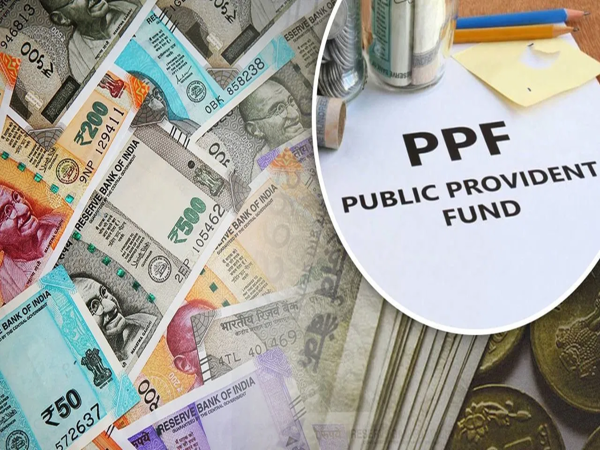
With the commencement of the Financial Year 2026-27, it becomes essential for investors to review their portfolios. Particularly regarding traditional investment avenues like the Public Provident Fund (PPF), the question arises: Is it still as beneficial today as it was once considered to be?
**Key Features: Safety and Tax Savings**
The PPF has always been regarded as a safe investment option, primarily because it is backed by the government. It remains immune to market fluctuations, ensuring stable returns. Furthermore, it falls under the EEE (Exempt-Exempt-Exempt) category, meaning the investment amount, the accrued interest, and the maturity proceeds are all exempt from taxation. This is precisely why it has remained the top choice for investors for a long time.
**Building a Substantial Corpus Through Compounding**
The PPF offers the benefit of compounding—meaning the interest earned each year itself generates further interest. Over a tenure of 15 years, this mechanism can help build a substantial corpus. Additionally, investors have the option to extend the account in blocks of five years thereafter, thereby further strengthening their investment.
**Returns Limited Relative to Inflation**
Although the PPF currently offers an interest rate of approximately 7.1%, with the inflation rate hovering around a similar level, the actual "real return" (adjusted for inflation) remains quite modest. Consequently, this investment is now viewed less as a vehicle for aggressive wealth creation and more as a tool for capital preservation.
**Liquidity and Investment Limits: Persistent Challenges**
The PPF comes with a mandatory lock-in period of 15 years, making it difficult to access funds in times of urgent need. Moreover, the maximum annual investment limit is capped at ₹1.5 lakh, which may prove to be insufficient for many investors.
**The Evolving Role of PPF**
Today, the market offers alternative investment avenues such as Mutual Funds and SIPs, which hold the potential for higher returns—albeit accompanied by higher risk. In this context, the PPF is now increasingly being viewed as a "balancing tool" that lends stability to an investment portfolio. As of 2026, the PPF has certainly not become obsolete; rather, its role within the broader investment landscape has evolved. The best strategy is to use this in combination with other investment options, so that both security and better returns can be achieved.
Disclaimer: This content has been sourced and edited from TV9. While we have made modifications for clarity and presentation, the original content belongs to its respective authors and website. We do not claim ownership of the content.
Contact to : xlf550402@gmail.com
Copyright © boyuanhulian 2020 - 2023. All Right Reserved.