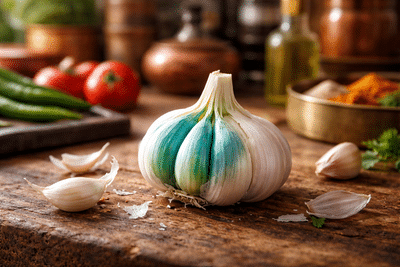
Garlic is one of those ingredients cooks rarely expect to surprise them. You slice it, crush it, toss it into hot oil or a jar of pickles, and it quietly does its job. But sometimes it behaves differently. A clove that began ivory white slowly turns green or even blue, staining the dish with a color no one expects from garlic. For many cooks, the sight triggers an immediate question: did something go wrong? The answer lies in a small but fascinating bit of kitchen chemistry that explains why this transformation happens and what it really means for your food. Scroll down to know more.
What is actually happening
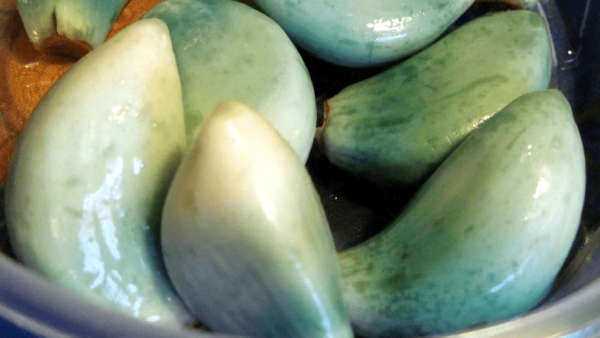
The color change happens when garlic’s natural compounds react under the right conditions. In acidic foods such as vinegar-based pickles, garlic can turn blue or purple because pigments called anthocyanins shift color in acid. Other that the reaction is more likely in immature, sprouting, or older garlic, and that metals in cookware, water, or pipes can also contribute to greenish discoloration. Food science research also notes that garlic can turn green through enzyme-driven reactions between its natural sulfur compounds, particularly alliin and the enzyme alliinase.
Is green garlic safe to eat ?
Yes. The extension guidance is very clear on this point: blue, green, or bluish-green garlic caused by these reactions is still safe to eat. Michigan State explicitly calls it “not a safety concern", while UC ANR says the garlic is still safe to eat even after the color shift. The change is mostly cosmetic, though it can signal that the garlic was immature or that the recipe conditions were especially reactive.
What it means for your health
The color itself does not make garlic harmful, but garlic’s broader health story is more nuanced. The garlic supplements may reduce LDL cholesterol slightly, may lower blood pressure a little, and may reduce blood sugar slightly in people with diabetes. At the same time, NCCIH notes that garlic can cause breath and body odor, abdominal pain, gas, nausea, and allergic reactions, and that garlic supplements may increase bleeding risk or interact with medicines such as anticoagulants and aspirin.
That is the key distinction: green or blue garlic in food is usually harmless, but garlic as a supplement or in large medicinal doses deserves more caution. In everyday cooking, the color change is not a warning sign of poison or spoilage. In health terms, it is a reminder that garlic is a biologically active food, not just a seasoning.
How to reduce the color change
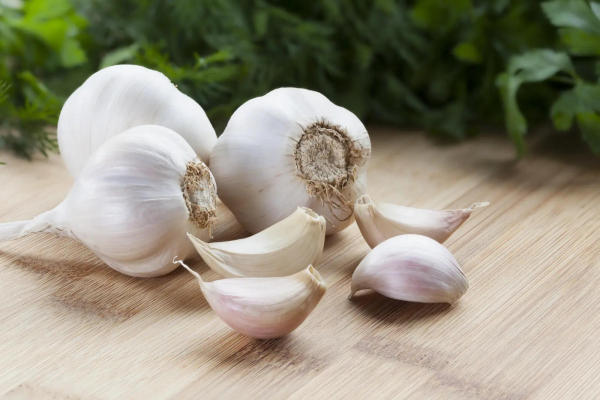
If you want to avoid it, food science sources suggest using fresh, mature garlic, especially in pickles and acid-heavy recipes. Older or sprouting cloves are more likely to discolor, and some water or metal conditions can make the effect more noticeable. The bottom line is simple: blue or green garlic can look odd, but it is usually just a reaction between garlic’s natural compounds and the food around it. In most home kitchens, it is safe to serve and safe to eat.
3 tasty ways to use garlic
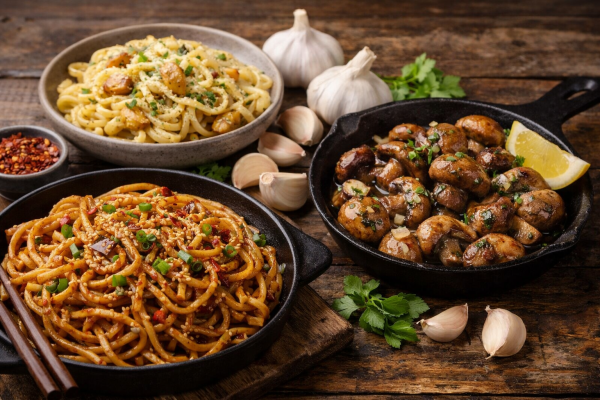
Garlic does far more than season a dish. It can anchor a recipe, sharpen a sauce, and turn a simple bowl of food into something deeply satisfying. If you have a few cloves on hand, these are three easy ways to put them to work.
Chilli garlic noodles
Chilli garlic noodles are the kind of dish that proves garlic can carry an entire meal. Sauté minced garlic in oil until fragrant, add chilli flakes or fresh chillies, then toss in cooked noodles with soy sauce, a little vinegar, and a touch of sesame oil. The result is bold, fast, and full of heat.
Garlic butter mushrooms
This dish brings out garlic’s softer side. When cooked gently in butter or olive oil, garlic turns mellow and aromatic, coating the mushrooms in a rich, savoury glaze. A squeeze of lemon and a handful of herbs can make the dish feel far more luxurious than the ingredients suggest.
Roasted garlic pasta
Pasta is comfort food at its best. Slow-roasted garlic becomes sweet, almost creamy, and blends beautifully into a simple pasta sauce with olive oil, parmesan, and black pepper. It is the kind of dish that feels rustic, warm, and quietly indulgent.
Contact to : xlf550402@gmail.com
Copyright © boyuanhulian 2020 - 2023. All Right Reserved.