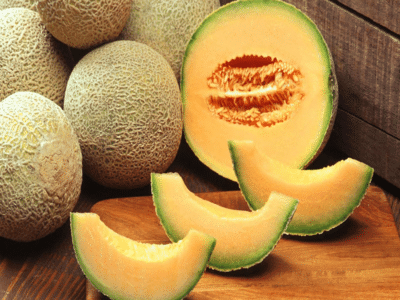
The summer season brings with it an abundance of seasonal fruits. Among these, watermelons and muskmelons are the most popular and widely sold items. Rich in water content, these fruits provide immense cooling relief to the body during the hot summer days and help prevent dehydration. Watermelons and muskmelons are not only delicious and hydrating but also extremely beneficial for one's health. However, when it comes to purchasing a muskmelon, many people struggle to determine whether it will turn out to be sweet or completely tasteless.

You might select and buy a muskmelon yourself, but upon cutting into it, you may find it to be dry, bland, and lackluster on the inside. So, how exactly can you identify—right at the time of purchase—whether a muskmelon will turn out to be delightfully sweet and delicious? To ensure this, keep the following points in mind when buying a muskmelon:
**Nutrients in Muskmelon**
Muskmelons have an exceptionally high water content, comprising approximately 90 percent of the fruit. Additionally, this fruit is packed with various vitamins and minerals. It is low in calories and contains Vitamin A, Vitamin C, antioxidants, fiber, potassium, and more. It helps maintain the health of the digestive system, boosts immunity, and benefits the eyes, heart, kidneys, and skin. Due to its low-calorie nature, consuming it does not lead to weight gain.
**How to Identify Whether a Muskmelon is Sweet?**
– Whenever you purchase a muskmelon—whether from a supermarket or a street vendor—start by smelling it. Every muskmelon has a stem attached to it; try smelling that specific area. If you detect a sweet fragrance emanating from that spot, you can be assured that the muskmelon is sweet and perfectly ripe.
– Regardless of the size of the muskmelon you choose, if it feels heavier than what its physical dimensions would suggest, you can assume that it is rich in both water and sweetness. If it lacks sufficient water content, the muskmelon may feel lighter than expected and could turn out to be dry, unripe, or excessively seedy.
– When a muskmelon reaches full ripeness, the color of its rind typically takes on a pale yellow or golden hue. If the rind is green, the melon is unripe. Look for a web-like pattern on the surface; if these ridges appear raised, the melon is perfect. It will be both sweet and ripe.
- When inspecting a melon by hand, gently press it with your fingers as well. If it yields slightly and feels soft, it is ripe and sweet. If it gives way too easily, it is overripe, mushy, and will likely lack flavor. Conversely, if it feels very hard when pressed, the melon is unripe.
- Tap the melon with your hands to check it. If you hear a hollow sound, you can be assured that it is ripe.
PC Social Media
Contact to : xlf550402@gmail.com
Copyright © boyuanhulian 2020 - 2023. All Right Reserved.