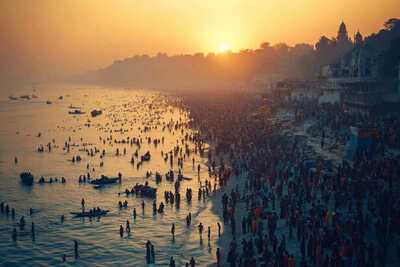
What Did Ganga See in Kashi That Made Her Turn Back?
A river that never stops. A current that never looks back. Yet in Kashi, something feels impossible. For nearly 1.5 kilometers, the sacred Ganga appears to turn against her own flow, moving as if time itself has reversed. Pilgrims watch in silence, unsure of what they’re seeing. Is it just a trick of the eyes or something deeper? A hidden story carried through centuries? Some call it a natural phenomenon, others believe it’s a divine sign. But one question remains when a river that never turns back suddenly does what truth is it trying to reveal?
Where the River Turns
Between Manikarnika Ghat and Tulsi Ghat, something unusual happens. The Ganga doesn’t flow in a straight line like elsewhere. Instead, it curves in such a way that it appears to move backward. This 1.5-kilometer stretch includes around 45 ghats, making it one of the most unique river behaviors in the world. To the eyes, it feels like the river is defying nature. But this visual mystery has fascinated pilgrims, scientists, and storytellers for generations.
The Ancient Story Behind It

According to ancient beliefs, when Ganga descended from heaven, her flow was extremely powerful. At that time, a sage often associated with divine energy was deep in meditation in Kashi. The strong current swept away his belongings. Realizing this, Ganga is believed to have turned back, returning his items and seeking forgiveness. Since then, this stretch symbolizes humility even for something as mighty as a river. It’s not just a story, but a message about respect and balance.
Science Behind the “Reverse” Flow
Scientifically, the Ganga doesn’t actually flow backward. The river takes a sharp northward curve in Kashi, unlike its usual south-east direction. This bend creates an optical illusion, making it appear as if the water is moving in reverse. Geography, land structure, and slope all play a role in shaping this unique path. So while faith sees a miracle, science explains it as nature’s design. And together, they create a mystery that continues to amaze.
Why It Feels So PowerfulKashi is not just a place it’s an emotion. When people see the Ganga “flowing backward,” it feels like time itself has paused. Devotees believe this stretch holds special spiritual energy. It’s seen as a place where even nature bows down to devotion. Whether or not you believe the legend, the feeling is undeniable. There’s a sense of calm, mystery, and connection that makes this experience unforgettable for anyone who visits.
The Real Lesson Hidden HereThe story of Ganga turning back is more than just a myth or a visual illusion. It carries a deeper lesson. No matter how powerful you are, humility matters. Even the strongest force can pause, reflect, and correct itself. In life, we often move forward without thinking. But sometimes, true strength lies in stepping back, fixing mistakes, and moving with awareness. That’s the real message hidden in this timeless mystery of Kashi.
Unlock insightful tips and inspiration on personal growth, productivity, and well-being. Stay motivated and updated with the latest at My Life XP.
Frequently Asked Questions (FAQs)
1. Does the Ganga really flow backward in Kashi?
Not exactly. The river doesn’t truly reverse its flow. Due to a natural curve in its path, it creates an optical illusion that makes it appear as if it’s flowing backward.
2. Where does this phenomenon occur?
This unique effect is seen between Manikarnika Ghat and Tulsi Ghat in Varanasi, covering around 1.5 kilometers.
3. What is the religious belief behind this?
According to ancient stories, Ganga turned back to return the belongings of a meditating sage and seek forgiveness, symbolizing humility and respect.
4. Why do people find this place so special?
Kashi is considered spiritually powerful. This unique flow adds to its mystical aura, making devotees feel a deeper connection.
5. Is there a scientific explanation for this?
Yes. The river takes a northward bend in this region, which creates the illusion of reverse flow.
Where the River Turns
The unique stretch where Ganga appears to reverse direction
Between Manikarnika Ghat and Tulsi Ghat, something unusual happens. The Ganga doesn’t flow in a straight line like elsewhere. Instead, it curves in such a way that it appears to move backward. This 1.5-kilometer stretch includes around 45 ghats, making it one of the most unique river behaviors in the world. To the eyes, it feels like the river is defying nature. But this visual mystery has fascinated pilgrims, scientists, and storytellers for generations.
The Ancient Story Behind It
The legend of divine respect and return
According to ancient beliefs, when Ganga descended from heaven, her flow was extremely powerful. At that time, a sage often associated with divine energy was deep in meditation in Kashi. The strong current swept away his belongings. Realizing this, Ganga is believed to have turned back, returning his items and seeking forgiveness. Since then, this stretch symbolizes humility even for something as mighty as a river. It’s not just a story, but a message about respect and balance.
Science Behind the “Reverse” Flow
Natural curves create the illusion of reverse flow
Scientifically, the Ganga doesn’t actually flow backward. The river takes a sharp northward curve in Kashi, unlike its usual south-east direction. This bend creates an optical illusion, making it appear as if the water is moving in reverse. Geography, land structure, and slope all play a role in shaping this unique path. So while faith sees a miracle, science explains it as nature’s design. And together, they create a mystery that continues to amaze.
Why It Feels So PowerfulKashi is not just a place it’s an emotion. When people see the Ganga “flowing backward,” it feels like time itself has paused. Devotees believe this stretch holds special spiritual energy. It’s seen as a place where even nature bows down to devotion. Whether or not you believe the legend, the feeling is undeniable. There’s a sense of calm, mystery, and connection that makes this experience unforgettable for anyone who visits.
The Real Lesson Hidden HereThe story of Ganga turning back is more than just a myth or a visual illusion. It carries a deeper lesson. No matter how powerful you are, humility matters. Even the strongest force can pause, reflect, and correct itself. In life, we often move forward without thinking. But sometimes, true strength lies in stepping back, fixing mistakes, and moving with awareness. That’s the real message hidden in this timeless mystery of Kashi.
Unlock insightful tips and inspiration on personal growth, productivity, and well-being. Stay motivated and updated with the latest at My Life XP.
Frequently Asked Questions (FAQs)
1. Does the Ganga really flow backward in Kashi?
Not exactly. The river doesn’t truly reverse its flow. Due to a natural curve in its path, it creates an optical illusion that makes it appear as if it’s flowing backward.
2. Where does this phenomenon occur?
This unique effect is seen between Manikarnika Ghat and Tulsi Ghat in Varanasi, covering around 1.5 kilometers.
3. What is the religious belief behind this?
According to ancient stories, Ganga turned back to return the belongings of a meditating sage and seek forgiveness, symbolizing humility and respect.
4. Why do people find this place so special?
Kashi is considered spiritually powerful. This unique flow adds to its mystical aura, making devotees feel a deeper connection.
5. Is there a scientific explanation for this?
Yes. The river takes a northward bend in this region, which creates the illusion of reverse flow.
Contact to : xlf550402@gmail.com
Copyright © boyuanhulian 2020 - 2023. All Right Reserved.