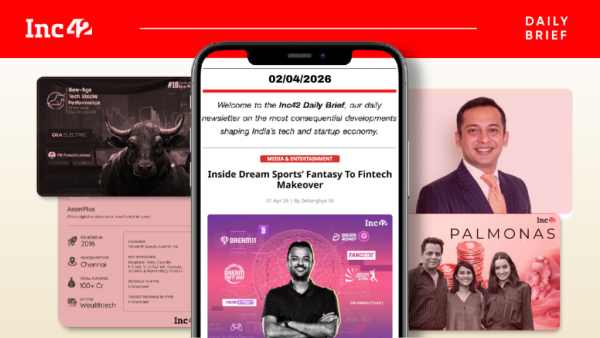
Dream Sports’ Post-RMG Era
Eight months after the government dismantled the real-money gaming (RMG) sector overnight, Dream Sports is trying to stand on its feet again. Instead of filing lawsuits, the Dream 11 maker is weaponising its existing user base to pivot to fintech and sports tech ecosystems.
The Great Reset: After the ban, Dream Sports moved swiftly to preserve its cash reserves and stop the operational burn. The company pulled out of the massive Indian cricket sponsorship, paused high-cost marketing and shut down FanCode’s merchandise line. The company then conceptualised a multi-vertical comeback plan by tapping into its user base.
The New Engines: Dream Sports’ most ambitious leap is into financial services. With the launch of wealthtech platform Dream Money and AI-driven brokerage platform DreamStreet, the brand is targeting the underserved, small-town investors.
Reimaging The Core: Simultaneously, the company is pivoting its erstwhile RMG platform into an ad-driven, second-screen social network. Early traction of 10 Mn users and rising creator participation suggest initial validation, but monetisation remains nascent.
Meanwhile, the company is also leaning heavily on its other established verticals like FanCode to fund fresh experiments and expand globally.
The Organisational Overhaul: To handle this expansion, the company has decentralised its corporate structure. Senior leaders have been redeployed as CEOs of these new standalone verticals. This independent structure minimises corporate risk and allows each arm to move at hyper-speed.
However, the true test of Dream Sports’ transition will be navigating coordination between these highly diverse businesses, while managing the pending regulatory tax hurdles. With much on its plate, can the company make a comeback in its fintech avatar? Let’s find out…
From The Editor’s Desk
Xpedize Cofounder No More
- The cofounder of Clear-acquired SaaS startup, Regan Mithani, passed away late last during a family vacation in Singapore. There was no clarity on his cause of death as of now.
- Mithani, along with Deepak Gugnani, cofounded the supply chain financing tech startup in 2017. Xpedize operated a supply chain finance platform focused on invoice discounting and working capital management.
- Mithani’s demise comes barely after SaaS unicorn Icertis’ cofounder Samir Bodas passed away in January this year at the age of 61 after a prolonged battle with cancer.
![💰]() Palmonas Bags $40 Mn
Palmonas Bags $40 Mn
- The omnichannel jewellery brand has raised ₹373 Cr in its Series B round led by Xponentia Capital and Vertex Growth Fund to expand the startup’s offline presence and scale operations.
- Founded in 2022, Palmonas is a jewellery brand that specialises in demi-fine jewellery made from surgical stainless steel and sterling silver with 18K gold vermeil finish. With the current round, the startup has raised ₹428 Cr to date.
- The jewellery band claims to operate 60 offline stores, and derives a “significant” chunk of its revenue from retail. With the latest fundraise, Palmonas is eyeing a piece of India’s online jewellery market, which is expected to cross $69.68 Bn in 2030.
Rediff Files Confidential DRHP
- The AvenuesAI subsidiary has filed its draft papers with SEBI via the confidential pre-filing route. If reports are to be believed, the size of the IPO could be in the range of ₹600-₹800 Cr.
- Founded in 1995, Rediff is a Mumbai-based internet company that has evolved from being just a news media outlet to an online SaaS platform, which offers enterprise email, digital payments and enterprise business suite.
- In 2024, AvenuesAI acquired a majority 54.1% stake in the portal for about ₹50 Cr. Subsequently, the listed parent also invested ₹87.7 Cr in Rediff to expand its digital footprint. The portal also received a TPAP licence from the NPCI last year.
Licious Crosses ₹1K Cr Revenue In FY26
- The IPO-bound D2C meat and seafood marketplace claims to have closed FY26 with a 47% YoY jump in net revenue to ₹1,166 Cr on the back of improving delivery speed and expanding footprint in existing markets.
- In line with rising revenue, Licious’ EBITDA loss rose 11% YoY to ₹187 Cr due to investments in infrastructure and offline expansion.
- The company plans to scale its dark store network to around 400 over the next five years.
NODWIN Brings Back Ex-CEO
- With an IPO on the horizon, the esports major has roped in its former CEO Sidharth Kedia as its new chief strategy and investments officer. Kedia, who exited NODWIN in 2023, will now lead strategy, fundraising, and amalgamations.
- Under his tenure as CEO, which lasted for four years, the company claims to have scaled revenues 10X, raised over $50 Mn, crossed a valuation of about $350 Mn and became South Asia’s largest esports company. He later joined AI video startup Mythik in 2025.
- This comes as NODWIN looks to raise about $100 Mn via a pre-IPO round. The company’s bankers are assessing market appetite and book-building visibility before going for an IPO. The esports major expects to close FY26 with a turnover of ₹700 Cr.
Inc42 Markets
Inc42 Startup Spotlight
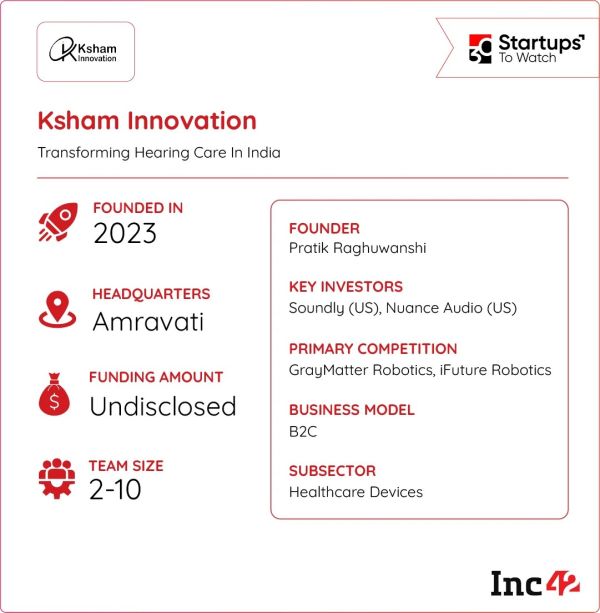
How Ksham Is Transforming Hearing Care In India
Hearing loss remains an under-addressed healthcare gap in India, which is made worse by the stigma, discomfort and cost associated with traditional hearing aids. Ksham Innovation is solving this problem by making hearing aids feel as natural as wearing glasses.
Ksham’s Smart Wearables: Founded in 2023, Ksham Innovation builds non-invasive assistive devices for people with hearing impairment. Its flagship Able Glasses uses bone conduction technology to send vibrations directly to the inner ear, bypassing damaged sections of the auditory system.
Designed For Everyday Use: The product is built in the form of regular eyewear, which makes it easier to wear in public and reduces the social awkwardness often associated with hearing devices. By avoiding surgery and maintaining a familiar form factor, Ksham is trying to make hearing assistance feel more accessible.
The AI Angle: Able Glasses is supported by the Able Assistant app, which lets users run quick AI-powered hearing assessments that align with recognised standards. Incubated at SIIC Kanpur, Ksham Innovation is targeting the affordability and usability barriers that have long limited adoption in assistive healthcare.
With an eye on India’s hearing and assistive hearing devices market, which is projected to become a $389.1 Mn opportunity by 2034, can Ksham disrupt hearing care in India?
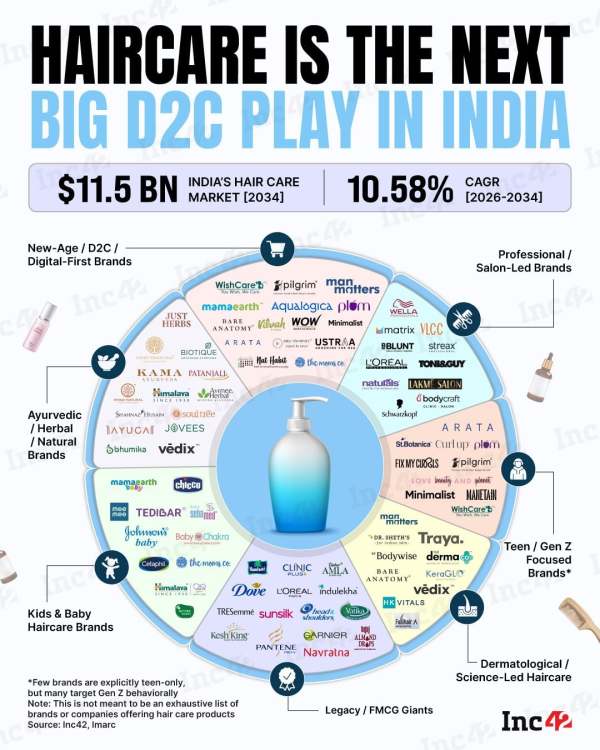
Infographic Of The Day
The Indian haircare market is getting a serious makeover. From oil-shampoo combos to personalised routines, this billion-dollar space is booming. Here is what it is all about…
Contact to : xlf550402@gmail.com
Copyright © boyuanhulian 2020 - 2023. All Right Reserved.