
Every year, during the season of spring, thousands of international professionals register for the U.S. visa lottery program with the hope of winning one of the few available work visas that grant permission to work in the United States in specialty occupations such as engineering, technology, research, and financial fields. The catch is that the available work visas are only 85,000 every year, but the registrations far outnumber the available work visas. This means that the majority of the applicants do not make the cut.
Missing out on the 2027 visa lottery can certainly feel discouraging, but it’s important to remember that it doesn’t close the door on your plans to move to the United States. There are several other established visa pathways that allow individuals to live and work there, and becoming familiar with these options can help you map out a more informed and strategic career path.
Cap‑exempt H‑1B: A direct work visa without a lotteryOne of the most similar alternatives to the standard H-1B visa is a , one that is special in that it does not have to go through the lottery process. Some organisations qualify as cap-exempt under the immigration regulations. These include higher learning institutions, non-profit research organisations, and government research organisations. If you can find employment with a cap-exempt employer, then your application can be filed at any time and will not be subject to the cap. This option is often used by many professionals in the academic and scientific fields, and in other technical fields, because it results in authorised employment and can be processed with fewer restrictions than the standard H-1B visa. The drawback to an H-1B cap-exempt visa is that it can only be used to work for an employer in the cap-exempt category. If one wants to move to a for-profit company that is cap-subject, then one must go through the standard H-1B process.
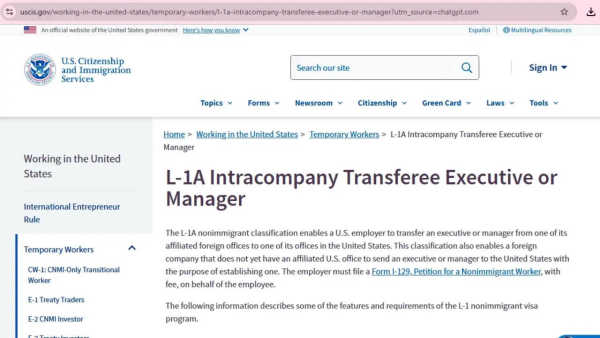
L‑1 Visa: Intra‑company transfers to the U.S. officeFor professionals who work with multinational companies, the L-1 visa is an opportunity to get to the US without the lottery system associated with the H-1B visa. The L-1 visa is an option for the company to bring an employee from one of its overseas offices to the US office if the employee has been working for the company overseas for at least one continuous year within the last three years. There are two types of L-1 visas. The L-1A visa is for managers and executives, while the L-1B visa is for employees with specialized knowledge that is essential to the company. Once the applicant is granted the visa, they can work directly for the US entity, bringing along their spouses and children as well (who will hold the L-2 visa).
The best part about the L-1 visa is that it is not subject to the cap on the H-1B visa. This means that the applicant does not have to go through the lottery system. The applicant is eligible for the visa as long as they have been employed by the company's overseas office for at least one continuous year within the last three years. This is the best route for professionals who work with large IT companies, consultancies, and companies with large overseas operations.
O‑1 Visa: For individuals with extraordinary abilityThe other valid and approved alternative to the lottery system is the O-1 visa, which is offered to workers who show extraordinary ability in their respective fields of work. This category acknowledges individuals who have achieved distinction through significant accomplishments in science, business, education, or the arts. The O-1 category is not subject to a numerical cap, which means there is no requirement for a lottery system. Rather, this category is approved on the basis of evidence of achievements, such as receiving awards, publications, professional recognitions, significant contributions to a field, etc.
The fact that this visa is based on skills and not on a lottery system makes this category more appealing to individuals who have accumulated a high level of academic or professional achievements, especially in areas such as research, technology, or business. By receiving this visa, you are permitted to work in your specific area of expertise with your employer, and this visa can be renewed indefinitely in increments as long as you meet eligibility requirements.
Continuing on Optional Practical Training (OPT)For those already in the United States on an F-1 student visa, work authorization through Optional Practical Training (OPT) is still considered to be one of the legitimate means to remain in the United States and employed while you contemplate your next steps. OPT is valid for up to 12 months for the majority of graduates. Those in STEM fields can extend OPT for an additional 24 months if their employer is part of the E-Verify program. Although OPT is not meant to be a long-term solution, it provides recent graduates the opportunity to remain employed and gain work experience in the United States, which may improve their chances for other visas.
Not being selected in the H-1B lottery can be disappointing, yet it is not the end of the world. It does not mean you can’t work in the United States. There are many legitimate visa options in the United States immigration system that do not involve the lottery. It is important to understand which one is the best fit for your situation and to work towards it so you’re not limited to one lottery.
Contact to : xlf550402@gmail.com
Copyright © boyuanhulian 2020 - 2023. All Right Reserved.