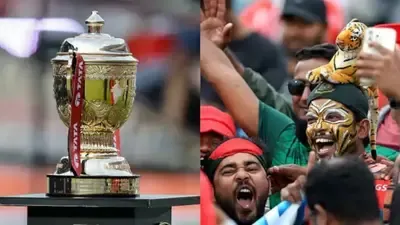
Cricket fans in Bangladesh face a major setback as IPL 2026 broadcast gets suspended following JioStar’s termination of its agreement with local broadcaster over payment issues.
The Indian Premier League has once again found itself at the centre of controversy, but this time off the field. In a significant development, IPL 2026 broadcasts have been halted in Bangladesh after JioStar terminated its sublicensing agreement with T Sports due to non-compliance with payment terms.
This move has left millions of cricket enthusiasts in Bangladesh without access to one of the most popular T20 leagues in the world, raising concerns about broadcasting rights, financial agreements, and the growing complexity of global sports media partnerships.
The suspension comes shortly after Bangladesh had lifted its earlier ban on IPL broadcasts, making the situation even more unexpected and disappointing for fans.
Sudden Termination Disrupts IPL Viewership in Bangladesh
The decision by JioStar to terminate its agreement with T Sports was reportedly triggered by repeated delays in payments. According to reports, the broadcaster failed to adhere to the financial timelines agreed upon under the contract, leading to immediate termination.
JioStar, which holds the media rights for IPL distribution in several regions, issued a formal communication stating that the agreement stood cancelled with immediate effect. The termination not only affects IPL 2026 broadcasts but also extends to the Women’s Premier League (WPL), further limiting cricket content availability in Bangladesh.
The impact of this decision is widespread. Bangladesh has a large and passionate cricket fan base, and the IPL enjoys immense popularity in the country due to its star-studded line-ups and high entertainment value.
Fans who were eagerly anticipating the tournament after the lifting of the earlier ban now find themselves unable to watch matches through official broadcast channels.
Background: Ban, Controversy and Policy Reversal
The current situation cannot be understood without looking at the events that preceded it. Bangladesh had previously imposed a ban on IPL broadcasts following a controversy involving Mustafizur Rahman.
The left-arm pacer, who had been picked by Kolkata Knight Riders, was later removed from the squad. The decision, reportedly influenced by directives linked to security concerns, sparked outrage in Bangladesh.
The issue escalated into a diplomatic and sporting controversy, with strong reactions from fans and officials. The situation intensified to the point where Bangladesh withdrew from the T20 World Cup scheduled in India, citing security concerns and dissatisfaction over the treatment of its player.
This marked a rare instance where cricketing relations between the two countries were significantly strained due to off-field developments.
However, with a change in the political landscape, Bangladesh’s interim government later reversed its stance. The ban on IPL broadcasts was lifted, and there were renewed efforts to restore normalcy in cricketing ties.
The lifting of the ban had raised hopes among fans that they would once again be able to enjoy IPL matches without restrictions. But the latest development involving the termination of the broadcast agreement has once again disrupted access.
Payment Dispute at the Core of the Crisis
While the earlier controversy was largely political and emotional, the current issue is rooted in commercial disagreements.
Broadcasting rights for major sporting events involve complex financial arrangements, including sublicensing deals, revenue-sharing models, and strict payment schedules. Any delay or default in payments can have serious consequences, as seen in this case.
JioStar’s decision highlights the importance of financial discipline in maintaining such agreements. By terminating the deal, the company has signalled that adherence to contractual obligations is non-negotiable.
For T Sports, the termination represents a significant setback. The broadcaster had secured sublicensing rights for IPL content from 2023 to 2027, positioning itself as a key platform for cricket coverage in Bangladesh.
Losing these rights not only affects its programming but also its market position and credibility.
Impact on Fans and Cricket Ecosystem
The immediate and most visible impact of the suspension is on fans. Cricket is more than just a sport in Bangladesh—it is a cultural phenomenon that brings people together.
The IPL, with its mix of international stars and high-octane matches, has a dedicated following in the country. The absence of official broadcasts means that fans may have to rely on unofficial or illegal streaming sources, which raises concerns about piracy and quality of viewing.
Beyond fans, the suspension also affects advertisers, sponsors, and businesses associated with cricket broadcasting. The IPL attracts significant advertising revenue, and its absence from Bangladesh’s television screens could lead to financial losses for multiple stakeholders.
The situation also raises broader questions about the stability of sports broadcasting agreements in emerging markets. As the demand for premium content grows, so does the need for reliable and financially robust partnerships.
Women’s Premier League Also Affected
An important aspect of the termination is that it extends beyond the IPL to include the Women’s Premier League (WPL). This is particularly significant as the WPL has been gaining traction globally and represents an important step towards promoting women’s cricket.
The suspension of WPL broadcasts in Bangladesh could slow down the growth of women’s cricket in the region by limiting visibility and audience engagement.
Broader Implications for Global Cricket Broadcasting
The IPL is not just a domestic tournament; it is a global brand with a vast international audience. Broadcasting deals play a crucial role in expanding its reach and maintaining its commercial success.
The breakdown of the agreement between JioStar and T Sports underscores the challenges involved in managing international media rights. Differences in financial capabilities, regulatory environments, and market conditions can all impact the success of such partnerships.
For the Board of Control for Cricket in India, which oversees the IPL, ensuring smooth broadcast distribution is essential for sustaining the league’s global appeal.
While the current issue is between JioStar and T Sports, its ripple effects are felt across the cricketing ecosystem.
What Lies Ahead
The immediate future remains uncertain for IPL broadcasts in Bangladesh. Unless a new agreement is reached with another broadcaster or the dispute is resolved, fans may continue to miss out on official coverage.
There is also the possibility of digital platforms stepping in to fill the gap, given the increasing shift towards online streaming. However, this would depend on licensing arrangements and regulatory approvals.
For now, the situation serves as a reminder of how off-field issues can significantly impact the viewing experience of millions of fans.
The post IPL 2026 Broadcast Suspended in Bangladesh After JioStar Terminates Deal Over Payment Dispute appeared first on CliQ INDIA.
Contact to : xlf550402@gmail.com
Copyright © boyuanhulian 2020 - 2023. All Right Reserved.