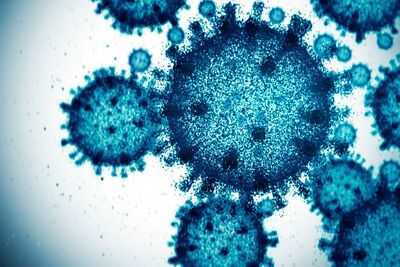
A doctor has warned that vaccinations may be less effective against a new Covid variant with 75 mutations in its structure, which is sweeping around the world. The UK Health Security Agency is monitoring the spread of the strain, officially designated BA.3.2.
The variant’s ability to stay ‘underground’ for so long before bursting into action has earnedit the nickname cicada - after the insect which lies dormant for years. It has been detected in 23 countries and is sweeping the US.
Writing on The Conversation website, Kyle B. Enfield, Associate Professor of Medicine, University of Virginia, said it was very different to previous variants. He said: “There’s no sign so far that BA.3.2, nicknamed Cicada, is any more dangerous or causes more severe disease than the variants that were circulating in the winter of 2025-26. But because it’s significantly different from them, the current COVID-19 vaccine may not be as effective against it.”
- Warning meat sold in UK shops could cause meningitis
- Urgent warning about new Covid 19 cicada variant - full list of symptoms
Researchers first identified BA.3.2 inNovember 2024 in Africa. It started its global trek in 2025 and had made it to 24 countries as of February 2026.
The Cicada variant (BA.3.2) has been confirmed in the United Kingdom. While it is not yet the dominant strain in the UK (where variants like XFG and ‘Nimbus’ have been more common recently, health agencies like the UKHSA are monitoring it due to its potential to bypass immunity from older vaccines and past infections
Prof Enfield said: “BA.3.2 is descended from the omicron variant, which emerged in late 2021. Compared to the current predominant strains of SARS-CoV-2, the virus that causes COVID-19, BA.3.2 carries 70 to 75 genetic changes in its spike protein, the part of the virus that helps it get into cells. The spike protein is also the part of the virus that vaccines rely on to coax people’s immune systems into recognizing the virus.”
“All viruses change over time – and the type of virus that causes COVID-19 does so especially quickly. Every time the virus copies itself inside a cell, its genetic material mutates. Most of these changes disappear, but occasionally one gives the virus an advantage over other variants, allowing that version to spread.
“These changes make it harder for the immune system to recognize the virus.” He said some patients were more at risk: “As a pulmonary and critical care doctor, I see many patients who are at high risk for severe COVID-19 due to chronic lung disease, as well as patients living with long COVID. All of them ask me how worried they should be about new variants of the virus.”
On the issue of vaccines, talking about the situation in the US, he said: “Scientists design vaccines based on the most common versions of a virus circulating at a given time. Current COVID-19 vaccines are made to protect against strains from the JN.1 lineage of the virus, which have been the most common strains in the U.S. since January 2024. However, BA.3.2 is the new kid in the block − it’s almost a complete stranger to residents of the U.S. It is different enough from the JN.1 strains that the vaccine may not do as good a job of priming the immune system against it, allowing it to evade detection.”
For most people, the symptoms remain consistent with other Omicron-era variants. However, there are a few notable trends. A particularly severe or “razorblade” sore throat has been frequently reported alongside fever, chills, cough, fatigue, and nasal congestion.
Some reports indicate a slightly higher prevalence of nausea, vomiting, or diarrhoea compared to other recent strains. So far, there is no evidence that Cicada causes more severe disease or higher rates of hospitalisation than previous variants.
Virologist Andrew Pekosz said: “It has a lot of mutations that may cause it to look different to your immune system.” Dr Marc Siegel, a doctor at health firm NYU Langone, said: “There is concern that it could represent a significant public health risk, but since the prevalence is still so low, it is too soon to predict this on a community-wide basis.”
People can take these steps to avoid getting or spreading COVID-19:- First, wash your hands after using the bathroom, before preparing food or eating, and after being in contact with a sick person. Hand-washing decreases the chance of a respiratory infection by 16% to 21%.
- Second, if you feel unwell, stay home – not just to take care of yourself, but to prevent spreading disease. You may be hesitant to miss work or school, but the person sitting next to you might have a condition, such as cancer or chronic lung disease, that puts them at risk for severe infection, or they might live with someone who does.
- Third, get outside. Reducing your time in crowded environments reduces your chance of exposure.
- Finally, if you have concerns about your risk of developing a severe infection due to your own health conditions, talk to a trusted clinician who can offer advice that’s specific to your circumstances.
To read the full article click here.
Contact to : xlf550402@gmail.com
Copyright © boyuanhulian 2020 - 2023. All Right Reserved.