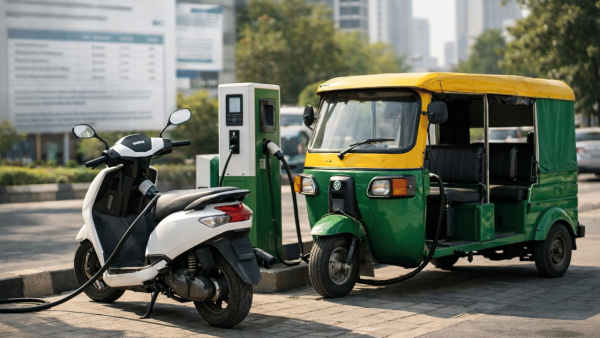
New Delhi: The government has revised its PM E-Drive scheme, tweaking both the timelines and eligibility rules for electric vehicle subsidies. The changes affect electric two-wheelers and three-wheelers, and are aimed at keeping EV adoption moving while slowly pulling back on financial support.
The scheme is fund-limited meaning if the money runs out before the deadline, the subsidies stop. So buyers should not assume the window will stay open until the last date. Electric two-wheelers registered on or before July 31, 2026 will be eligible for subsidies. Three-wheelers including e-rickshaws and e-carts get a longer window, with incentives running until March 31, 2028.
Subsidy structure and limits
The government has also adjusted the subsidy amounts. Electric two-wheelers will get Rs 2,500 per kWh, capped at Rs 5,000 per vehicle. The ex-factory price of the vehicle must not exceed Rs 1.5 lakh to qualify. Three-wheelers get Rs 2,500 per kWh as well, capped at Rs 12,500 per vehicle. The scheme is targeting support for around 24.79 lakh electric two-wheelers and over 39,000 electric three-wheelers.
What it means for buyers
The extended timeline means people now have more time to buy an electric vehicle with government support, which helps bring down the initial cost. But since the scheme has limited funds, the subsidy could stop earlier if the budget runs out.
Though, the government is also working on improving public charging stations and adding more electric buses. This could make using an EV easier over time.
The subsidy itself is also being reduced compared to earlier phases. This shows that the government is slowly moving towards a system where EV sales depend less on incentives and more on better pricing, improved infrastructure, and growing public acceptance.
Contact to : xlf550402@gmail.com
Copyright © boyuanhulian 2020 - 2023. All Right Reserved.