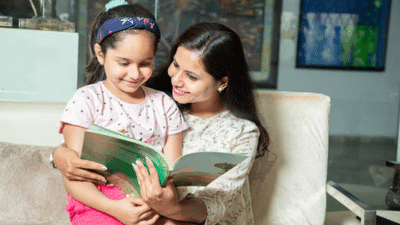
These are big words. Privilege . Diversity. Inclusion . The kind of words children usually hear in school presentations, corporate workshops, or Instagram posts with pastel backgrounds.
But the actual learning of these things does not happen in workshops.
It happens at the dining table. In the car. As we speak of neighbours, relatives, classmates, house help, drivers, people on news, people in movies.
In a nutshell, children are taught how to perceive the world based on how the adults discuss other people.
There is no parent who sits and defines privilege to a ten-year-old child. But children slowly understand it in very simple ways.
They notice who lives in big houses and who doesn’t.
They notice who speaks English confidently and who is scared to.
They notice who gets treated politely in shops and who gets ignored.
They notice who sits at the table and who eats in the kitchen.
They notice which jobs are spoken about with pride and which jobs are spoken about with sympathy.
Children are extremely observant about social differences. Much more than adults realise. The only question is whether they grow up understanding these differences with empathy or with superiority.
That depends almost entirely on how adults talk at home.
If children constantly hear things like, “These people are like that only,” or “That’s not our type of people,” or “Only uneducated people do those jobs,” they slowly build a mental map of the world where some people matter more than others.
Nobody officially teaches discrimination. It is usually learned through casual conversation.
On the other hand, if children grow up hearing things like, “Every job deserves respect,” “Everyone’s life is different,” “We are lucky to have certain opportunities,” “Not everyone gets the same start in life,” they slowly grow up understanding something very important without anyone using the word privilege.
Privilege is actually a very simple idea.
It just means some people start the race a little ahead of others.
Some children grow up in houses full of books. Some grow up in houses where nobody had the chance to go to college. Some children have tutors for every subject. Some children are teaching themselves from YouTube. Some children never worry about fees. Some children are constantly worried about fees.
This doesn’t mean one child is better than another. It just means life is not starting from the same line for everyone.
If children understand this early, they grow up less arrogant when they succeed and less ashamed when they struggle. They understand that life is not only about individual effort. It is also about opportunity, environment, and luck.
Inclusion, then, becomes a very simple thing.
Include the child who speaks differently.
Include the child who cannot afford the same things.
Include the child who is quiet.
Include the new student.
Include the person nobody is talking to.
These conversations don’t need big speeches. They just need small, honest conversations when situations come up.
Because children are already forming opinions about people, class, language, money, and status. The only question is whether they form those opinions with kindness and understanding, or with judgement and superiority.
And that depends a lot on what they hear at home when adults think they are not listening.
Contact to : xlf550402@gmail.com
Copyright © boyuanhulian 2020 - 2023. All Right Reserved.