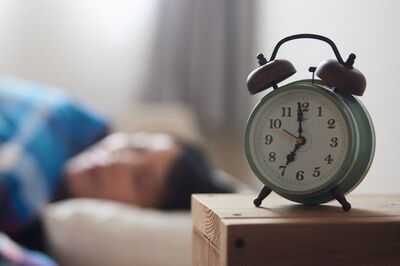
The UK is preparing to have less sleep this weekend, as the clocks are set to go forward. However, little you may know, there's a simple change you can make to stop experiencing "jet lag" as we prepare to get less sleep, and it's easier than you think to manage as we step into summer.
Professor of Neuroscience Rob Lucas, from Manchester University, recently explained there's a simple thing we can do to help our body clocks adjust. After all, it's normal to feel out of sorts when the clocks change, but there's no need to let it take a toll on your health.
It comes after another handyhack was shared too. Doctor Amir Khanrecently revealed how to get back to sleep easily if you want to have a lie in.
- Doctor Amir Khan wants people who 'feel tired all the time' to take a blood test
- Major new health warning for anyone going on holiday - full list of countries
The university recently shared a clip on TikTok where Professor Lucas explained how we can best adjust to the changes. When asked what he does to cope, he said: "It's really simple.
"We have inside our body an inherent sense of biological time, and that has to be reset to what we define as the right time of day, and the way that our body clock knows what time of day it is by experiencing light, and bright light as much as possible.
"If you want to start to get up earlier in the morning, the thing to do is to get up and expose yourself to natural daylight as much as possible first thing in the morning."
He also noted the clock change happens over Saturday night for a reason, adding: "Mostly, that's the time - Saturday/Sunday - when people have most flexibility over their schedule. Take advantage of that flexibility.
"Not by ignoring the clock change, but by making Sunday the first day that you respond to the clock change and then, by the time you get to Monday, you'll be a good way forward through that process of adjusting to the new time."
As Professor Lucas is the Director of the Centre for Biological Timing, he's someone you should pay attention to. In fact, there's a big reason why you should expose yourself to sunlight on Sunday.
How to adjust to clocks going forwardOne of the biggest things you can do to adjust to clocks going forward is by keeping the bedroom dark at night, but then increasing exposure to bright, natural sunlight in the morning to help reset your internal clock.
Morning sunlight is especially important, as this will help your body adjust to the new time. The shift to Daylight Saving Time (DST) disrupts your internal body clock (circadian rhythm) because it effectively creates darker mornings and lighter evenings.
Morning light acts as the primary cue to reset this clock, which allows you to feel more awake earlier and fall asleep at the correct time in the evening.
Morning light exposure helps overcome the "lost hour" and improves alertness throughout the day. Generally, it's advised people spend around 15 minutes outside within the first 30 to 60 minutes of waking on Sunday, as well as the days after, to help adjust well.
When the clocks go forward, people often experience symptoms similar to jet lag. Even though no travelling is involved, the sudden one-hour shift disrupts the body's internal clock (circadian rhythm), creating a phenomenon often referred to as "social jet lag".
Contact to : xlf550402@gmail.com
Copyright © boyuanhulian 2020 - 2023. All Right Reserved.