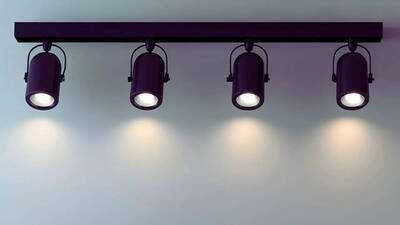
How lighting in home impacts mood, stress level and emotional balance
For a long time, Indian homes and commercial spaces treated lighting as a finishing layer, selecting it only after making real design decisions. That view no longer aligns with contemporary lighting science or evolving user expectations. Today, lighting is a powerful design force that shapes how a space looks, feels, and functions. Light influences human physiology, mood, and behaviour affecting not just visibility but experience. As Indian lifestyles become increasingly indoor and urban, lighting decisions are a more strategic and fundamental element of modern design.
Light Regulates Human Performance
Chronobiology research confirms that the body responds directly to light exposure. The circadian system depends on changes in intensity and colour temperature to regulate sleep cycles, alertness, hormone release, and cognitive performance. Bright, cooler light in the morning supports focus. Warmer, lower-intensity light in the evening signals rest. When indoor environments ignore this rhythm, the result is fatigue, restless sleep, and elevated stress. This issue is not a theoretical concern. It is increasingly visible in the way urban populations report persistent tiredness despite adequate sleep duration.
Lighting That Calms, Connects, and Transforms Spaces
In many projects, the issue is not insufficient lighting but poor calibration. Excessive glare, high contrast ratios, and uniformly bright ceilings keep the eye and brain in constant adjustment, leading to cognitive fatigue. Comfort is often mistaken for brightness. In reality, balance comes from controlled luminance, precise beam distribution, and layered lighting . When aligned, a space feels visually improved and comfortable. effortless and mentally calming. Users may not identify the technical cause, but they sense reduced strain
Light affects us far more deeply than most people realize. In Japan, the East Japan Railway Company began installing blue LED lights at the ends of platforms along the Yamanote Line in 2009 with a clear purpose: reducing suicide incidents. A peer-reviewed study examining ten years of data across 71 stations found that this simple intervention was linked to an approximately 84% drop in platform suicides. Importantly, there was no indication that individuals simply moved to nearby stations. Researchers attribute this effect to the calming, mood-regulating effects of blue wavelengths. Similar strategies have since been adopted in Scotland, England, Belgium, and New York’s transit system. It stands as a powerful example that light is more than a tool for visibility, it can influence human emotions, even in moments of extreme vulnerability.
The Market Is Shifting Toward Human-Centric Lighting
India’s premium residential, hospitality, and commercial segments are evolving. Clients ask informed questions. Architects integrate circadian principles early. Developers recognise that lighting quality influences perceived luxury and occupant wellbeing.
This year marks the transition from utility-led to human-centric lighting. Key design responses driving this shift include:
This evolution is not about making spaces dimmer or more dramatic. It is about making them physiologically and visually appropriate.
From Technology Availability to Design Intelligence
The industry has access to highly efficient LEDs, advanced optics, and increasingly sophisticated control systems. From a technology standpoint, the tools required to create responsive lighting environments are largely in place. The gap, however, often lies in application. Human-centric lighting demands technical discipline, correct lux planning, high colour rendering, glare management, and precise fixture placement. Without this rigour, even premium installations can underperform from a comfort standpoint.Light is increasingly viewed as a biological nutrient, as essential as sleep or nutrition. Tunable LED systems now adjust colour temperature and brightness through the day, promoting alertness in the morning and supporting melatonin production in the evening. With IoT integration, lighting responds to occupancy, daylight levels, and user behaviour. Full-spectrum systems mimicking natural sunlight are being deployed in healthcare and office environments to address conditions such as Seasonal Affective Disorder, with measurable improvements in mood and cognition. The next frontier is personalisation of the lighting industry is the ability to combine design intelligence, technical rigour, and contextual planning into lighting ecosystems that genuinely enhance human experience.
Looking Ahead
India is entering a phase where lighting will be evaluated not only on efficiency, but on its impact on wellbeing. As awareness of sleep quality and mental load grows, lighting will move closer to the centre of architectural decision-making. The industry must move beyond treating lighting as a commodity or décor accessory. It is a critical enabler of healthier, responsive built environments and how well people within a space can live, work, focus, and restore.
By Ranbir Mehra, Director – Lighting, Jaquar Group
Light Regulates Human Performance
Chronobiology research confirms that the body responds directly to light exposure. The circadian system depends on changes in intensity and colour temperature to regulate sleep cycles, alertness, hormone release, and cognitive performance. Bright, cooler light in the morning supports focus. Warmer, lower-intensity light in the evening signals rest. When indoor environments ignore this rhythm, the result is fatigue, restless sleep, and elevated stress. This issue is not a theoretical concern. It is increasingly visible in the way urban populations report persistent tiredness despite adequate sleep duration.
Lighting That Calms, Connects, and Transforms Spaces
In many projects, the issue is not insufficient lighting but poor calibration. Excessive glare, high contrast ratios, and uniformly bright ceilings keep the eye and brain in constant adjustment, leading to cognitive fatigue. Comfort is often mistaken for brightness. In reality, balance comes from controlled luminance, precise beam distribution, and layered lighting . When aligned, a space feels visually improved and comfortable. effortless and mentally calming. Users may not identify the technical cause, but they sense reduced strain
Light affects us far more deeply than most people realize. In Japan, the East Japan Railway Company began installing blue LED lights at the ends of platforms along the Yamanote Line in 2009 with a clear purpose: reducing suicide incidents. A peer-reviewed study examining ten years of data across 71 stations found that this simple intervention was linked to an approximately 84% drop in platform suicides. Importantly, there was no indication that individuals simply moved to nearby stations. Researchers attribute this effect to the calming, mood-regulating effects of blue wavelengths. Similar strategies have since been adopted in Scotland, England, Belgium, and New York’s transit system. It stands as a powerful example that light is more than a tool for visibility, it can influence human emotions, even in moments of extreme vulnerability.
The Market Is Shifting Toward Human-Centric Lighting
India’s premium residential, hospitality, and commercial segments are evolving. Clients ask informed questions. Architects integrate circadian principles early. Developers recognise that lighting quality influences perceived luxury and occupant wellbeing.
This year marks the transition from utility-led to human-centric lighting. Key design responses driving this shift include:
- Layered lighting schemes instead of single-source illumination
- Greater use of indirect and glare-controlled fixtures
- Tunable white systems that align with time-of-day needs
- Scene-based controls that support multiple use cases within the same space
This evolution is not about making spaces dimmer or more dramatic. It is about making them physiologically and visually appropriate.
From Technology Availability to Design Intelligence
The industry has access to highly efficient LEDs, advanced optics, and increasingly sophisticated control systems. From a technology standpoint, the tools required to create responsive lighting environments are largely in place. The gap, however, often lies in application. Human-centric lighting demands technical discipline, correct lux planning, high colour rendering, glare management, and precise fixture placement. Without this rigour, even premium installations can underperform from a comfort standpoint.Light is increasingly viewed as a biological nutrient, as essential as sleep or nutrition. Tunable LED systems now adjust colour temperature and brightness through the day, promoting alertness in the morning and supporting melatonin production in the evening. With IoT integration, lighting responds to occupancy, daylight levels, and user behaviour. Full-spectrum systems mimicking natural sunlight are being deployed in healthcare and office environments to address conditions such as Seasonal Affective Disorder, with measurable improvements in mood and cognition. The next frontier is personalisation of the lighting industry is the ability to combine design intelligence, technical rigour, and contextual planning into lighting ecosystems that genuinely enhance human experience.
Looking Ahead
India is entering a phase where lighting will be evaluated not only on efficiency, but on its impact on wellbeing. As awareness of sleep quality and mental load grows, lighting will move closer to the centre of architectural decision-making. The industry must move beyond treating lighting as a commodity or décor accessory. It is a critical enabler of healthier, responsive built environments and how well people within a space can live, work, focus, and restore.
By Ranbir Mehra, Director – Lighting, Jaquar Group
Contact to : xlf550402@gmail.com
Copyright © boyuanhulian 2020 - 2023. All Right Reserved.