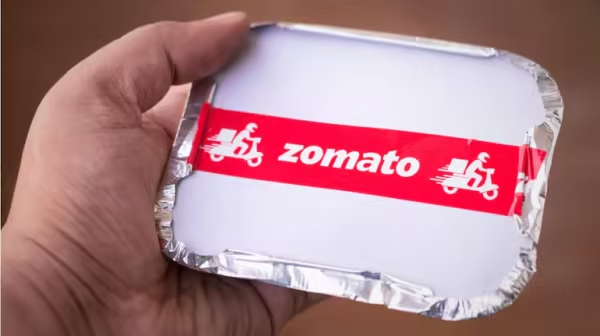
If you felt your last food order was slightly more expensive, you’re not imagining it.
Zomato has increased its platform fee to ₹14.9 per order from ₹12.5—a nearly 19% jump. While the number may seem small in isolation, it reflects a much bigger story unfolding behind the scenes of India’s booming food delivery market.
From rising fuel prices to supply chain disruptions, the economics of your favourite late-night order are changing—and fast.
Credits: Bussiness
The Real Reason Behind the Hike
At the heart of this move lies a familiar culprit: rising crude oil prices.
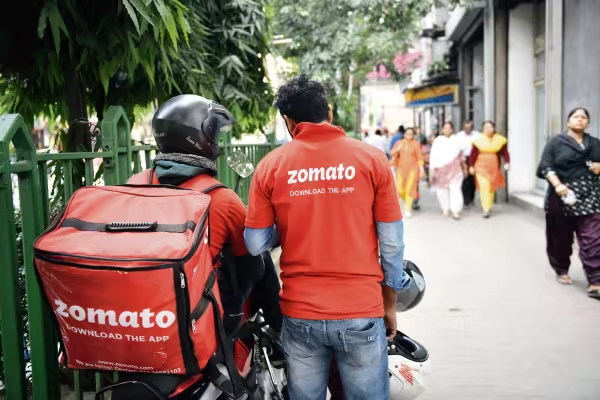
Delivery platforms like Zomato run on tight margins, and fuel costs are a critical part of their operations. When crude prices rise, delivery becomes more expensive, directly impacting the earnings of delivery partners and the platform’s overall cost structure.
But that’s not the only pressure point.
Restaurants are also feeling the heat. LPG supply disruptions have made kitchen operations more unpredictable, increasing costs and occasionally affecting output. When both supply (restaurants) and logistics (delivery) are under stress, platforms are left with limited options—one of which is passing on some of the burden to users.
Swiggy vs Zomato: The Pricing Chess Game
Interestingly, this isn’t just about costs—it’s also about competition.
With the new fee, Zomato has almost perfectly matched rival Swiggywhich charges ₹14.99 per order.
This signals a subtle but important shift. Instead of competing aggressively on pricing, both giants are now aligning toward similar fee structures. The era of deep discounting and price wars is gradually giving way to a more mature, profitability-focused approach.
For consumers, that means fewer “cheap order” hacks and more standardized pricing across platforms.
The Silent Impact on Your Wallet
Let’s be honest—₹2.4 extra per order doesn’t sound like much.
But stack it with delivery charges, surge fees, packaging costs, and higher menu prices, and suddenly your ₹200 meal starts inching closer to ₹300.
For frequent users—students, professionals, and late-night snackers—this incremental increase can quietly add up over weeks and months.
It also raises a bigger question: how much are we willing to pay for convenience?
Investors Are Loving It
While customers may feel the pinch, the stock market is cheering.
Shares of Zomato’s parent, Eternal Ltdrose nearly 2% to ₹233 following the update—signaling investor confidence in the company’s strategy.
Brokerage giant JM Financial has even gone a step further, urging investors to “aggressively accumulate” the stock with a 12–18 month outlook.
Why the optimism?
A big reason is Blinkit—Zomato’s quick commerce arm—which analysts believe could become a major growth engine once macroeconomic conditions stabilize.
Not All Smooth Sailing
That said, the road ahead isn’t entirely clear.
According to Kotak SecuritiesLPG supply disruptions are already impacting restaurants, which could temporarily reduce food delivery volumes.
Interestingly, Swiggy may face a bigger hit from these challenges, giving Zomato a slight competitive edge in the near term.
Add to this global uncertainties—like geopolitical tensions and shifting tech trends—and the industry finds itself navigating a complex, ever-evolving landscape.
Credits: Mint
The Bigger Shift: From Growth to Profit
What we’re witnessing isn’t just a price hike—it’s a mindset shift.
For years, food delivery platforms chased growth at any cost, offering heavy discounts to win users. But now, the focus has clearly shifted toward profitability and sustainability.
Zomato’s fee increase is a signal that the industry is growing up.
For users, it means slightly higher bills. For companies, it means healthier balance sheets. And for investors, it could mark the beginning of a more stable and predictable growth phase.
The only question that remains: will customers continue to pay for convenience—or start cooking more often?
Contact to : xlf550402@gmail.com
Copyright © boyuanhulian 2020 - 2023. All Right Reserved.