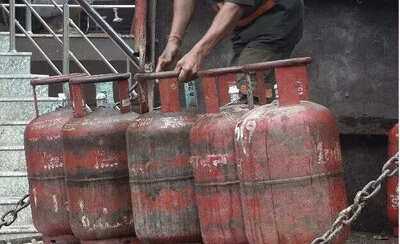
Guwahati, March 19: The ongoing challenges with LPG supply in Assam are starting to affect community kitchens that serve thousands daily in Guwahati.
At the Kamakhya Temple, the daily Anna Seva continues to attract large crowds, but organizers are facing new hurdles behind the scenes.
“Initially, as the crisis unfolded, sourcing cylinders became a significant challenge. We had to reduce the variety of items in the bhog and adjust accordingly,” explained Kabin Sarma, the ‘Bor Doloi’ of the temple management committee.
This kitchen provides meals such as khichdi, sabji, payas, papad, and even sooji and poori-bhaji at no cost, serving approximately 3,000 individuals on weekdays and up to 4,500 on weekends.
“We require at least three cylinders daily,” stated Anna Seva supervisor Barada Gayan.
Other food service programs are also feeling the pressure. The Khalsa Centre North East, which offers meals to patients and their families at the Dr B Borooah Cancer Institute every Wednesday, is struggling with both supply shortages and rising costs.
“In the black market, cylinder prices surged to Rs 3,000. We need around 10 to 12 cylinders monthly, which is extremely challenging at that price,” said Jaswinder Singh, the organization's president. “We had to reach out to the community to secure cylinders to maintain our service.”
The Touchstone Foundation of the Hare Krishna Movement, which provides large-scale meal programs in hospitals, reported no immediate crisis but noted that improved supply would ease concerns. They serve about 1,000 people daily at Gauhati Medical College and Hospital and another 500 at the Dr B Borooah Cancer Institute, making them a vital food support system for patients and caregivers.
While operations continue, sources from various initiatives expressed worry about the situation. Many organizations, wishing to remain anonymous, have already contacted government agencies to request measures to stabilize LPG supply and prevent further disruptions.
At the Sri Guru Singh Sabha Gurudwara, known as the Fancy Bazar Gurudwara, where langar serves around 1,000 to 1,500 people weekly, operations are stable for now.
“Currently, we are managing, but our needs will grow as we plan to expand the langar. If supply issues continue, it could become challenging,” said committee president Bhupinder Pal Singh.
In contrast, larger institutional kitchens seem to be less affected. The Akshaya Patra Foundation, which runs centralized kitchens in Guwahati and Jorhat serving over 40,000 schoolchildren, has reported no disruptions thus far.
“So far, everything is running smoothly. LPG is a minor part of our needs since most cooking is done using boilers and biogas,” noted Vijaya Pandit Dasa, vice-president (North East) of the foundation.
This situation underscores a significant disparity. While larger, organized supply chains can manage short-term fluctuations, smaller, community-based kitchens are much more susceptible to fuel supply disruptions.
For the many who rely on these kitchens—ranging from pilgrims and patients to the urban poor—the continuity of meals is crucial. For those managing these kitchens, a consistent fuel supply and assurance of availability are vital.
Contact to : xlf550402@gmail.com
Copyright © boyuanhulian 2020 - 2023. All Right Reserved.