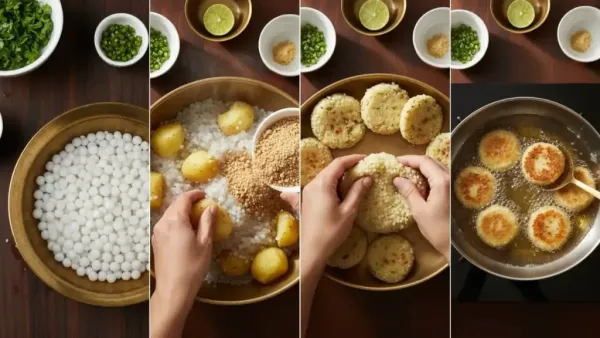
Sabudana Tikki: The holy time of Navratri is here once again, and with it comes the tradition of fasting and enjoying special fruit dishes. During these nine days, when we are engrossed in the devotion of Goddess Durga, we often feel like eating something that is not only filling, but also tastes great and provides us with energy. In such a situation, Sabudana Tikki is a great option. It is crispy on the outside and soft on the inside, and is very easy to make.
Today we are going to share with you a recipe for making Sabudana Tikki, which will make your fasting meal even more fun. It is so delicious that even those who do not keep fast will gobble it up! It is not only easy to make, but is also made from ingredients that are easily available in every household in India.

Sabudana Tikki recipe
Ingredients
- 1 cup Sago medium sized
- 2 medium sized Potato boiled and mashed
- ¼ cup Roasted Peanut Powder coarsely ground
- 2-3 Green chilly Finely chopped, as per your taste
- 1 inch piece Ginger:
- 2 tablespoons green coriander finely chopped
- 1 big spoon lemon juice
- rock salt as per taste
- ½ small spoon freshly ground black pepper
- oil or ghee to fry
Instructions
Step 1: Soaking the Sago
- The first and most important step is to soak the sago properly. Take 1 cup medium sized sago and wash it thoroughly with water 2-3 times. This will help remove excess starch and prevent the tikkis from becoming sticky. After washing, spread the sago in a wide vessel. Now add just enough water to submerge the sago just a little (the water level should be about ½ inch above the level of the sago). Soak it for 4-5 hours or overnight.

Step 2: Prepare Ingredients
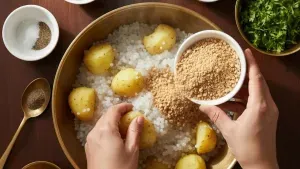
- When the sago swells well, take it out in a big bowl. Make sure there is no excess water; If it is, then squeeze it gently. Now add 2 medium sized boiled and mashed potatoes into it. Also add ¼ cup coarsely ground roasted peanut powder, 2-3 finely chopped green chillies, 1 inch grated ginger, and 2 tablespoons finely chopped coriander. Finally, add rock salt and ½ tsp black pepper powder as per taste. Collecting all the ingredients in one place makes the making process easier.
Step 3: Mix the mixture well
- Now start mixing all the ingredients well with your hands. It is important to ensure that all the spices and ingredients mix well with the sago and potatoes. Keep kneading and mixing the mixture until it becomes a soft dough. It may be a little sticky, but don’t worry, this is normal. If the mixture seems too sticky, you can add 1-2 tbsp water chestnut flour or rajgira flour.
Step 4: Shape the tikkis
- Now grease your palms with a little oil or ghee so that the mixture does not stick. Take a small portion of the prepared mixture and press it between your palms and give it a round shape. Then flatten it a little and give it the shape of a tikki. You can make small or big tikkis as per your choice. Make sure that the edges of the tikki are smooth and there are no cracks, as cracks may cause the tikki to break while frying. Prepare all the tikkis in the same manner and keep them in a plate. This is the most fun part of making tikkis, where you can showcase your creativity!
Step 5: Fry the Tikkis
- Heat enough oil or ghee in a heavy-bottomed kadai or non-stick pan to deep fry or shallow fry the tikkis. Let the oil heat on medium flame. When the oil is hot enough (you can test by dropping a small piece in the oil, if it immediately rises up and starts forming bubbles then the oil is ready), carefully drop the tikkis into the hot oil, one by one.
- Do not overfill the pan with tikkis, as this will drop the temperature and the tikkis will not become crispy. Fry the tikkis until golden brown and crisp. Keep turning them occasionally so that they cook evenly from both sides. This should take about 4-6 minutes per batch. When the tikkis become golden and crisp, remove them from the oil and place on an absorbent paper to remove excess oil.

Step 6: Serve hot
- Your delicious and crispy Sabudana Tikki is now ready to serve! Serve it hot with green coriander and curd chutney (vrat wali) or mint chutney. Some people also like it with sweet chutney. If you want, you can also squeeze a little lemon juice on top, which will further enhance its taste. This tikki is so delicious that it can be eaten even without any chutney. It is a great way to satiate your hunger and give you energy during Navratri fast. So, your hard work has paid off and you have prepared a wonderful fruit dish!

Notes
Method of soaking sago: The amount of water is very important while soaking sago. Too much water will make the sago sticky, and too little water will leave it tough. Always add enough water that the sago is just slightly submerged. If the sago is not soaked properly, the tikkis will not become crispy and may remain raw from inside. You can squeeze out the excess water in the morning, after soaking overnight.
Selecting and Boiling Potatoes: Selecting the right potatoes for tikkis is also important. Starchy potatoes such as jyoti or chipsona (readily available in India) are best, as they bind the mixture well. Do not boil the potatoes too much, as they will absorb water and make the mixture sticky. Boil the potatoes just until they become soft and can be mashed easily. Let the boiled potatoes cool completely, then peel and mash them. Adding hot potatoes can also cause the mixture to become sticky.
Peanut Magic: Roasted and coarsely ground peanuts add a wonderful flavor and crunch to the tikkis. Roast the peanuts, cool them, then grind them coarsely in a mixer. Do not powder it too finely, as coarseness gives a better texture to the tikki. It also helps bind the tikkis and imparts a nutty flavour.
Oil Temperature: The temperature of the oil is very important while frying tikkis. If the oil is too cold, the tikkis will absorb too much oil and become soggy. If the oil is too hot, the tikki will burn from outside and remain raw from inside. Fry the tikkis in medium hot oil and keep the flame medium. With this, the tikki will be cooked from inside and will become golden and crispy from outside.
For refreshing flavour: You can enhance the taste by adding some more things to the tikki mixture. For example, 1/2 tsp roasted cumin powder, a little red chili powder (if you like spicy), or grated carrot (something some people eat during fasting). Mint leaves can also be added along with coriander leaves, which will give a refreshing taste. Adding lemon juice at the end gives a sourness to the tikki which further enhances its taste.
The post Navratri Special Sabudana Tikki, Crisp and Spicy during Vrat appeared first on NewsUpdate.
Contact to : xlf550402@gmail.com
Copyright © boyuanhulian 2020 - 2023. All Right Reserved.