
Listen to this article in summarized format
Loading...
××
Subscribe to

Unlock AI Briefing and Premium Content
New Year Offer 24 Hours Left
Subscribe NowAlready a member? Sign In
What's Included
- Exclusive Stories
- Daily ePaper Access
- Smart Market Tools
- Curated Investment Ideas
- Ad-lite Experience
Subscription

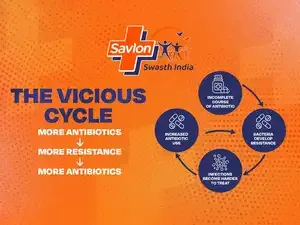
Imagine a familiar scenario in a modern household. A child develops a sudden fever. Instead of immediately consulting a doctor, the first reaction is often a quick trip to the local pharmacy. We ask for the same antibiotic that worked last year, or we reach for a leftover strip from the medicine cabinet. When the fever drops a few days later, we stop the medication halfway. While these actions seem like harmless shortcuts, they are quietly fueling one of the most significant health challenges of our time. Antibiotics are losing their effectiveness, and the germs are growing stronger.
This reality is the focus of a recent episode of Savlon Swasth India Mission’s The Doc’s Pod. Hosted by journalist Faye D’Souza, the episode features Dr. Vijay Yewale, Consultant Paediatrician at Apollo Hospitals. The podcast decodes the growing threat of antimicrobial resistance (AMR) and explains why the fight against germs must begin inside our homes.
The rise of community-level resistance
It is a common misconception that antimicrobial resistance is strictly a hospital problem. AMR has established itself in our communities as well. When antibiotics are used indiscriminately, the medication wipes out the body's vulnerable bacteria. This leaves behind only the tougher, more resistant strains, allowing them to survive, multiply, and pass into the environment.
Treating a standard viral infection with an antibiotic does absolutely nothing to cure the illness, but it harms the wider community by actively breeding resistance.
Rethinking daily care and common illnesses
Reversing this trend requires unlearning several deep-rooted habits. To protect the efficacy of our medicines, parents must reconsider how they handle everyday ailments:
Preventing infections with the SHAKE formula
A powerful weapon against antimicrobial resistance is incredibly simple - if an infection is prevented, the need for an antibiotic is controlled.
To help families easily integrate protective habits, there is a simple formula - S.H.A.K.E. formula. This memorable checklist empowers parents to secure their household:
Since 2016, ITC's Savlon Swasth India Mission has touched the lives of over 14 million children with its innovative outreach and is one of the largest hand hygiene education programmes run globally. This ongoing initiative has effectively instilled hand hygiene practices among primary school students, demonstrating tangible results leading to habit change.
As per the Kantar impact report in March 2024 commissioned to assess impact for the Savlon Swasth India Mission in select centres, it was observed that there is an increase in overall handwashing occasions by children who have attended the programme. Mothers also perceived their child’s health to have gotten better post the campaign which points to the initiative’s role in increasing awareness about handwashing. The study also reports on higher compliance to handwashing occasions by children who had been a part of the program. The school initiative has also generated conversations where children are discussing the initiative and mothers are discussing the improvements in their child’s handwashing habits and the program benefits.
With a focus on innovation in design and communication, the mission has introduced various initiatives such as Savlon Healthy Hands Chalk Sticks, Savlon ID Guard, and the recent Hand Ambassador and Handwashing Legend campaigns, all aimed at fostering education and promoting good hygiene habits.
Savlon Swasth India is a mission towards ensuring the good health of all our children and thus enhancing their performance to shape the future of a billion dreams. Healthier kids, stronger India.
Disclaimer: The views/suggestions/opinions should not be considered a substitute for medical advice. Please consult your treating physician for more details. This article has been produced on behalf of Savlon Swasth India Mission by Times Internet’s Spotlight team.
This reality is the focus of a recent episode of Savlon Swasth India Mission’s The Doc’s Pod. Hosted by journalist Faye D’Souza, the episode features Dr. Vijay Yewale, Consultant Paediatrician at Apollo Hospitals. The podcast decodes the growing threat of antimicrobial resistance (AMR) and explains why the fight against germs must begin inside our homes.
The rise of community-level resistance
It is a common misconception that antimicrobial resistance is strictly a hospital problem. AMR has established itself in our communities as well. When antibiotics are used indiscriminately, the medication wipes out the body's vulnerable bacteria. This leaves behind only the tougher, more resistant strains, allowing them to survive, multiply, and pass into the environment.
Treating a standard viral infection with an antibiotic does absolutely nothing to cure the illness, but it harms the wider community by actively breeding resistance.
Rethinking daily care and common illnesses
Reversing this trend requires unlearning several deep-rooted habits. To protect the efficacy of our medicines, parents must reconsider how they handle everyday ailments:
- Treating minor wounds: Simple cuts and scrapes are frequently treated with over-the-counter topical antibiotic creams - this practice is wrong. Wounds should be cleaned with an antiseptic liquid to prevent infection and antibiotics should be used only after medical consultation.
- Managing fevers: A fever is not always an immediate emergency; it is the body’s natural response actively fighting an infection. Providing paracetamol to manage a child’s discomfort is acceptable, but demanding an antibiotic for every sore throat or runny nose is not necessary. Parents should consult a doctor to decide the plan of action to solve the sickness.
A powerful weapon against antimicrobial resistance is incredibly simple - if an infection is prevented, the need for an antibiotic is controlled.
- S - Sanitise surfaces often: Keep high-touch areas and objects disinfected to reduce the spread of germs in the home.
- H - Hand wash regularly: Washing hands thoroughly with handwash for 20 seconds is one of the most effective ways to break the chain of infection.
- A - Avoid self-medication: Never purchase antibiotics over the counter. Medication should be consumed only after consulting a doctor.
- K - Keep wounds clean: Use an antiseptic liquid on minor abrasions to clean the wound.
- E - Eat fresh and healthy food: Building immunity from the inside out with proper nutrition and safe, hygienic food preparation.
Since 2016, ITC's Savlon Swasth India Mission has touched the lives of over 14 million children with its innovative outreach and is one of the largest hand hygiene education programmes run globally. This ongoing initiative has effectively instilled hand hygiene practices among primary school students, demonstrating tangible results leading to habit change.
As per the Kantar impact report in March 2024 commissioned to assess impact for the Savlon Swasth India Mission in select centres, it was observed that there is an increase in overall handwashing occasions by children who have attended the programme. Mothers also perceived their child’s health to have gotten better post the campaign which points to the initiative’s role in increasing awareness about handwashing. The study also reports on higher compliance to handwashing occasions by children who had been a part of the program. The school initiative has also generated conversations where children are discussing the initiative and mothers are discussing the improvements in their child’s handwashing habits and the program benefits.
With a focus on innovation in design and communication, the mission has introduced various initiatives such as Savlon Healthy Hands Chalk Sticks, Savlon ID Guard, and the recent Hand Ambassador and Handwashing Legend campaigns, all aimed at fostering education and promoting good hygiene habits.
Savlon Swasth India is a mission towards ensuring the good health of all our children and thus enhancing their performance to shape the future of a billion dreams. Healthier kids, stronger India.
Disclaimer: The views/suggestions/opinions should not be considered a substitute for medical advice. Please consult your treating physician for more details. This article has been produced on behalf of Savlon Swasth India Mission by Times Internet’s Spotlight team.
(This article is generated and published by ET Spotlight team. You can get in touch with them on etspotlight@timesinternet.in)