
Listen to this article in summarized format
Loading...
××
Subscribe to

Unlock AI Briefing and Premium Content
New Year Offer 24 Hours Left
Subscribe NowAlready a member? Sign In
What's Included
- Exclusive Stories
- Daily ePaper Access
- Smart Market Tools
- Curated Investment Ideas
- Ad-lite Experience
Subscription

Raising a child in today's unpredictable climate requires more than just traditional parenting methods. With fluctuating air quality and erratic weather patterns becoming the norm, families are facing a new set of daily challenges [1]. Changing weather poses a challenge to the developing immunity system of a child. Recurring infections can overburden the immunity even further.
The modern parenting goal has evolved well beyond merely treating seasonal sniffles. Today, the focus is on equipping children with the biological strength to thrive regardless of external environmental stressors. This shift transforms basic cleanliness to a strategic tool for physical empowerment.
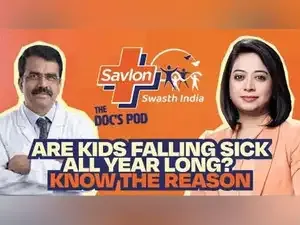
By integrating science-backed hygiene practices into a child's everyday life, parents can establish a robust foundation for enduring health. This proactive philosophy is the central theme of The Doc’s Pod, a podcast initiative by Savlon Swasth India Mission. Hosted by journalist Faye D’Souza, the programme is aimed to help families navigate the complex relationship between a changing environment and childhood wellness. Hygiene should be viewed as an essential life skill. When parents prioritize these daily habits, they invest in their children’s long-term developmental potential.
The climate change: Immunity connection
A child’s immune system is still ‘under construction’ and typically only reaches full maturity between the ages of seven and eight. When young bodies are constantly forced to battle environmental stressors and contaminated surfaces or polluted air, they have to divert vital energy away from growth to focus on immune defence and recovery.
By maintaining a cleaner personal ecosystem through the regular use of handwash, laundry disinfectant, and antiseptic liquid, families can significantly lower this germ load. This proactive reduction in germ exposure allows a child’s internal resources to remain focused on what truly matters: cognitive development. Studies show that a rigorous 20-second handwashing routine can lower the risk of respiratory illnesses by roughly 21% [2].
Creating a dynamic defence system
Savlon Swasth India Mission encourages families to transition their mindset from fear-based protection to skill-based empowerment. When children understand these routines as pathways to independence, they adopt the habits much more willingly.
To help parents easily implement these medical insights, Savlon Swasth India Mission Podcast breaks down the advice into a memorable acronym known as the SHAKE formula. This simple mental checklist helps families build a high-performance health culture at home:
Empowering the next generation
While we cannot control the changing climate or city pollution, we have complete control over the environment within our homes. By embedding these protective rituals into daily life, parents can foster true resilience, giving their children the freedom to explore without hesitation. Savlon Swasth India Mission reinforces that when hygiene is treated as a fundamental life skill, it secures a child's fundamental right to an active, joyful, and uninterrupted childhood.
About Savlon Swasth India Mission
Savlon Swasth India Mission believes in hygiene as the cornerstone of prevention. In a climate-stressed world, these everyday actions are not just about cleanliness. They give children’s immune systems the space they need to grow stronger, rather than constantly fighting the next infection.
Since 2016, ITC's Savlon Swasth India Mission has touched the lives of over 14 million children with its innovative outreach and is one of the largest hand hygiene education programmes run globally. This ongoing initiative has effectively instilled hand hygiene practices among primary school students, demonstrating tangible results leading to habit change.
As per the Kantar impact report in March 2024 commissioned to assess impact for the Savlon Swasth India Mission in select centres, it was observed that there is an increase in overall handwashing occasions by children who have attended the programme. Mothers also perceived their child’s health to have gotten better post the campaign which points to the initiative’s role in increasing awareness about handwashing. The study also reports on higher compliance to handwashing occasions by children who had been a part of the program. The school initiative has also generated conversations where children are discussing the initiative and mothers are discussing the improvements in their child’s handwashing habits and the program benefits.
With a focus on innovation in design and communication, the mission has introduced various initiatives such as Savlon Healthy Hands Chalk Sticks, Savlon ID Guard, and the recent Hand Ambassador and Handwashing Legend campaigns, all aimed at fostering education and promoting good hygiene habits.
Savlon Swasth India is a mission towards ensuring the good health of all our children and thus enhancing their performance to shape the future of a billion dreams. Healthier kids, stronger India!
References:
[1] UNICEF Report on Child Health: The Climate-Changed Child - UNICEF
[2] CDC Handwashing Facts & Statistics: Centers for Disease Control and Prevention
Disclaimer: The views/suggestions/opinions expressed in the article are the sole responsibility of the experts and the brand concerned. This should not be considered a substitute for medical advice. Please consult your treating physician for more details. This article has been produced on behalf of Savlon Swasth India Mission by Times Internet’s Spotlight team.
The modern parenting goal has evolved well beyond merely treating seasonal sniffles. Today, the focus is on equipping children with the biological strength to thrive regardless of external environmental stressors. This shift transforms basic cleanliness to a strategic tool for physical empowerment.
By integrating science-backed hygiene practices into a child's everyday life, parents can establish a robust foundation for enduring health. This proactive philosophy is the central theme of The Doc’s Pod, a podcast initiative by Savlon Swasth India Mission. Hosted by journalist Faye D’Souza, the programme is aimed to help families navigate the complex relationship between a changing environment and childhood wellness. Hygiene should be viewed as an essential life skill. When parents prioritize these daily habits, they invest in their children’s long-term developmental potential.
The climate change: Immunity connection
By maintaining a cleaner personal ecosystem through the regular use of handwash, laundry disinfectant, and antiseptic liquid, families can significantly lower this germ load. This proactive reduction in germ exposure allows a child’s internal resources to remain focused on what truly matters: cognitive development. Studies show that a rigorous 20-second handwashing routine can lower the risk of respiratory illnesses by roughly 21% [2].
Creating a dynamic defence system
Savlon Swasth India Mission encourages families to transition their mindset from fear-based protection to skill-based empowerment. When children understand these routines as pathways to independence, they adopt the habits much more willingly.
To help parents easily implement these medical insights, Savlon Swasth India Mission Podcast breaks down the advice into a memorable acronym known as the SHAKE formula. This simple mental checklist helps families build a high-performance health culture at home:
- S - Sanitise surfaces often: Disinfecting surfaces often to lower the concentration of germs on shared surfaces
- H - Hand wash regularly: Make washing hands with hand wash for 20 seconds a rule especially before meals and after using the washroom
- A - Avoid self-medication: Always seek guidance from a doctor rather than relying on guesswork
- K - Keep wounds clean: Clean the wounds with an antiseptic liquid to prevent them from developing an infection
- E - Eat fresh and healthy food: Pair hygiene habits with a nutritious diet to fuel the body’s internal immune defences
While we cannot control the changing climate or city pollution, we have complete control over the environment within our homes. By embedding these protective rituals into daily life, parents can foster true resilience, giving their children the freedom to explore without hesitation. Savlon Swasth India Mission reinforces that when hygiene is treated as a fundamental life skill, it secures a child's fundamental right to an active, joyful, and uninterrupted childhood.
About Savlon Swasth India Mission
Savlon Swasth India Mission believes in hygiene as the cornerstone of prevention. In a climate-stressed world, these everyday actions are not just about cleanliness. They give children’s immune systems the space they need to grow stronger, rather than constantly fighting the next infection.
Since 2016, ITC's Savlon Swasth India Mission has touched the lives of over 14 million children with its innovative outreach and is one of the largest hand hygiene education programmes run globally. This ongoing initiative has effectively instilled hand hygiene practices among primary school students, demonstrating tangible results leading to habit change.
As per the Kantar impact report in March 2024 commissioned to assess impact for the Savlon Swasth India Mission in select centres, it was observed that there is an increase in overall handwashing occasions by children who have attended the programme. Mothers also perceived their child’s health to have gotten better post the campaign which points to the initiative’s role in increasing awareness about handwashing. The study also reports on higher compliance to handwashing occasions by children who had been a part of the program. The school initiative has also generated conversations where children are discussing the initiative and mothers are discussing the improvements in their child’s handwashing habits and the program benefits.
With a focus on innovation in design and communication, the mission has introduced various initiatives such as Savlon Healthy Hands Chalk Sticks, Savlon ID Guard, and the recent Hand Ambassador and Handwashing Legend campaigns, all aimed at fostering education and promoting good hygiene habits.
Savlon Swasth India is a mission towards ensuring the good health of all our children and thus enhancing their performance to shape the future of a billion dreams. Healthier kids, stronger India!
References:
[1] UNICEF Report on Child Health: The Climate-Changed Child - UNICEF
[2] CDC Handwashing Facts & Statistics: Centers for Disease Control and Prevention
Disclaimer: The views/suggestions/opinions expressed in the article are the sole responsibility of the experts and the brand concerned. This should not be considered a substitute for medical advice. Please consult your treating physician for more details. This article has been produced on behalf of Savlon Swasth India Mission by Times Internet’s Spotlight team.
(This article is generated and published by ET Spotlight team. You can get in touch with them on etspotlight@timesinternet.in)