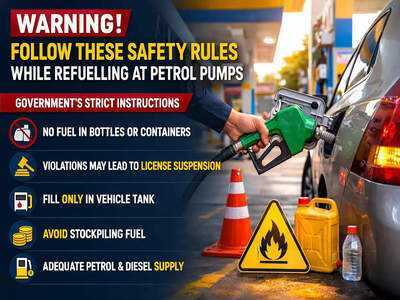
Amid escalating geopolitical tensions in West Asia and ongoing fluctuations in the global oil market, the Indian government has released a crucial advisory aimed at enhancing fuel safety and ensuring a steady supply throughout the nation. This directive is directed at both petrol station operators and consumers, emphasizing the importance of preventing accidents and upholding safety standards at fuel stations.
Prohibition on Unsafe Fuel Containers
A significant aspect of the advisory is the strict prohibition against dispensing petrol or diesel into plastic bottles, cans, or any open containers that fail to meet safety standards. The ministry has highlighted that petrol is highly flammable, and storing it in unsafe containers can lead to severe fire hazards or accidents. Therefore, petrol station operators are mandated to adhere to safety regulations without exception.
Consequences for Non-Compliance
The government has issued a stern warning that petrol pump dealers who are found dispensing fuel into unsafe containers may face serious repercussions, including suspension or revocation of their petrol pump license. State authorities have been instructed to closely monitor retail fuel outlets to ensure adherence to these guidelines.
Guidelines for Consumers
In addition to the advisory for petrol stations, the government has provided guidelines for consumers to help maintain safety at fuel stations. Motorists are urged to refuel only in their vehicle's tank and to avoid storing petrol or diesel in unsafe containers at home, as improper storage can lead to fire risks and accidents. Consumers are also reminded to observe basic safety practices, such as turning off vehicle engines during refueling.
Clarification on Fuel Stock
Recently, rumors regarding potential fuel shortages have circulated widely on social media due to tensions in the Middle East. The government has dismissed these claims, assuring citizens that India has sufficient reserves of petrol and diesel. The Petroleum Ministry has confirmed that fuel supply remains stable at approximately one lakh retail fuel outlets across the country. Refineries have ramped up production levels to ensure a consistent supply, and despite disruptions in certain global energy routes, India has secured crude oil imports from alternative sources.
Priority for CNG and PNG Supply
As part of broader energy management strategies, the government issued a Natural Gas Control Order on March 9, 2026. This directive prioritizes Compressed Natural Gas (CNG) for vehicles and Piped Natural Gas (PNG) for households in gas allocation. Authorities have confirmed that 100 percent supply for domestic PNG and vehicle CNG will be maintained to ensure that household cooking needs and transportation services remain uninterrupted.
Current Fuel Price Situation
Despite global crude oil prices nearing $100 per barrel, the government has indicated that there are currently no plans to raise petrol and diesel prices. The aim is to protect consumers from sudden inflationary pressures. However, energy market experts suggest that if global tensions persist, price adjustments may be considered in the future. For now, authorities are closely monitoring the situation while keeping fuel prices stable.
Safety Precautions for Citizens
The government has also advised citizens to observe certain precautions regarding fuel usage and information:
- Avoid rumors: Do not trust unverified social media posts claiming fuel shortages or price increases.
- Use official platforms: Order LPG cylinders or other fuels only through authorized digital platforms or official distributors.
- Follow safety rules: Keep the vehicle engine off while refueling and refrain from using mobile phones at petrol stations.
Ensuring Safety and Stability
The government has emphasized that this advisory aims to ensure both public safety and smooth fuel distribution across the nation. By enforcing stringent safety regulations at petrol stations and promoting responsible fuel usage, authorities seek to prevent accidents and maintain order in the fuel supply chain. Officials have reassured citizens that India’s energy supply remains stable, and there is no cause for panic. Adhering to safety guidelines and avoiding unnecessary fuel storage will help sustain normal supply conditions nationwide.
Contact to : xlf550402@gmail.com
Copyright © boyuanhulian 2020 - 2023. All Right Reserved.