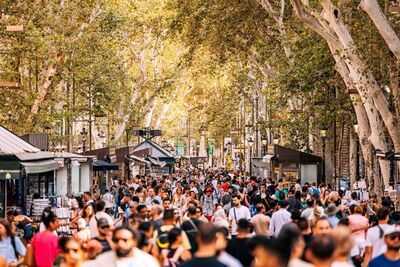
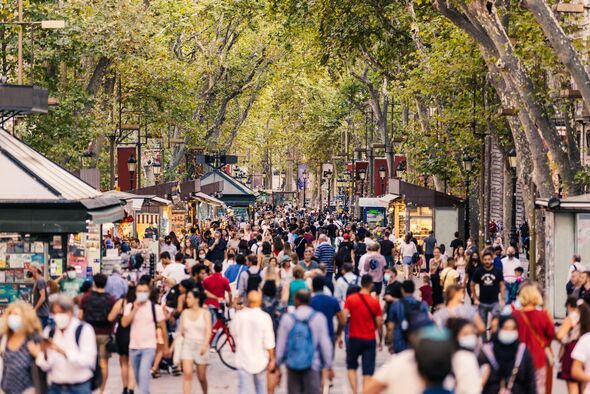
A popular city loved by Brits will be doubling its tourist tax from next month, ranking it among Europe's priciest for such a charge. Following new legislation approved by the Catalan Parliament, the Barcelona City Council has announced that the tourist tax will double this year and gradually increase across the rest of Catalonia, reaching twice the current rate by 2027.
Effective from April 1, the doubling of Barcelona's tourist tax will coincide with Holy Week (Semana Santa) during Easter when the city hosts traditional processions and sees a surge in visitors. During this time, Barcelona comes alive with processions throughout the city centre, the fair and blessing of palms on Rambla de Catalunya, and the custom of giving 'palmes' and laurel branches to be blessed, alongside the seasonal treat Mona de Pasqua (Easter cake).
In addition to the standard regional tax, municipalities can apply a local surcharge. In Barcelona, the City Council has increased this surcharge from €4 (about £3.5) to €5 (£4.3) per night. The council also decided that this surcharge will increase by one euro every year until 2029 reaching a maximum of €8 (£6.9) per night.
Guests at five-star hotels will now pay a total of €12 (£10.40) per night, up from €7.50 (£6.50) with the new regional tax and the municipal surcharge.
Four-star hotels will see the total fee increase from €5.70 (£4.90) to €8.40 (roughly £7.30) per night while holiday rentals will rise to €9.50 (£8.20) per night.
Other establishments will now pay €7 (£6) per night, and cruise passengers will face a tax of €9 (£7.80) for stays longer than 12 hours and €11 (£9.50) for shorter stays. A special category for youth hostels registered with the Generalitat keeps the regional tax at €1 (about £0.90).
Revenue from the tourist tax will be split, with 25% earmarked for housing policies and 75% allocated to a Tourism Promotion Fund managed by local authorities. The fund will support initiatives ranging from economic development to industry promotion and efforts to reduce the seasonality of tourism, the council said.
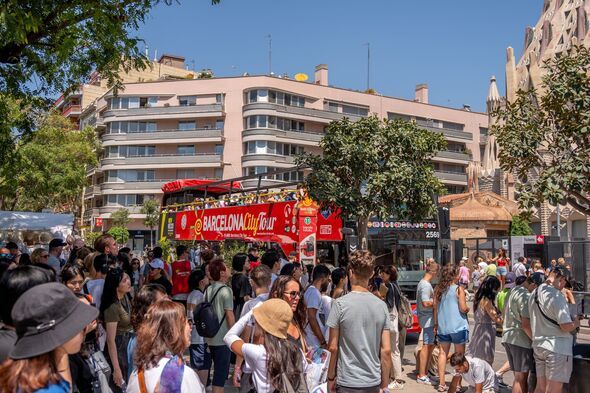
Barcelona welcomed 16 million visitors in 2025, marking a 2.9% increase compared with the previous year. Last June, thousands of local residents took to the streets to protest against overtourism, chanting slogans such as "Your holidays, my misery" and highlighting the strain on infrastructure, environmental damage, and housing shortages.
Many say they have been pushed and priced out of their neighbourhoods and criticised political inaction in addressing the impact of uncontrolled mass tourism.

In September, Barcelona also marked World Tourism Day with protests at several landmark sites, highlighting local frustrations over overcrowding and housing pressures. Local residents chanted slogans such as "tourists go home," and displayed signs and a large banner reading "mass tourism kills the city."
However, hotel owners have expressed concerns that the increased costs could deter tourists and significantly impact the industry. Direct spending linked to tourism activity was estimated at €10.375 billion (almost £9 billion) in 2025, according to the city council.
Jordi Clos, president of Barcelona's hoteliers' association, warned that the measure could negatively impact key visitor segments. He said there is "widespread concern in the industry about how the increase in the tourist tax and the municipal surcharge in Barcelona might affect the sector."
He added: "It will be necessary to monitor the impact this measure may have on business activity and on the most strategic segments [such as business and conference tourism], and to prevent a qualitative and widespread decline."
Contact to : xlf550402@gmail.com
Copyright © boyuanhulian 2020 - 2023. All Right Reserved.