
Health professionals have disclosed the minor everyday practices that could extend your lifespan and "change the trajectory of your health". While everyone aspires to enjoy a lengthy and wholesome life - what straightforward measures can be implemented to assist?
This follows concerning figures showing healthy life expectancy has declined in the UK. Between 2022 and 2024, men could anticipate spending 60.7 years (77% of life) in "good" general health, while women could expect 60.9 years (73%).
Overall life expectancy in the UK for 2022 to 2024 stood at 83 for women and 79.1 for men. From the one per cent principle to the precise quantities of protein and fibre required for a nutritious diet, specialists have offered their insights on boosting your healthy life expectancy.
Professor Paul Lee, orthopaedic surgeon and medical engineer, outlined his "one per cent rule".
He added: "The body is designed to move, so regular walking, joint movement and strength work help maintain tissues and circulation. Hydration, nutrition and reducing harmful inputs all change the internal environment your cells operate in. Sleep, recovery and the body's repair processes sit here.
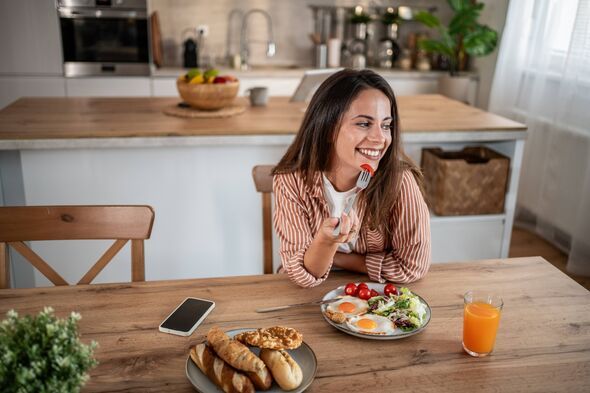
"One of the most powerful principles is the one per cent rule. Improve something small and repeatable each day. Walk a little more. Hydrate better. Sleep slightly earlier. When those small inputs compound over months and years, they change the trajectory of your health."
Josie Jones, founder of The Mindful Cook, outlined the precise amount of protein and fibre you require in your diet.
She added: "In nutrition, three daily anchors I encourage are very simple and measurable: Around 90g of protein across the day. This supports muscle maintenance, appetite regulation and metabolic health, particularly from midlife onwards.
"About 30g of fibre per day. Fibre feeds the gut microbiome, supports blood sugar regulation and is strongly associated with lower risk of cardiovascular disease and several cancers. A small amount of healthy fats daily. Foods such as olive oil, nuts, seeds and oily fish support heart health and help with satiety. Those three habits tend to nudge people towards whole foods automatically.
"Meals built around protein, fibre-rich plants and healthy fats usually crowd out ultra-processed foods with little effort. None of this is expensive. Tinned beans, lentils, oats, eggs, yoghurt, frozen vegetables, olive oil and nuts are all accessible foods that support those targets. The key is consistency. When you eat this way daily, the cumulative impact is significant."
Denise Yeats, director at Denise Yeats Empowered Partnerships Ltd, stated brief exercise sessions before Zoom calls can prove transformative.
She continued: "I work with women who think they don't have time to move. They do. Two minutes between meetings - 10 squats, 10 wall push-ups, 30 seconds of marching - reactivates your glutes and genuinely generates energy rather than spending it.
"I've sat on a Swiss ball since 2002 for the same reason: it makes stillness the harder option. For perimenopausal and menopausal women, this isn't a nice-to-have. Hormonal changes already affect cognition and energy. Consistent micro-movement is protective, non-negotiable. The reset isn't a faddy hack. It's 10 squats before your next Zoom call."
Florence Achery, founder of Yoga Retreats and More, revealed that spinal health can be preserved through five straightforward exercises.
She explained: "With the rise in back pain and mobility issues, spine health is fundamental. Every morning I practise the Five Tibetan Rites, which are a quick daily sequence of five movements combining stretching, balance and strength, designed to wake up the body and improve mobility.
"It's a daily energy boosting practice that only takes 10 minutes. Sometimes I will follow with a cold shower to set me up for the day. A walk after lunch is also a great mood boosting habit. Lunch at one's desk in front of a computer should be banned.
"Your mental wellbeing is equally important. There should be no tech in bedrooms. No doom scrolling first thing in the morning or last thing at night. Dust off or invest in an alarm clock. Don't use your phone to wake up. Suffering from anxiety? Turn off social media notifications. Take control back."
Contact to : xlf550402@gmail.com
Copyright © boyuanhulian 2020 - 2023. All Right Reserved.