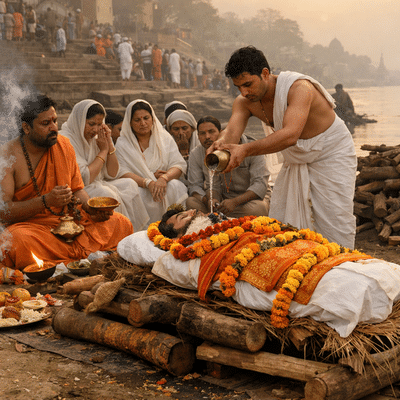
Stop Man-Made Rules: What Hindu Shastras Say About Daughters' Rights
For generations, many people have believed that only a son can perform the final rites of parents. This belief has been repeated so often that it feels like an unquestionable rule of tradition. But what if this idea is not entirely true? Ancient Hindu scriptures tell a deeper and often forgotten story. They reveal that daughters also have the right to perform last rites when circumstances demand it. The real essence of these rituals is not gender it is love, responsibility, and devotion. Understanding this truth helps us separate true dharma from social customs created over time.
The Popular Belief About Sons

In many families, people grow up hearing that only a son can perform the final rites of parents. The belief is connected to the idea that a son helps the soul attain peace after death. Because of this assumption, daughters were often kept away from funeral rituals. Over time, this belief became so strong that many people accepted it as absolute religious law. But when we examine ancient scriptures carefully, we realize that this idea is not the complete truth. Dharma texts present a more balanced and compassionate view.
What Hindu Scriptures Actually Say
According to the Garuda Purana, the son or grandson usually performs the final rites. However, the text also clearly explains that if they are not present, other family members can perform the rituals. This includes daughters and wives. Another important scripture, the Markandeya Purana, goes even further. It states that the wife has the primary right, and daughters can also perform the rites when needed. These references show that scriptures focus on responsibility and devotion rather than gender.
The Role of Society in Changing Traditions

Over centuries, society developed many customs that slowly replaced the original flexibility of scriptures. In some cases, women were kept away from certain rituals due to social structures related to property, inheritance, and family authority. Gradually, these social practices began to look like religious rules. Many people started believing they were following ancient tradition, when in reality they were following customs created by society. Understanding this difference helps us see the true intention behind dharma.
The True Meaning of AntyestiFinal rites, known as Antyesti, are meant to be a final farewell filled with respect, gratitude, and love for the departed soul. They represent the last responsibility performed by family members for someone who has passed away. The true essence of this ritual is not about who performs it, but about the sincerity and devotion behind it. When a daughter deeply loves and honors her parents, her participation in their final farewell becomes a sacred act of duty. In spiritual understanding, emotions, intentions, and respect matter far more than social labels or outdated customs. True dharma values heartfelt devotion above everything else.
What This Means for Modern FamiliesToday, many families are rediscovering the deeper teachings found in ancient scriptures. More daughters are stepping forward to perform the final rites of their parents when the situation requires it. They do this not to challenge tradition, but to honor their loved ones with sincerity, dignity, and devotion. In many ways, this shift brings families closer to the true spirit of dharma described in sacred texts. When rituals are guided by love, respect, and responsibility rather than rigid customs, their real meaning becomes clear. It reminds us that the purpose of these sacred rites is to express gratitude and offer a heartfelt farewell.
Unlock insightful tips and inspiration on personal growth, productivity, and well-being. Stay motivated and updated with the latest at My Life XP.
Frequently Asked Questions (FAQs)
1. Can daughters perform last rites in Hinduism?
Yes. Ancient scriptures like the Garuda Purana and Markandeya Purana mention that daughters and wives can perform funeral rituals when sons or grandsons are not present. The focus is on devotion and responsibility rather than gender.
2. What are last rites called in Hindu tradition?
The final funeral ritual in Hinduism is known as Antyesti, which means the “last sacrifice” or final farewell performed for the departed soul.
3. Why do people believe only sons should perform last rites?
This belief developed mainly through social customs over time. While sons traditionally performed the ritual, many scriptures do not strictly limit the right only to them.
4. What is the spiritual purpose of Antyesti?
Antyesti is meant to honor the departed soul, express gratitude, and help the soul move peacefully to the next journey through prayers and sacred rituals.
5. What lesson does this teaching give modern families?
It reminds us that true dharma values love, devotion, and responsibility. Rituals should be guided by sincerity and respect, not by outdated social restrictions.
The Popular Belief About Sons
For centuries many families believed only sons could perform last rites.
In many families, people grow up hearing that only a son can perform the final rites of parents. The belief is connected to the idea that a son helps the soul attain peace after death. Because of this assumption, daughters were often kept away from funeral rituals. Over time, this belief became so strong that many people accepted it as absolute religious law. But when we examine ancient scriptures carefully, we realize that this idea is not the complete truth. Dharma texts present a more balanced and compassionate view.
What Hindu Scriptures Actually Say
Sacred texts describe broader rights for family members in funeral rituals.
According to the Garuda Purana, the son or grandson usually performs the final rites. However, the text also clearly explains that if they are not present, other family members can perform the rituals. This includes daughters and wives. Another important scripture, the Markandeya Purana, goes even further. It states that the wife has the primary right, and daughters can also perform the rites when needed. These references show that scriptures focus on responsibility and devotion rather than gender.
The Role of Society in Changing Traditions
Sacred texts describe broader rights for family members in funeral rituals.
Over centuries, society developed many customs that slowly replaced the original flexibility of scriptures. In some cases, women were kept away from certain rituals due to social structures related to property, inheritance, and family authority. Gradually, these social practices began to look like religious rules. Many people started believing they were following ancient tradition, when in reality they were following customs created by society. Understanding this difference helps us see the true intention behind dharma.
The True Meaning of AntyestiFinal rites, known as Antyesti, are meant to be a final farewell filled with respect, gratitude, and love for the departed soul. They represent the last responsibility performed by family members for someone who has passed away. The true essence of this ritual is not about who performs it, but about the sincerity and devotion behind it. When a daughter deeply loves and honors her parents, her participation in their final farewell becomes a sacred act of duty. In spiritual understanding, emotions, intentions, and respect matter far more than social labels or outdated customs. True dharma values heartfelt devotion above everything else.
What This Means for Modern FamiliesToday, many families are rediscovering the deeper teachings found in ancient scriptures. More daughters are stepping forward to perform the final rites of their parents when the situation requires it. They do this not to challenge tradition, but to honor their loved ones with sincerity, dignity, and devotion. In many ways, this shift brings families closer to the true spirit of dharma described in sacred texts. When rituals are guided by love, respect, and responsibility rather than rigid customs, their real meaning becomes clear. It reminds us that the purpose of these sacred rites is to express gratitude and offer a heartfelt farewell.
Unlock insightful tips and inspiration on personal growth, productivity, and well-being. Stay motivated and updated with the latest at My Life XP.
Frequently Asked Questions (FAQs)
1. Can daughters perform last rites in Hinduism?
Yes. Ancient scriptures like the Garuda Purana and Markandeya Purana mention that daughters and wives can perform funeral rituals when sons or grandsons are not present. The focus is on devotion and responsibility rather than gender.
2. What are last rites called in Hindu tradition?
The final funeral ritual in Hinduism is known as Antyesti, which means the “last sacrifice” or final farewell performed for the departed soul.
3. Why do people believe only sons should perform last rites?
This belief developed mainly through social customs over time. While sons traditionally performed the ritual, many scriptures do not strictly limit the right only to them.
4. What is the spiritual purpose of Antyesti?
Antyesti is meant to honor the departed soul, express gratitude, and help the soul move peacefully to the next journey through prayers and sacred rituals.
5. What lesson does this teaching give modern families?
It reminds us that true dharma values love, devotion, and responsibility. Rituals should be guided by sincerity and respect, not by outdated social restrictions.
Contact to : xlf550402@gmail.com
Copyright © boyuanhulian 2020 - 2023. All Right Reserved.