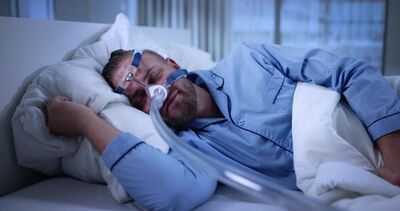

An expert has warned that your snoring could indicate a more serious health issue and in certain instances you should seek medical help. Snoring is often treated as a harmless, if annoying, bedtime habit, but in some cases, it can point to something that warrants medical attention.
Obstructive sleep apnoea (OSA), is a condition in which the airway repeatedly collapses during sleep, interrupting breathing for seconds at a time. Many cases go undiagnosed for years, with symptoms mistaken for everyday tiredness or stress.
To help people tell the difference, an expert at Sleeplay, a CPAP and sleep therapy provider, outlined seven warning signs that shouldn't be ignored. "Snoring on its own doesn't always mean something is wrong," said Aaron M Fuhrman, founder and CEO of Sleeplay.
"But when certain patterns show up alongside it, that's when it's worth paying attention." Aaron listed the seven signs that your snoring could indicate you need medical attention.
Not all snoring is created equal. Snoring that is loud enough to disturb a partner and happens most nights of the week is one of the most consistent indicators of OSA. Occasional, light snoring after a long day or a glass of wine is rarely a concern, but persistent, heavy snoring is a different story.
"Loud snoring on a near-nightly basis is the body signalling that the airway is under strain during sleep," says Fuhrman. "It's one of the most common reasons people end up coming to us."
Choking, gasping, or snorting soundsThis is an extremely telling sign. When the airway becomes fully blocked, the body jolts itself awake to restore breathing, often producing a choking, gasping, or snorting sound. A bed partner is frequently the first to notice this, as the person experiencing it may have no memory of it.
Find out about the symptoms you need to watch out for and get health advice with our free health newsletter from the Daily Express
Morning headachesWaking up with a headache, particularly one that fades within an hour or two, can be a sign that oxygen levels dropped during the night. When breathing is repeatedly interrupted during sleep, carbon dioxide can build up in the blood, causing blood vessels in the brain to dilate. That often results in a dull, persistent headache come morning.
Extreme daytime fatigueFeeling tired after a poor night's sleep is normal. Feeling exhausted every single day despite spending a full night in bed is not. Sleep apnea prevents the body from reaching the deeper, restorative stages of sleep, meaning sufferers can wake up after eight hours feeling as though they barely slept.
"A lot of people just accept that they're tired all the time," Aaron said. "They put it down to a busy life or getting older. But the kind of fatigue that affects your ability to function is worth investigating."
Mood changes or irritabilityChronic sleep deprivation takes a toll on emotional regulation. People with undiagnosed sleep apnea frequently report increased irritability, low mood, and a shorter fuse than usual. In some cases, it has also been associated with symptoms of anxiety and depression.
Difficulty concentratingStruggling to focus, forgetting things, or feeling mentally foggy all day can all be linked to poor sleep quality. The brain consolidates memory and processes information during deep sleep, or the stages that sleep apnea repeatedly cuts short.
High blood pressureThis one often surprises people. Each time breathing stops during sleep, the body responds with a small surge of stress hormones, raising blood pressure. Over time, this pattern can contribute to hypertension, particularly the kind that proves difficult to manage even with medication.
The risks of sleep apnoeaThe consequences of leaving sleep apnoea untreated go beyond tiredness. Research has linked the condition to a higher risk of heart disease, stroke, type 2 diabetes, and metabolic issues. The interrupted breathing and repeated drops in blood oxygen that characterise sleep apnea place sustained pressure on the cardiovascular system over time.
"Sleep apnea isn't just a sleep problem," Aaron said. "When it goes unaddressed for years, the impact on overall health can be significant. The positive is that it's very treatable. You have to know you have it first."
His advice is supported by the NHS, which says you should see a GP if you have any of the main symptoms of sleep apnoea, such as:
- Your breathing stops and starts while you sleep
- You make gasping, snorting or choking noises while you sleep
- You always feel very tired during the day
The NHS adds: "Sleep apnoea can be serious if it's not diagnosed and treated."
Contact to : xlf550402@gmail.com
Copyright © boyuanhulian 2020 - 2023. All Right Reserved.