Americans have purchased around 16 million cars per year from 2023 to 2025, and that doesn’t look like it’s going to change too drastically any time soon. That said, there are a lot of things to consider if you’re looking to join in on the fun. With industry analysts expecting, as of early 2026, that retail prices will continue to rise, buying the right car has become increasingly important.
That’s easier said than done, though, given the sheer amount of options available. No matter the type of vehicle or one’s price bracket, there’s bound to be at least a handful of strong contenders, each with its own strengths and weaknesses. This is where automotive reviews and trusted, long-running outlets like Consumer Reports (CR) come into the picture.
While nothing will ever beat test-driving a car and getting some hands-on time, lists like Consumer Reports’ top 10 cars for 2026 can offer useful guidance and help steer buyers in the right direction(s). It’s not the be-all-end-all of lists, of course, but it can offer a useful data point to consider alongside other outlets and any first-hand experience one can accrue.
Honda Civic
The modern-day Honda Civic is possibly one of the best cars money can buy, with praise coming from all corners of the automotive industry. KBB ranked the Civic above all other compact cars on the market, for example, while the 2025 Honda Civic Si impressed us at the end of 2024. Thus, it really isn’t much of a surprise that Consumer Reports ranks the modern Civic as one of its 10 best cars for 2026.
There is truly a lot to like about the 11th-generation Honda Civic, not least its great fuel economy, reliability, and price — the 2026 Civic Sedan starts at $24,695, while the Hatchback version starts at $27,895 (both plus $1,195 destination) — and, most crucially for CR, the availability of a hybrid version. The Civic Hybrid, which sports Honda’s award-winning twin-motor hybrid system, is available in sedan and hatchback forms. It offers significantly better fuel economy than the gas Civic (49 combined mpg versus 34 for the gasoline hatchback, according to Honda) while also making 200 hp, 50 hp more than the 2.0-liter gas engine.
The result, then, is a compact four-door that seems to offer the best of most worlds for the average buyer. It’s reassuringly frugal, but doesn’t wholly sacrifice performance or driving pleasure to achieve that. Sure, it’s not a Civic Type R, but, as we found out when we drove a 2025 Civic Hatchback Hybrid, it’s still more fun than competing hybrids thanks to its decent power and good handling. CR agrees, too, naming the Hybrid as the Civic to go for.
Tesla Model Y
The Tesla Model Y is seemingly America’s favorite EV, if the 318,000 or so units that Tesla sold in 2025 are anything to go by. Tesla has something of a stranglehold on the American EV market — for context, the best-selling non-Tesla EV in 2025 was the Chevy Equinox EV, with just under 58,000 units sold — and that doesn’t look like it’s going to change much for 2026.
Sure, we have competitors like the Toyota bZ gunning for the Model Y’s crown, but Tesla hasn’t rested on its laurels, either. Tesla’s 2026 Model Y retains all of the EV SUV’s strengths, including typically great EV acceleration, but also benefits from several updates that the automaker introduced over 2025 and early 2026. Most importantly, the 2025 “Juniper” Model Y refresh brought improvements such as improved range, significantly updated interiors, a quieter cabin (thanks to acoustic glass), and a softer, more comfortable suspension — all updates that pushed CR to name the Model Y its EV choice for 2026.
Those looking to buy a Model Y in 2026 now have an extra trim level to choose from, too. In February, the automaker introduced the Model Y Standard AWD, which offers buyers the option of dual-motor performance (and traction) without having to pony up $50,000 or so for the Model Y Premium AWD. Tesla’s dual-motor option was always the better choice, and the fact that you can now get that option at a slightly more affordable price looks to be a pretty good deal indeed.
Toyota Camry
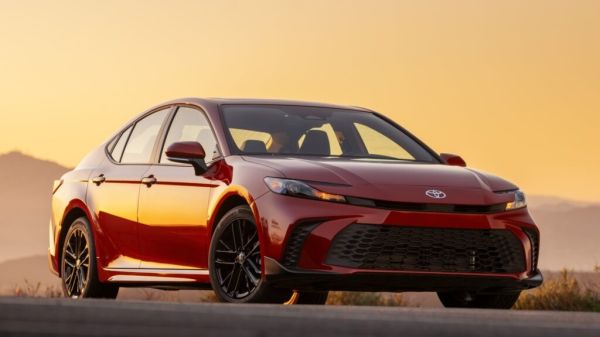
The Toyota Camry has been around for nine generations as of 2026, and it’s developed a reputation for being a reliable and sensible daily driver that, while not exciting, does what the average driver needs a sedan to do. The latest Camry, which debuted in 2025, carries that legacy into the modern day, complete with a hybrid-only setup that offers excellent fuel economy to boot.
Now, let’s be clear: The current Camry’s strengths are not necessarily exciting. CR, for example, praises said fuel economy (the outlet managed 48 mpg combined, in line with the sedan’s EPA estimates), the Camry’s good ride quality, decent handling, and good interior room. That said, while it’s not a sports sedan in the least, the Camry’s engine isn’t too bad, either. We tested a 2025 Toyota Camry and appreciated the new hybrid powertrain, with its combined 225 hp (or 232 hp in AWD trim) making it a great car for daily driving. Our experience matched that of Consumer Reports, too, with our reviewer praising the Camry’s steering feel and reasonably comfortable ride.
Essentially, all of these strengths might just make the ninth-gen Camry the epitome of the sensible daily-driver sedan. It won’t thrill, but it nails all the commuting and transportation essentials nearly perfectly. Prices are pretty compelling, too, with 2026 models starting at $29,100 for the Camry LE and maxing out at $34,125 (all prices plus $1,195 destination fee) for the Nightshade Edition AWD. The latter, which is also available in FWD guise, is new for 2026; it’s a spruced-up Camry SE with 19-inch black satin wheels and metallic black trim pieces throughout.
Ford F-150
The Ford F-150 is the undisputed big daddy of the American pickup truck market. Sure, there are a few alternatives to the F-150 available, but we’d venture that nothing out there has quite the same cultural cachet and popularity as Ford’s long-running pickup. It’s mostly justified, too, with models like the 2025 Ford F-150 impressing thanks to Ford’s excellent BlueCruise and its potent hybrid V6 engine option.
So, really, it shouldn’t come as a surprise that CR named the F-150 the pickup truck to beat for 2026. The outlet appreciated some of Ford’s updates for the 2025 model year, namely the addition of features like blind spot assist, which the automaker introduced alongside other safety features like Evasive Steering Assist, Road Edge Detection, and Driver State Detection. The outlet also appreciated the F-150’s current engine selections, with the 325-hp turbo 2.7-liter V6 and 430-hp V6 hybrid we tested earning particular praise.
Ford also reduced F-150 prices for 2025, although that came at the cost of some standard equipment. Thus, the various trim levels received downgrades, such as smaller 18-inch wheels on the F-150 STX, which carry on into 2026. Ford also reduced the trial periods for its excellent BlueCruise system down to 90 days for some trims, which may sting a bit. None of these changes should be deal-breakers, admittedly, but they seem to be part of a greater trend at Ford, which also dropped a standard Mach-E feature for 2026, albeit without a commensurate drop in price.
Subaru Crosstrek
The Subaru Crosstrek is the automaker’s most popular SUV in the U.S., and the subcompact crossover has gotten even better for the 2026 model year thanks to two notable updates. These are a tweaked powertrain selection for gasoline Crosstreks and the addition of a hybrid version, both of which contributed to CR naming this its favorite small crossover for 2026.
The more minor update has to do with the gas Crosstrek, with even the base trim now coming with the 2.5-liter, 180-hp engine that used to be exclusive to Premium and higher trims. This does come with a slight price bump to $26,995 (plus $1,420 destination), up from the $25,695 of the 2025 model, but we think most drivers will gladly pay extra to leave the barely-adequate old engine behind. The Crosstrek Hybrid adds some extra power on top of that, to the tune of 194 hp combined, and also improves fuel economy — as you might expect from a hybrid.
That said, the fuel economy improvements aren’t the main draw, as we found out when we tested a 2026 Crosstrek Hybrid. While an EPA-rated 36 mpg combined isn’t anything to scoff at, the Crosstrek Hybrid’s main appeal is its zippier, more rewarding drive, albeit one that comes with a $7,000 premium over the cheapest gas Crosstrek. Regardless of which you choose, though, the Crosstrek delivers on several fronts, including ride quality, stability, and that signature Subaru all-wheel drive. Other changes for 2026 include Subaru’s DriverFocus anti-distraction system and a heated steering wheel coming as standard on Limited and Limited Hybrid trims, with the latter also available on the Crosstrek Wilderness.
Subaru Forester
Subaru debuted an all-new Forester for the 2025 model year, introducing a healthy selection of changes to the ever-popular compact crossover. Notable revisions included a redesigned interior and exterior, better standard equipment, a stiffer chassis, and enhanced steering response. The changes definitely improved the Forester, although we stopped short of offering a ringing endorsement when we first drove one, noting that it was likely to appeal more to existing owners than new ones.
Consumer Reports obviously feels differently, though, naming the Forester its compact SUV of choice for all buyers. It’s not hard to see why, given the brand’s general reputation for reliability alongside the Forester’s strengths, such as its good interior room, overall pleasant drive, and full-time AWD. Buyers shopping for a Forester in 2026 have a lot more choice than before, too, as Subaru introduced a Forester Hybrid in early 2025 and an off-road-ready Forester Wilderness for 2026.
The Forester Hybrid has the same 194-hp hybrid powertrain as the Crosstrek Hybrid, and it achieves an EPA-rated 35 mpg combined fuel economy, a minor improvement over its gasoline sibling’s 29 mpg. But while it’s not all that frugal, we think the Forester Hybrid is the one to go for anyway, just so long as you’re not chasing outright efficiency — the engine is just better overall, and there are no real downsides to it beyond the extra cost. Even then, it’s not too bad: Subaru is asking $36,595 (plus $1,420) for a Forester Premium Hybrid, $3,210 more than the equivalent gasoline Forester.
Ford Maverick
Compact trucks like the Ford Maverick might not be as popular as their larger brethren, but Ford’s diminutive hauler in particular offers great bang-for-buck, not least thanks to its $28,145 (plus $1,845 destination and $695 acquisition fees) starting MSRP. That keen price is part of why CR names the Maverick its favorite compact truck, but there’s a lot more to the Maverick than a low price.
One of the Maverick’s most notable features is its standard hybrid powertrain, and Ford made that even better for the 2025 model year when it introduced an AWD variant — previously only available on the gasoline Maverick — for the XL, XLT, and Lariat trims. CR praised the FWD version’s fuel economy, noting that it managed 37 mpg overall in the outlet’s testing. We really liked the Ford Maverick Hybrid too, appreciating its versatility and practicality — even if it wasn’t all that fun to drive.
Of course, the Maverick isn’t just about the hybrid, frugal as it is. Those who prefer gasoline power can opt for a 2.0-liter turbo EcoBoost instead, which makes 238 hp compared to the hybrid’s 191. You sacrifice fuel economy, of course, but some may find that a worthwhile trade-off. Ford also has something for the street truckers in the form of the Ford Maverick Lobo, which it introduced for 2025. The Maverick Lobo rides lower, sports fancier wheels, and has new drivetrain components, including a seven-speed ‘box and a torque-vectoring rear drive unit. It’s no Ford Raptor R, but it gives buyers oodles of street truck style for a reasonable $35,930 (plus $1,845 destination and $695 acquisition fees).
Lexus NX
If you ask CR, there’s only one compact SUV for those seeking a luxury experience: the Lexus NX. The outlet has named the NX its top compact luxury SUV for two years running, with the SUV’s economical powertrain (especially hybrid guise), luxury, and overall refinement earning it a recommendation ahead of rivals like the 2025 Acura RDX.
Of course, this goodness doesn’t necessarily come cheap, with the NX starting at $46,070 (including $1,250 destination) for a NX 350h with front-wheel drive and topping out at just under $65,000 for the top-of-the-line PHEV NX 450h+ F Sport Handling AWD. But while the NX 450h+ may be a stretch too far for some, we think the NX 350h’s asking price is pretty reasonable, all things considered. As we noted in our review of a 2025 NX 350h, Lexus’ compact hybrid SUV is luxurious, comfortable, impressively efficient — 40 mpg combined, according to the EPA — and immaculately put together. It’s not fast, but you can’t have everything, after all.
Well, you can, provided you’re willing to pay. The PHEV NX 450h+, which starts at $59,405 (including $1,250 destination) in its new-for-2026 Premium trim, takes all those strengths but adds 304 hp into the mix by pairing the NX’s 2.5-liter inline-four with a hybrid system capable of 37 miles of electric-only range. This makes for a luxury ride that can hit 60 mph in 6 seconds yet still manages to rank as one of the most reliable PHEVs money can buy.
Toyota Grand Highlander
A two-row SUV will fit most modern American families, but there are times when you just need that third row — but without taking up too much room on the driveway. Toyota’s Grand Highlander aims to satisfy both criteria, offering room for up to eight adults, with plenty of room for bags and cargo, but without the unwieldy dimensions of something like the Toyota Sequoia. In that light, it makes sense why the Grand Highlander is CR’s midsized SUV of choice for 2026, but the SUV has a lot going for it beyond its Goldilocks sizing.
CR really liked the Grand Highlander’s smooth ride, which we also appreciated in our review of the 2025 Grand Highlander Hybrid. Another standout feature is the mid-tier, 245-hp hybrid engine, with its decent power and a solid EPA-rated 36 mpg combined when in two-wheel drive form — which it managed to just about equal in CR’s real-world testing, too. Toyota also offers a gas version with 265 hp, while those who want power can opt for the Hybrid Max and its combined 362-hp output.
We tested a a Grand Highlander Hybrid Max and, while our reviewer appreciated the engine’s power, Toyota’s top-tier hybrid is unfortunately not a particularly frugal engine: The EPA rates the Hybrid Max for just 27 mpg combined, while we only managed 23 mpg. It won’t be a cheap SUV to own, then, considering Toyota’s $55,490 asking price. That said, the gasoline and standard Hybrid models are quite a bit more affordable, starting at $41,660 and $45,010 (all prices plus $1,450 destination), respectively.
BMW X5
The BMW X5 debuted for the 2000 model year as, in the words of a company press release of the time, “the world’s first sports activity vehicle.” Silly marketing terminology aside, you can see where BMW was coming from. It was trying to combine all the traits that had made SUVs such a booming market with its signature driving experience — although it wasn’t all that successful, if reviews of the time are anything to go by.
Times have changed, though, and in 2026, the X5 is arguably the de facto luxury SUV to go for. It’s one of Consumer Reports’ highest-rated vehicles ever, with particular praise going to its lavish interior, comfortable seating, and great powertrain. CR’s praise comes on the heels of a major refresh in 2024, when BMW introduced a new exterior design, mild-hybrid powertrains (plus a welcome power boost for the standard six-cylinder), and its fancy curved display, which combined a 12.3-inch driver display with a 14.9-inch touchscreen.
Reviews of the time liked what the 2024 X5 offered, with the interior and engines regularly praised by motoring journalists. BMW has opted against making major changes since then, barring the introduction of a lane-change assist feature for 2025, probably a smart move, all things considered. The X5 you’ll be considering in 2026, then, will have all the strengths (and weaknesses) of models like the BMW X5 M60i we reviewed in 2024 — which isn’t a bad thing, really.