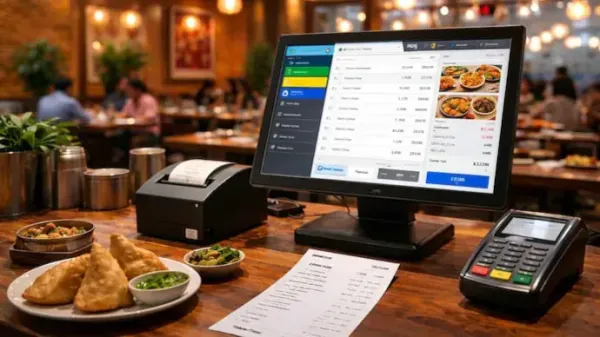
India’s restaurant industry has come under the scanner after the Income Tax Department launched a large-scale verification exercise across the country to investigate suspected tax evasion worth nearly ₹70,000 crore. The move signals a sharper focus by authorities on technology-driven manipulation in sectors that handle massive daily consumer transactions.
The exercise, which is currently underway in several states, aims to detect possible under-reporting of sales and manipulation of restaurant billing software used to generate invoices.
Credits: TaxAssist Accountants
Why the Tax Department Is Investigating Restaurants
According to sources familiar with the development, tax officials suspect that a significant number of restaurants may have suppressed their actual turnover by manipulating digital billing systems.
Preliminary data suggests that the suppression of turnover—based on hard data examined by authorities—stands at around ₹13,000 crorewhich could extrapolate into a potential ₹70,000 crore tax evasion across the industry.
Investigators believe some establishments may have deleted or altered billing data within software systems to reduce the reported value of sales. This allowed them to show lower revenues in their tax filings, thereby reducing their tax liabilities.
The verification exercise is particularly focused on software-enabled restaurant billing networkswhich are widely used across India to manage orders, payments, and accounting.
States Under the Scanner
The suspected tax evasion is believed to be concentrated in several southern states, including:
Telangana
Andhra Pradesh
Karnataka
Tamil Nadu
Officials believe that manipulation may have occurred across multiple restaurants using similar software systems.
While the investigation began in the south, authorities have now expanded their scrutiny to other parts of the country as wellmaking the exercise a pan-India verification drive.
In Delhitax officials have reportedly visited the office premises of around five restaurants to examine their billing systems and understand how transactions are recorded.
Probe Triggered By Billing Software Company Survey
The investigation was reportedly triggered after the Income Tax Department’s investigation wing in Hyderabad surveyed the premises of a local company that develops restaurant billing software.
During the survey, officials allegedly discovered that certain hotels and restaurants were manipulating features within the software to under-report income.
Such manipulation could involve:
Maintaining multiple billing databases
Deleting transaction records
Generating parallel invoices
Suppressing certain sales before tax filings
Since restaurants process large volumes of daily transactionseven small alterations in billing records can significantly impact the final reported revenue.
First Phase: Communication With Restaurants
The Income Tax Department has confirmed that it has begun the first phase of the verification exercisewhich involves reaching out to identified restaurants.
Authorities stated on social media that emails and messages will be sent to restaurants flagged during the investigation. The businesses have also been advised to file their income tax returns by March 31.
Officials emphasised that the current exercise is a verification process rather than immediate enforcementaimed at understanding how billing systems are being used and whether discrepancies exist in reported revenues.
The verification visits currently involve surveying office premises and reviewing billing mechanismsrather than conducting full search-and-seizure operations.
Credits: SBNRI
Technology-Driven Tax Evasion Under Scrutiny
The investigation highlights the growing concern among tax authorities about technology-enabled tax evasion.
In sectors like hospitality and food services, where businesses handle high volumes of small-ticket transactionsmonitoring accurate reporting becomes more complex.
Restaurants often accept a mix of cash payments, digital transactions, and aggregator-based ordersmaking it possible for businesses to hide certain offline or unrecorded sales.
Authorities believe that software manipulation could allow businesses to show lower digital records even while processing a higher number of real transactions.
What Happens If Irregularities Are Found
If the Income Tax Department confirms that restaurants have deliberately under-reported their income, the establishments could face further scrutiny and enforcement action under the Income Tax Act.
Potential consequences could include:
In serious cases, authorities could also initiate prosecution proceedings for deliberate tax evasion.
A Warning Signal for the Hospitality Industry
The ongoing verification exercise sends a strong signal to the hospitality sector that tax authorities are increasingly monitoring digital infrastructure used for financial reporting.
With advanced data analytics and cross-verification tools now available to regulators, attempts to manipulate billing systems or conceal revenues are becoming easier to detect.
For the restaurant industry—one of India’s fastest-growing consumer sectors—the probe underscores the importance of transparent accounting practices and compliant technology systems.
As the verification exercise continues over the next few days, the findings could potentially reshape compliance standards for restaurants across the country.
Contact to : xlf550402@gmail.com
Copyright © boyuanhulian 2020 - 2023. All Right Reserved.