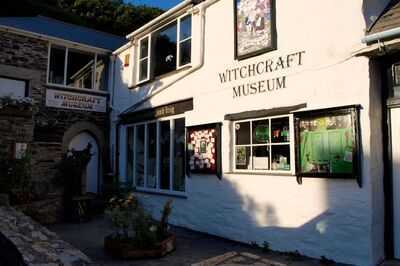
Appearing as a peaceful and scenic fishing village on Cornwall's coastline, this destination may seem idyllic, but it possesses a mystical history that shouldn't be ignored.
Boscastle has been dubbed Britain's equivalent to Salem, boasting a rich and complex heritage linked to witchcraft and sorcery.
The legends and stories that envelop this enchanting village are plentiful, so much so that it became home to the world's largest collection of witchcraft-related artefacts.
- I visited UK's cheapest town with £50k houses - it was nothing like I expected
- 'I am a housesitter for the rich - it's one of the easiest jobs you can do'
It all originated from a group of women residing in the area, commonly known as 'witches' or the 'wise women', who practised healing and rituals to offer protection against misfortune.
Their influence was believed to be powerful within the community and had a considerable impact on the lives of those they helped.
An ancient legend portrays the Boscastle witches as 'selling wind' to sailors, enabling them to gain speed. They would simply tie three knots in a rope for captains, with the concept being the first knot released a breeze, the second a strong wind and the third a huge gale.
These narratives have shaped the village, but beyond its mysterious folklore, it remains a hidden gem in England, frequently overshadowed by its more renowned neighbouring towns.
Boasting stunning views, picturesque walks and a postcard-perfect harbour, there's far more than initially apparent.
The Museum of Witchcraft and MagicLocated at the centre of the village is The Museum of Witchcraft and Magic, which runs independently, separate from the National Trust, which safeguards much of the surrounding area.
The museum is due to reopen at the beginning of April for the season, before closing again in October.
However, it happens to house the world's largest collection of witchcraft-related artefacts, established by Cecil Williamson, whose obsession with the subject consumed his life. The venue was opened in 1962, and he selected the location with magic in mind.
He said: "Three miles away from this spot you can find this prehistoric maze stone carved into a living rock face, proof that from ancient times man and his magic-making with the world of spirit were active in this area."
After exploring this educational museum, one visitor commented on TripAdvisor: "I visited once as a child, and it terrified me, so I knew I was in for a treat returning all these years later."
They added: "Truly a magical experience, and we felt renewed upon leaving – especially since the sun had come out!". It's one of our favourite days of our holiday, and we even spent a pound to turn the fortune wheel in which I asked, 'When are we getting married?' It told me to be patient, and...just two days later, we got engaged!"
For years, the museum infamously displayed the remains of Joan Wytte, known as the Fighting Fairy Woman of Bodmin. Her skeleton was exhibited as an object of mockery after she was wrongfully branded a witch in the 18th century and imprisoned in Bodmin Jail.
When new ownership took over, they determined she warranted a dignified burial following years of mistreatment, and her remains are no longer on public display.
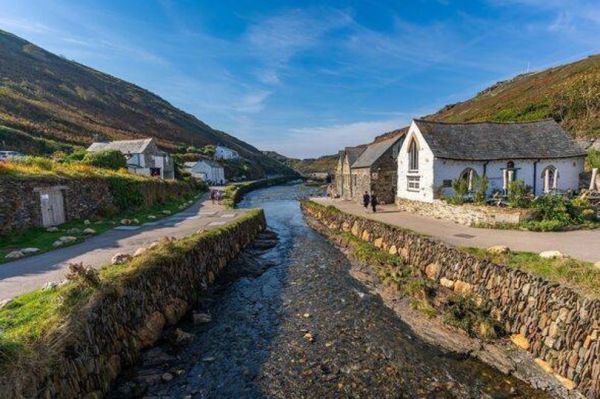 The harbour and coastal area
 Witches aside, Boscastle is an enchanting destination in its own right, boasting spectacular views of the Cornish coastline. The centrepiece is the postcard-worthy harbour, which is now safeguarded by the National Trust.
The ideal way to explore it is along the well-loved and straightforward walking trail, called the Boscastle Harbour walk, which guides you on a tranquil journey through the village. Beginning from Boscastle car park, the route showcases the historic harbour, the river, and the renowned blowhole.
Upon finishing the walk, one visitor commented: "We absolutely loved Boscastle, walking both sides of the harbour and off into the hills, visiting the local church, and just taking in the wonderful views.
"Proper rugged Cornish coastline just needed Poldark riding across the cliff tops."
The harbour itself has served as a crucial part of the trading hub since the 16th century, with the walls dating back to 1584. It was previously used to import coal and lime and export slate, before the railway reached Cornwall in 1893.
Subsequently, it evolved into a major fishing port, primarily used for catching seafood for the local economy and now, naturally, tourism. "We have been coming back to Boscastle as a family for over 25 years and the harbour is still breathtaking," one visitor claimed.
They added: "The area is owned by the National Trust so hasn't been ruined by overdevelopment. A stunning harbour and a short walk up to the left along the cliffs gives a truly spectacular view."
Contact to : xlf550402@gmail.com
Copyright © boyuanhulian 2020 - 2023. All Right Reserved.