Gold and silver have emerged as star performers in the commodity market over the past year, delivering exceptional gains to investors. This sharp rally has significantly boosted the returns of gold and silver exchange-traded funds (ETFs), prompting many investors to consider booking profits. However, before selling these ETF holdings, it is crucial to understand the tax implications that apply to the gains earned.
Gold and Silver ETFs: A Strong Year for Investors
Over the last 12 months, gold and silver prices have surged sharply due to global economic uncertainty, geopolitical tensions, and increased demand for safe-haven assets. As a result, gold ETFs have delivered returns of over 83%, while silver ETFs have outperformed even further, generating gains of more than 170% during the same period.
Gold and silver ETFs allow investors to benefit from price movements in these precious metals without physically purchasing or storing them. These funds are traded on stock exchanges just like shares, making them a convenient and transparent investment option for both short-term traders and long-term investors.
Why Investors Are Now Thinking of Selling
With such strong returns already realized, many investors are looking to exit their positions and lock in profits. While selling ETFs is easy from a trading perspective, the tax treatment of gains can significantly impact the final returns. Unlike equity mutual funds or listed shares, gold and silver ETFs fall under the category of non-equity assets, which means different tax rules apply.
No Tax-Free Limit for Long-Term Gains
One of the most important points investors must note is that the tax exemption available on long-term capital gains up to ₹1.25 lakh does not apply to gold or silver ETFs. This exemption is limited only to equity mutual funds and listed equity shares.
Therefore, any long-term profit earned from selling gold or silver ETFs is fully taxable, regardless of the amount.
How Capital Gains Are Taxed on Gold and Silver ETFs
The tax liability depends on how long the investment was held before selling:
Short-Term Capital Gains (STCG)
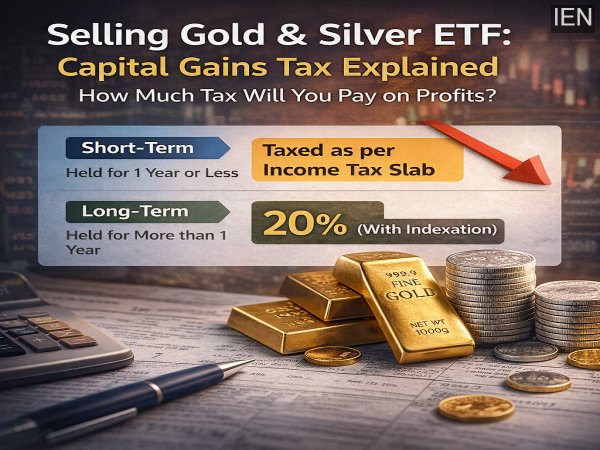
If gold or silver ETFs are sold within one year of purchase, the profit is classified as short-term capital gain. In such cases, the gains are added to the investor’s total income and taxed according to the applicable income tax slab rate. This means higher-income investors may end up paying a substantial portion of their profits as tax.
Long-Term Capital Gains (LTCG)
If the ETFs are sold after one year, the gains are treated as long-term capital gains. These gains are taxed at a flat rate of 12.5%, without any benefit of indexation. Since indexation is not available, inflation adjustment cannot be used to reduce taxable profits.
Why Indexation Benefit Is Not Available
Earlier, some non-equity assets enjoyed indexation benefits to reduce tax liability. However, under the current tax structure, gold and silver ETFs do not qualify for indexation. This makes the effective tax rate slightly higher in real terms, especially during periods of high inflation.
Can Investors Use Tax-Loss Harvesting?
Yes, investors can use tax-loss harvesting with gold and silver ETFs. This strategy involves selling investments that are currently at a loss and using those losses to offset gains made elsewhere. Capital losses from ETFs can be adjusted against capital gains, helping reduce the overall tax burden.
Tax experts suggest that investors with diversified portfolios can use this method strategically to manage their tax liability more efficiently.
Key Takeaway for ETF Investors
Gold and silver ETFs have delivered exceptional returns, making them rewarding investments over the past year. However, investors should not ignore the tax impact when planning to sell. Since these ETFs are taxed differently from equity investments, understanding holding periods, applicable tax rates, and available strategies like tax-loss harvesting is essential.
Before making any decision, investors may also consider consulting a tax advisor to align profit-booking with their overall financial planning. Smart tax planning can ensure that strong market gains translate into meaningful post-tax returns.
Contact to : xlf550402@gmail.com
Copyright © boyuanhulian 2020 - 2023. All Right Reserved.