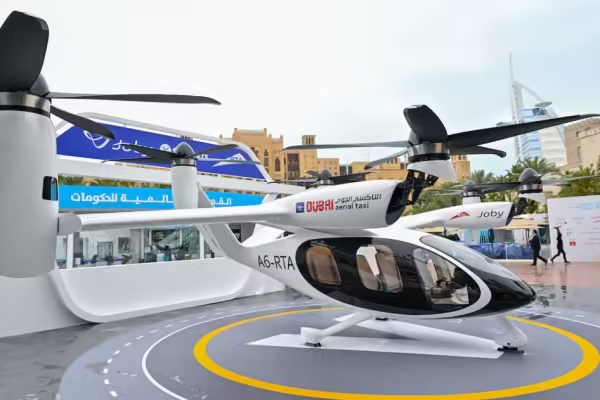
Uber is preparing to transform urban mobility by integrating air taxi services into its ride-hailing platform. Through a collaboration with Joby Aviationthe company plans to offer electric vertical take-off and landing (eVTOL) aircraft — often called air taxis — as a ride option in select cities. These flying vehicles aim to bypass ground congestion, connect key urban points faster, and deliver a new form of on-demand aerial transportation.
What Uber Air Is and Where It Launches
The service, known as Uber Air powered by Jobywill let users book short aerial flights through the familiar Uber app. Rather than selecting a car or bike, customers in eligible cities will see an “Uber Air” option when they enter their destination. The system coordinates the whole journey, including ground transport to and from designated vertiports — take-off and landing points for air taxis.
Dubai is expected to be the first city where Uber Air launches commercially, with operations anticipated to begin later in 2026 once regulatory approvals and infrastructure are ready. The rollout will require aviation authority clearances, and further expansion to cities such as New York, Los Angeles, London, the United Kingdom, and Japan will depend on local certification and facility readiness.
How Booking Works Through the Uber App
Booking an Uber Air ride will be similar to booking a traditional Uber:
- Open the Uber app and enter your destination.
- If the service is available, you’ll see Uber Air as an option alongside other ride choices.
- Select Uber Air, confirm your booking, and the app will handle the journey — from a car pickup to the vertiport, the air taxi flight itself, and a final ground transfer if needed.
This seamless integration is designed so riders can use a single app and ticket for a multimodal journey, simplifying logistics and improving convenience.
The Aircraft and Service Experience
Uber Air flights will use electric air taxi aircraft developed by Joby Aviation. These vehicles can accommodate up to four passengers and a pilot and take off vertically like a helicopter before transitioning into fast forward flight. They offer panoramic views, relatively quiet operation, and zero in-flight emissions due to their electric propulsion.
These aircraft are designed for short-range urban trips, with typical ranges of up to about 160 kilometres (100 miles) and cruising speeds around 200 mph (320 km/h). This could significantly cut travel time compared with ground transport in congested cities once the service is operational.
Regulatory and Future Expansion
Full deployment depends on safety certifications and regulatory approvals in each market. In the United States, for example, this involves final certification by the Federal Aviation Administration (FAA) before commercial operations can begin. Similar approvals are required from aviation authorities in other countries before Uber Air can expand.
If successful, Uber Air could mark a major shift in urban transport, making aerial rides a routine option alongside cars, bikes, and other shared mobility services.
Contact to : xlf550402@gmail.com
Copyright © boyuanhulian 2020 - 2023. All Right Reserved.