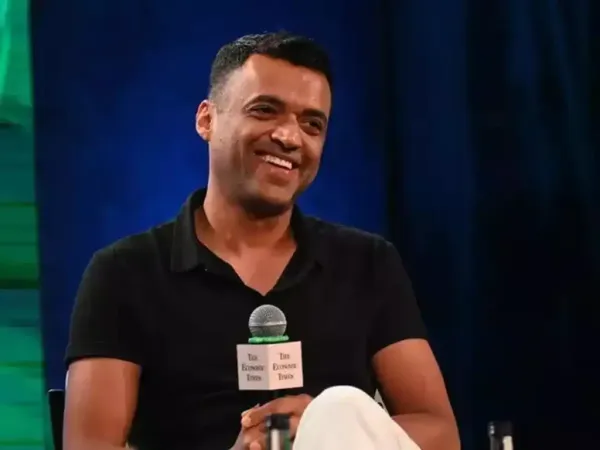
Deepinder Goyalbest known as the founder of Zomatois now stepping into uncharted territory. His latest venture, Templehas raised $54 million (₹490 crore) in its maiden funding round — and not from traditional VCs, but largely from “friends and family.”
The round values Temple at a post-money valuation of $190 million (₹1,730 crore) — a remarkable figure for a startup that hasn’t even officially launched a product yet.
Credits: Tech Crunch
A Funding Round Built on Belief
Unlike typical early-stage fundraises dominated by venture capital firms, Temple’s backers include:
Founder friends
Early-stage Zomato investors
Over 30 Temple employeesinvesting at par valuation
Goyal highlighted that employees invested without any discountusing their own money — a rare show of conviction in the startup ecosystem.
For a pre-market hardware startup, this kind of insider participation signals extraordinary internal confidence.
What Exactly Is Temple Building?
Temple is positioning itself as the developer of the “ultimate wearable for elite performance athletes.”
But this isn’t another smartwatch.
The company is building a next-generation neuro-performance wearable designed to monitor:
The aim? To generate real-time data that could help decode how posture, movement, lifestyle, and even gravity affect long-term brain health.
The “Gravity Ageing Hypothesis”
Temple’s foundational concept traces back to November 2025, when Goyal introduced a research framework called the “Gravity Ageing Hypothesis.”
The theory proposes that:
Temple’s wearable is designed to measure minute changes in blood flow and oxygenationpotentially unlocking insights into cognitive longevity and neurological performance.
If validated, the implications could extend beyond athletes — into ageing research, neuroscience, and preventive health.
The Hiring Policy That Sparked Debate
While the technology grabbed attention, Temple’s recruitment strategy sparked headlines.
Goyal announced that applicants must meet specific body fat criteria:
To put that into context:
16% for men typically reflects a lean, athletic build with visible muscle definition.
26% for women falls within the fitter range of healthy body composition.
Goyal’s reasoning?
To build elite-performance products, creators must physically resemble users.
Technically gifted candidates who don’t meet the requirement are allowed to apply — but must hit the physical targets within three months.
The move has triggered debates around workplace culture, meritocracy, and physical standards in tech hiring.
Engineering at the Edge of Science
Temple isn’t hiring generic software engineers. It is assembling what Goyal calls a “tribe” across hyper-specialised domains:
Neural & Bio-Sensing
Brain-Computer Interface (BCI) Engineers
Computational Neuroscientists
Neural Decoding Researchers
Hardware & AI
Embedded Systems Engineers
Deep Learning Engineers for physiological analytics
Computer Vision experts focusing on microexpressions and subvocal signals
Materials & Industrial Design
CMF (Color, Materials, Finish) Engineers
Adhesive Materials Specialists
Analog Systems and Electronics Designers
Product Management
The talent blueprint suggests Temple is aiming for a level of sophistication rarely seen in consumer wearables.
The Gold Device That Started It All
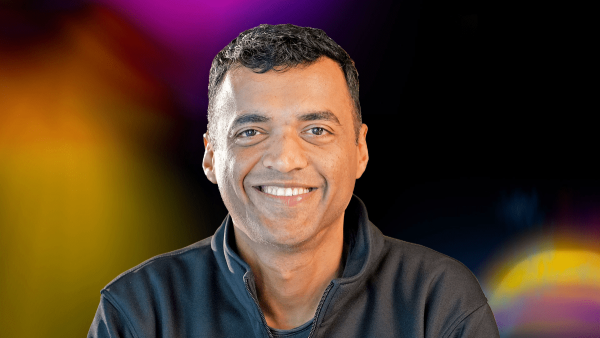
Public curiosity spiked last year when images of Goyal wearing a small gold-coloured device near his right temple went viral.
He later confirmed it was a prototype developed to track cerebral blood flow — and that he had been self-testing it for over a year.
That prototype has now evolved into a startup backed by nearly half a billion rupees.
Credits: The Financial Express
Big Vision, Bigger Questions
Temple sits at the intersection of:
But it also faces enormous challenges:
Regulatory approvals for neuro-monitoring devices
Scientific validation of the Gravity Ageing Hypothesis
Market positioning in a crowded wearable landscape
Yet, if Temple succeeds, it could redefine what performance wearables mean — shifting from step counts and heart rates to real-time brain analytics.
For Goyal, this may be his most ambitious experiment yet — one that moves far beyond food delivery and into the frontiers of human optimisation.
Contact to : xlf550402@gmail.com
Copyright © boyuanhulian 2020 - 2023. All Right Reserved.