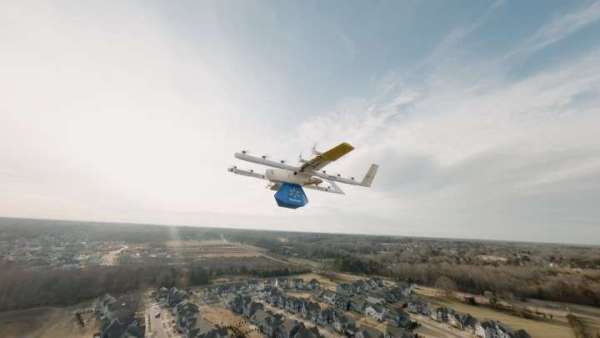
For years, the “flying car” was the ultimate tech-bro punchline, a futuristic promise that always seemed to be exactly ten years away. But as of February 2026, the joke has officially landed (or rather, taken off). In a landmark announcement, Uber has confirmed that its long-gestating dream of urban air mobility is moving from the whiteboards of Silicon Valley to the skylines of major global hubs. Through a strategic partnership with Joby AviationUber is launching Uber Aira service that promises to turn agonizing 45-minute gridlocks into breezy 10-minute aerial hops.
The backbone of this revolution isn’t a traditional helicopter but a new breed of aircraft: the eVTOL (electric Vertical Take-Off and Landing). In 2021, Uber sold its “Elevate” division to Joby Aviation, but the two companies never truly parted ways. Today, that relationship has culminated in a “powered by” partnership where Joby provides the high-tech hardware and Uber provides the massive demand engine and app infrastructure.
Joby’s aircraft is a marvel of modern engineering. It features six tilting propellers that allow it to lift off like a helicopter and then transition into forward flight like a plane. Because it’s all-electric, it lacks the deafening roar of a traditional chopper, designed instead to “blend into the ambient noise of a city street.”
Where and When: Dubai Takes the Lead
While the world watches, Dubai has secured the crown as the official launchpad. Later this year, the first commercial passengers will soar above the Burj Khalifa. The choice of Dubai isn’t accidental; the city has aggressively cleared regulatory hurdles and fast-tracked the construction of Vertiports specialized hubs for air taxi operations.
In Dubai, the service will initially connect four key locations:
Beyond the UAE, Uber has its sights set on New York City and Los Angeles in the United States, as well as major metros in the United Kingdom and Japan. These launches are contingent on the final stages of FAA and international certification, but the message is clear: the era of the “ground-to-sky” commute is no longer a pilot program.
The App Experience: How to Book Your Flight
The most impressive part of the Uber Air rollout is how “normal” it feels. You won’t need a separate “Sky-hailing” app; the functionality is integrated directly into the standard Uber interface.
The Step-by-Step Process:
Enter Destination: Open the Uber app and type in your destination just as you would for an UberX.
Qualify the Route: If your starting point and destination are near supported Vertiports, “Uber Air powered by Joby” will appear as a premium ride option.
One-Tap Booking: With a single tap, Uber handles the entire “multimodal” journey. The app books an Uber Black to pick you up and take you to the nearest Vertiport, secures your seat on the flight, and arranges another car to meet you at the landing pad to drive you to your final door.
Specs and Speed: 200 MPH Over the Traffic
The appeal of Uber Air isn’t just the “cool factor”, it’s the math. Joby’s aircraft carries four passengers and one pilottraveling at speeds of up to 200 mph. It has a range of roughly 100 miles on a single charge, making it perfect for “short-haul” urban jumps that usually take an hour in a car.
A trip from Dubai International Airport to the Palm Jumeirah, which can take nearly 50 minutes in peak evening traffic, will now take approximately 12 minutes. For the business traveler or the time-sensitive tourist, those 38 minutes saved are worth the premium price tag.
You won’t be hailing these from your driveway. The service relies on Vertiports miniature airports integrated into existing city infrastructure, such as the rooftops of parking garages or dedicated platforms at transit hubs. These stations are equipped with ultra-fast charging pads that can top off an eVTOL’s battery in the time it takes for passengers to deplane and board.
Construction on the flagship Vertiport at DXB began in late 2024 and is now in its final commissioning phase. These hubs are designed to be high-throughput, with multiple landing pads to ensure that “Uber Air” doesn’t just trade ground traffic for sky traffic.
Uber Air isn’t trying to replace the car; it’s trying to add a “third dimension” to urban transport. By moving the “premium” commuter into the sky, Uber aims to reduce pressure on ground-level roads while providing a high-speed alternative for those who can’t afford to sit in a tunnel. As the first passengers take flight in Dubai this year, the “future” will finally be something you can book with a thumb-tap.
Contact to : xlf550402@gmail.com
Copyright © boyuanhulian 2020 - 2023. All Right Reserved.