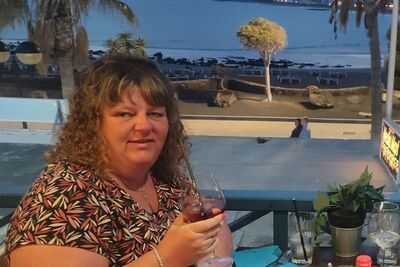
Rachael Zimbler has spent the last 14 years learning to live with her rare diagnosis and gradually loosing her sight to Bardet-Biedl Syndrome. She shared her story with Reach for Rare Disease Day, celebrated on February 28 to raise awareness of rare conditions people around the world are being affected by.
Rachael’s condition is caused by an inherited gene mutation and causes a range of seemingly unconnected symptoms. Once she was diagnosed “things clicked into place and made sense as to why I had some certain challenges to overcome.”
There’s only around 700 people with the syndrome known to BBS UK. It can sometimes also produce more peculiar symptoms like extra fingers or toes and the rarity of the condition often leads to delays in diagnosis. There is no cure for the condition.
- 'I'm a cardiologist and there are three things I would never eat or drink'
- 'I drank SIX bottles of wine EVERY DAY - until something horrific happened'
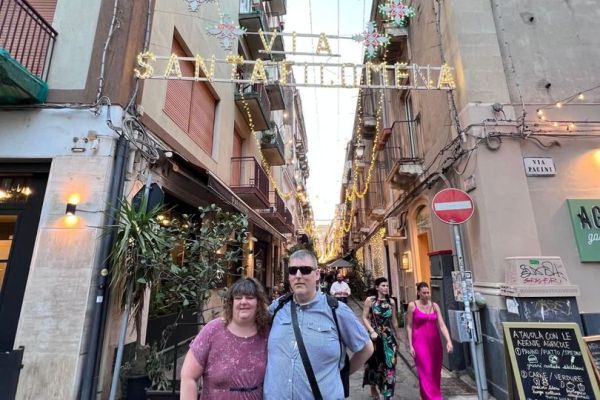
Some of the symptoms Rachael experienced that suddenly made sense after her diagnosis were:
- Wide feet
- Extra and overcrowding teeth
- Obesity and the feeling of being hungry and never being full
- Epileptic seizures
- Type 2 Diabetes
- Night Blindness and deterioration of sight
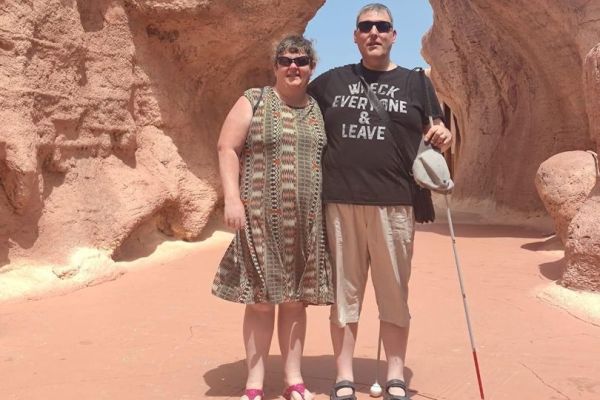
Now 45, Rachael’s sight has deteriorated over the last 10 years and she is now registered blind. This is the biggest impact BBS has had on her life, but the biggest challenges she faces actually comes the public and a lack of understanding.
She told Reach: “Being a woman of a larger size make people think that I probably over eat and eat the wrong foods and don't do any exercise which is not true or correct at all. The faulty gene in my brain does not work and no matter how much food I eat I still feel hungry and don't feel full.
“The other challenge is that people don't understand what BBS is and that when you say you’re registered blind it doesn't mean that you cannot see anything at all. You can still have some small useful vision even if it is a little amount and that you can still do things. I want to keep my independence and do as much for myself as possible.”
Dr Punam Krishan explained: “This condition causes a decline in mobility that is gradual rather than ‘overnight', with early signs including unsteadiness when walking, weakness in muscles and difficulty with getting out of chairs and climbing stairs which can be easy to dismiss.
Working with stairlift and home lift brand Stannah, the NHS GP added: “Along with the more unusual symptoms of Bardet-Biedl Syndrome, the condition can also include progressive vision loss, ataxia (poor coordination) and musculoskeletal factors such as hip dysplasia that can impact movement capabilities.”
“Despite mobility eventually worsening, home adaptations can help someone with BBS continue to live independently in their own space in a way that meets their individual needs.”
Rachael hasn’t let her rare diagnosis stop her from living life to the fullest. She’s travelled across the globe to see family and friends, from Australia to Egypt, and loves attending concerts. She even managed to bag tickets for Beyonce and Lady Gaga last year.
The Stockport local often attends audio described theatre performances, goes out to restaurants and listens to the footie. She said: “Life is precious and yes living with a rare genetic syndrome can be challenging but there is so much support available through BBS UK and you are never alone and you can always reach out for support.
“For me, having such a supportive husband, family and friends and being able to live my life to the full and do as much as possible in my everyday life.”
BBS UK commented: “Rare Disease Day is an important moment to highlight conditions that are often little known or misunderstood.
“People and families living with BBS need tailored support from health, education and community services to thrive. Raising awareness helps reduce isolation, improve understanding, and ensure people with rare conditions are better supported across all areas of life.”
Ensure our latest headlines always appear at the top of your Google Search by making us a Preferred Source.Click here to activate or add us as your Preferred Source in your Google search settings.
Contact to : xlf550402@gmail.com
Copyright © boyuanhulian 2020 - 2023. All Right Reserved.