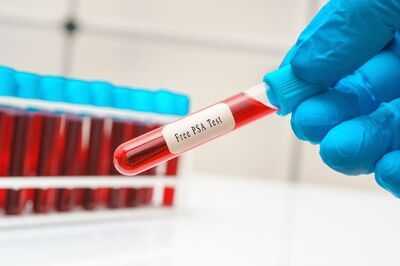
The Government has issued an important statement on prostate cancerand the potential for a screening programme, starting with high-risk men. Its message responds to an ongoing parliamentary petition that stresses the importance of early diagnosis in protecting people and saving lives.
In a statement issued yesterday (February 26), it was explained that theUK National Screening Committee has consulted on a draft prostate cancer screening recommendation and will make a final recommendation soon. Once this happens, the Government will then consider whether to accept it.
The Department of Health and Social Care explained: "The UK National Screening Committee consulted on a draft prostate cancer screening recommendation and will make a final recommendation soon. The Government will then consider whether to accept it.
- BBC doctor gives 11 questions any patient on medication should ask GP
- Don't ignore 4 symptoms as '40 percent of adults' at risk in March
"The UK National Screening Committee (UK NSC) makes recommendations to ministers and the NHS across the four nations of the United Kingdom, based on an assessment of high-quality, peer-reviewed evidence on whether screening for a certain condition would do more good than harm at reasonable cost.
"The UK NSC considered the current diagnostic and treatment pathways and consulted on their findings. The evidence package can be found [here]."
Right now, prostate cancer impacts approximately one in every eight men in the UK. While it predominantly occurs in the over-50s, the disease can strike at any age, making awareness of its symptoms and risk factors crucial.
Anyone who experiences an increased need to pee, lower back pain, erectile dysfunction and blood in the urine may be referred for a PSA test. This examination measures prostate-specific antigen levels in the bloodstream, and although elevated PSA doesn't definitively indicate cancer, it could necessitate additional investigation.
A biopsy, MRI or rectal examination may be included in this, though this will generally vary on a case-by-case basis. Although these check-ups are not routinely offered by the NHS and are not included in a national screening programme, the Government's response arguably implies that this is under consideration.
Nonetheless, the Department of Health and Social Care continued: "Screening can do harm, as well as good (benefit). It is also possible for someone to experience both the harms and benefits of screening at the same time. For example, a man may live longer due to their prostate cancer being identified and treated, but also live with serious side effects of treatment.
"The aim of prostate cancer screening would be to detect prostate cancer early to prevent death and reduce suffering from the disease. For men with aggressive and/or advanced prostate cancer, early intervention and treatment can allow them to live longer by preventing prostate cancer death.

"It can also reduce the chances of serious complications such as prostate cancer spreading to other parts of the body. Prostate cancer can spread to the area just outside the prostate (locally advanced or locally invasive cancer), and cause symptoms such as erectile dysfunction, difficulties emptying the bladder and pain. It can also spread further (metastatic cancer), most commonly to the bones and spine, where it can cause severe pain, fractures, or spinal cord compression."
The department eventually concluded: "The UK NSC will make a final recommendation soon, after which the Secretary of State for Health and Social Care will consider whether to accept and implement the recommendation."
The petition titled 'Introduce a screening programme for prostate cancer, starting with high-risk men' has currently drawn in over 44,000 signatures. Should it reach 100,000, it will be considered for a parliamentary debate.
You can read the petition and its response in full here.
Potential risk factors of prostate cancerAccording to the NHS, several people may be at a higher risk of developing prostate cancer. This includes the following:
- Men over 50 years old
- Men from a Black ethnic background
- Men who have a history of prostate cancer in their family
- Men who have close relatives who have had breast or ovarian cancer. Sometimes, prostate cancer is caused by the same inherited genes
Further guidance from the NHShas explained: "Speak to a GP if you're worried about your prostate cancer risk, even if you do not have any symptoms. Symptoms of prostate cancer do not always appear until the cancer has grown or spread."
Visit theNHS website for more information.
Ensure our latest headlines always appear at the top of your Google Search by making us a Preferred Source.Click here to activate or add us as your Preferred Source in your Google search settings.
Contact to : xlf550402@gmail.com
Copyright © boyuanhulian 2020 - 2023. All Right Reserved.