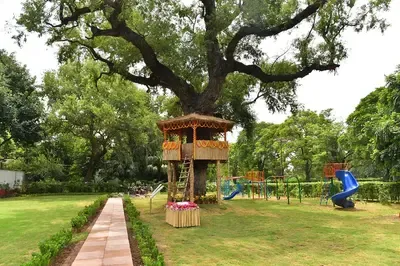
One of the most pleasant times to visit Delhi is from February to March, when the temperature moderates and visitors can enjoy the beautiful parks and gardens in the Indian capital. And undoubtedly, one of the most attractive places to experience is the Amrit Udyan, known as ‘the soul of Rashtrapati Bhavan’, which is the home of the President of India.
In the past, the gardens opened to the public only once a year. But now they will be open twice annually, once during summer (mid-August to mid-September) and during February-March.
President Droupadi Murmu recently inaugurated the Amrit Udyan Winter Annuals Edition 2026. “Formerly known as Mughal Garden, this world-renowned garden is set to mesmerise visitors this spring season with its spectacular collections of roses, tulips, herbal plants, extensive array of trees, shrubs and seasonal flowers and other exotic species,” said an official spokesperson. Nestled within the grounds of Rashtrapati Bhawan, Amrit Udyan provides a visual feast every year.
Stay up to date with the latest news. Follow KT on WhatsApp Channels.
Amrit Udyan is spread over a vast expanse of 15 acres, and has often been portrayed as the soul of the Rashtrapati Bhavan. Originally, it included East Lawn, Central Lawn, Long Garden and Circular Garden, but over the years, other gardens including Herbal, Tactile, Bonsai and Arogya Vanam have been opened.
The current winter edition is a landscaping marvel and visitors can witness rare seasonal flowers in full glory, said the spokesperson. It also introduces the Babbling Brook, featuring a meandering stream, sculptural spouts, stepping stones, and a reflecting pool, offering a refreshing and serene experience.
Visitors also spend time in multiple attractions including a specially curated garden for children called Bal Vatika and admire a 225-year-old Sheesham tree. There are several other attractions as well. Situated at the heart of the grand architectural ensemble, the lush Central lawn serves as a sprawling canvas for stately events and national celebrations. Encircled by the imposing facade of the Rashtrapati Bhavan, it exudes a sense of regality, providing a stunning backdrop for ceremonial occasions and state functions. “Adorned with vibrant flowerbeds and symmetrical pathways, the meticulously maintained greenery offers a tranquil retreat within the bustling city of New Delhi,” said the spokesperson.
A row of nearly 5,000 Dahlias can be seen in between the seasonal flowers on both sides of the Central lawn and long garden. Bal Vatika, a dedicated garden for children, known as Nature’s Classroom, has been built from the remains of a dead tree from the President’s Estate. One of the most iconic features of Amrit Udyan, The Circular (‘Pearl’ or Butter Fly’ or ‘Sunken’) garden is planted with fragrant varieties like Phlox of different colours, Marigold, Viola 4 and Pansies in different colours. A bubble fountain in the middle of the bowl, surrounded with greens enhances the grandeur of the place.
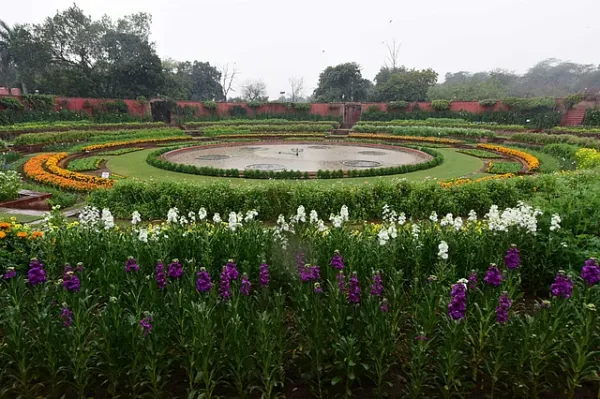
The circular garden contains more than 30 varieties of seasonal flowers including Dahlias which are eight feet high and go along the circular wall of the Garden. Tulips in magnificent colours have been added to enhance the beauty of the garden. A wide variety of native, rare and seasonal birds can also be found in the President’s Estate in Delhi. Another feature is a vertical garden, adorned with intricate floral patterns “This living tapestry of nature, meticulously designed and nurtured, transforms a vertical canvas into a vibrant masterpiece,” said the official spokesperson. “Cascading waves of greenery, punctuated by bursts of colourful blossoms, create a mesmerising display that captivates the eye. The floral patterns are meticulously composed, weaving a tale of nature's artistry. Each flower seems to dance with the wind, as if participating in a choreographed ballet, bringing life and movement to the vertical expanse.”
The 225-year-old Sheesham or Indian Rosewood tree stands proudly and has over the decades witnessed the evolution of India. And nestled in a serene corner of the landscape is the captivating bonsai garden, which emerges as a miniature forest, showcasing the artistry and patience of bonsai cultivation. Each meticulously pruned and nurtured tree tells a story of resilience and refinement, their diminutive stature belying the immense character they embody. Some of the bonsai legends are more than 60 years old. The park will be open for nearly two months (except Monday and on public holidays).
Yuge Yugeen Bharat: A landmark museum for the Indian capital Indian heritage restorers piece together capital's past Look: India's first masjid, built in 629AD during the lifetime of Prophet MuhammadContact to : xlf550402@gmail.com
Copyright © boyuanhulian 2020 - 2023. All Right Reserved.