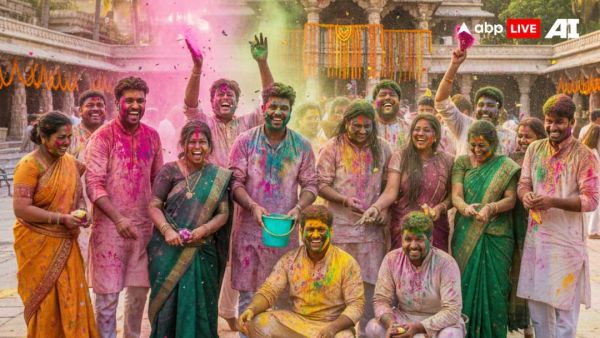
Holi marks the arrival of spring with joy, laughter and a riot of vibrant hues. Across India, preparations begin days in advance, markets brim with gulal, homes fill with festive sweets, and communities gear up for gatherings that celebrate togetherness. Traditionally associated with colours, music and festive cheer, Holi is a time when social boundaries soften and streets transform into open arenas of celebration.
Yet beyond the familiar scenes of colour-smeared faces and water balloons, India offers a fascinating spectrum of Holi traditions that go far deeper than playful splashes of gulal. In different corners of the country, communities have shaped their own distinctive ways of observing the festival, each rooted in history, faith or regional culture.
Lathmar Holi, Uttar Pradesh
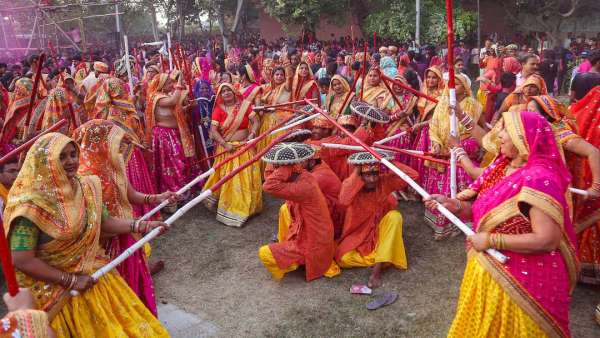
In the twin towns of Barsana and Nandgaon, Holi takes on a dramatic and theatrical form known as Lathmar Holi. Linked to legends of Radha and Krishna, this celebration unfolds days before the main Holi festival.
Here, women playfully strike men with wooden sticks, or lathis, while the men attempt to shield themselves. The spirited exchange draws thousands of visitors from India and abroad. The atmosphere is electric, filled with music, chants and anticipation, turning the event into a spectacle unlike any other.
Phoolon Wali Holi, Uttar Pradesh
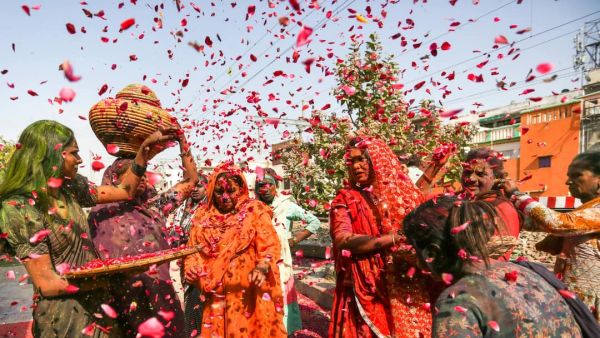
In Vrindavan, Holi blooms in a different hue, one made entirely of flowers. Known as Phoolon Wali Holi, this celebration replaces synthetic colours with fragrant petals.
At temples such as Banke Bihari Temple, priests shower devotees with flowers as devotional songs echo through the premises. The mood is serene yet joyful. Pilgrims and elderly travellers often prefer this version of Holi, drawn to its spiritual and gentle character.
Masan Holi, Varanasi
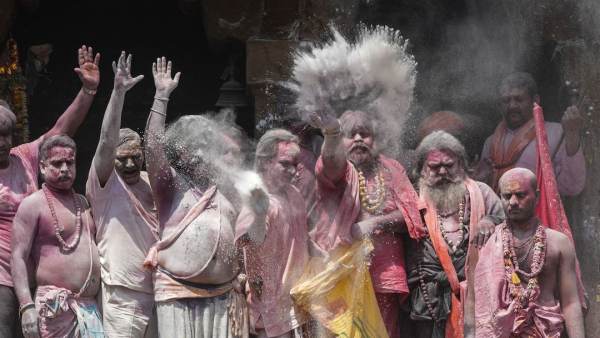
Varanasi presents perhaps the most unconventional expression of Holi, Masan Holi. Celebrated near Manikarnika Ghat, this ritual uses ash from funeral pyres instead of coloured powders.
The observance reflects the city’s profound spiritual philosophy, where life and death are seen as intertwined cycles rather than opposites. In this setting, Holi becomes more than a festival of colour; it transforms into a reminder of existence’s deeper truths.
Hola Mohalla, Punjab
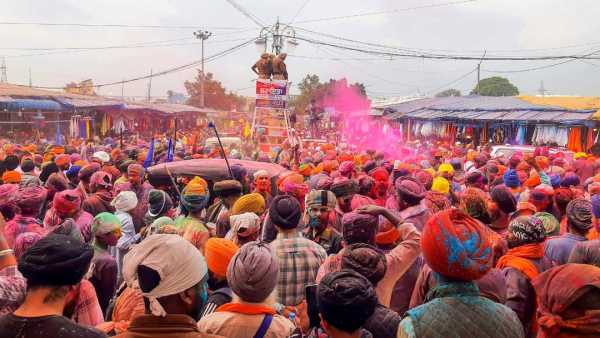
In Anandpur Sahib, the spirit of Holi merges with valour during Hola Mohalla, a Sikh festival established by Guru Gobind Singh.
Unlike colour-centric celebrations, Hola Mohalla features martial arts demonstrations, mock battles, horseback riding and community meals known as langars. Strength, discipline and unity take centre stage. While it coincides with the Holi period, the festival offers a distinctly different energy rooted in courage and tradition.
Kumaoni Holi, Uttarakhand
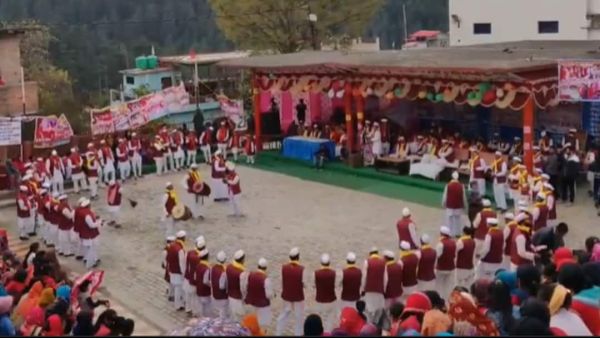
In the Kumaon region of Uttarakhand, Holi unfolds not with exuberant colour fights but through music and melody. Known as Kumaoni Holi, the celebration centres on classical ragas, devotional songs and community gatherings.
Towns like Almora and Nainital host performances that stretch across several weeks. The experience feels immersive and reflective, blending spirituality with rich cultural heritage. Here, Holi becomes a musical journey rather than a burst of colour.
Basant Utsav, West Bengal
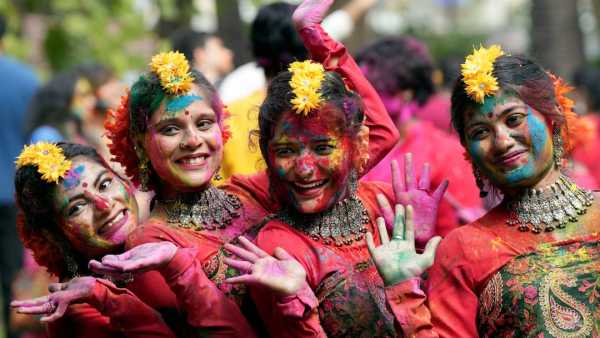
In Shantiniketan, Basant Utsav presents a cultural interpretation of Holi inspired by Rabindranath Tagore. Students dressed in yellow welcome spring with songs, poetry recitations and graceful dance performances.
The atmosphere feels artistic and refined. Rather than boisterous celebrations, this version of Holi highlights creativity and cultural expression, making it especially appealing to travellers seeking a thoughtful and elegant experience.
Contact to : xlf550402@gmail.com
Copyright © boyuanhulian 2020 - 2023. All Right Reserved.