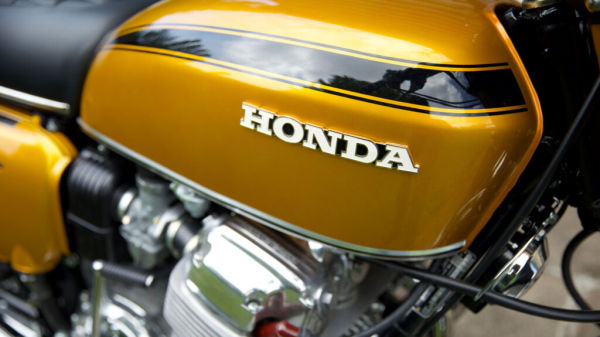
For years, Honda, aka Big Red, has solidified its empire by producing motorcycles that are not only safe but also appeal to the mass market. In fact, when Honda mass-produced the CB750 FOUR in 1969it was the first motorcycle in the world with a “parallel four-cylinder SOHC engine, hydraulic disc brakes, double cradle frame, and four mufflers.”
With such a rich and innovative history of nearly 80 years, the company has its fair share of absolute engineering madness. Looking back, it often seems like Honda’s top executives just handed its engineers a blank check and a bottle of champagne and told them to go wild. The goal seemed to not just meet market demands but to simply show off to the world what Honda could build. While this sometimes gave birth to icons, the result was just as often confusing and downright bizarre machines that would not stand the test of time, vanishing from showrooms as if they never existed.
The motorcycles on this list represent the latter. We have compiled a selection of Honda bikes that are rare misfires from the company. While there may be other undocumented or lesser-known cases hidden in official market brochures, here are five prominent examples of the worst-selling Honda motorcycles ever made.
Honda CX500 Turbo (1982)
In 1982, Honda released the world’s first factory-fitted turbocharged motorcycle, the CX500 Turbo. This bike appeared to be less of a vehicle but more of a “corporate statement” by the Japanese manufacturer to prove Honda’s dominance, according to the Turbo Motorcycle International Owners Association (TMIOA). The bike was designed to showcase how Honda could squeeze massive power out of a middleweight engine — in short, it was a rolling laboratory. As noted by the St. Francis Motorcycle MuseumHonda produced more than 230 patents for the components associated with the bike.
It was the first-ever instance of a computerized fuel injection being used on a production motorcycle. The styling and design was done by Italian stylist Giovanni Michelotti, with Cycle World calling it “a Superbike in party clothes.” The Honda CX500 Turbo was packed with a 497cc water-cooled turbocharged four-stroke V-twin engine producing 82hp of power. The riding experience, though, was a “Jekyll-and-Hyde affair.” Below 4,000 rpm, the bike felt sluggish; only after the turbo kicked in would the CX500 Turbo delivered the acceleration expected out of it. In Cycle World’s test, the bike had a quarter-mile time of 12.3 seconds at 106 mph, a number competitive with 650cc machines.
This massive turbo lag was one of the reasons the bike felt unpredictable in corners. Ultimately the market did not need an overly complex and expensive science experiment on the road. Also, launching an almost $5,000 bike during the U.S. motorcycle market collapse in 1982 made matters worse for the CX500 Turbo. This resulted in abysmal sales. TMIOA estimates that a mere 2,525 units were imported to the U.S., making it one of Honda’s sales disasters.
Honda CX650 Turbo (1983)
Building on the promises of the CX500 Turbo, Honda launched the CX650 Turbo a year later in 1983. It was a refined masterpiece that actually delivered on the promise of forced induction. This motorcycle was released for just a single year and addressed its predecessor’s biggest flaw — the light power delivery. By bumping the compression ratio to 7.8:1 and displacement to 673cc, Honda ensured that the bike doesn’t have to wait to deliver the boost. As Silodrome points out, where the CX500 couldn’t deliver on performance, the CX650 offers a relentless surge that provides a smooth ride.
To be honest, the CX650’s performance numbers were quite staggering for a middleweight cruiser, even as it was also one of the coolest-looking Honda motorcycles ever. The bike churned out 100hp, allowing its V-twin engine to rocket past the quarter-mile in just 11.9 seconds (via Audrain Auto Museum). However, Motorcycle Classics pointed out that the bulky design of the bike, which weighed 573 lbs, made it a handful in parking lots. Yet the Honda CX650 Turbo remained stable at high speeds, thanks to its Pro-Link rear suspension and TRAC anti-drive forks, as it reached its top speed of 140 mph (225 kph).
However, all this technology and a powerful engine came at a price that wasn’t suitable for the 1983 motorcycle market. Only around 1,777 units were ever produced (a mere 1,200 were imported to North America), making the CX650 Turbo a one-year-only exotic motorcycle. The bike couldn’t survive for long because of high production costs and insurance premiums.
Honda GB500 Tourist Trophy (1989 – 1990)
If there is any motorcycle from Honda that perfectly fits the line “a perfect motorcycle arriving at the completely wrong time,” the GB500 Tourist Trophy has to be on that list. Built and styled as a tribute to the British classics like the BSA Gold Star, the GB500 is is quite an underappreciated bike from the earlier days of Honda. Launched in 1989, the GB500 Tourist Trophy was a factory-built café racer decades before the modern retro craze took off; the bike looked like a classic without the mechanical headaches.
Cycle World praised the Honda GB500 Tourist Trophy for its reliability, calling it the “perfect sportbike for someone who wants to enjoy the sensations of a traditional road-going Single” free of worry from involved maintenance cycles. At its core was a 498cc air-cooled single-cylinder engine, the same engine architecture as the XL600 dirtbike. According to Autoevolutionthe GB500 Tourist Trophy produced 38 hp and 35 Nm of torque, with a top speed of 108 mph (174 kph). The bike could cover a quarter mile in 14.13 seconds and came fitted with a 4.4-gallon tank.
But all this wasn’t good enough for the U.S. market, which was already fascinated by the charm of plastic-clad sportsbikes. The GB500 Tourist Trophy came with a price tag of $4,195, which was quite hefty for a single-cylinder bike. As per Hagertyaround 3,500 units were imported to the U.S. But within a year, the bikes could be bought for $1,000 less than the list price. The company faced great trouble selling this model, so much so that 1,000 unsold units were shipped to Germany to liquidate the stock.
Honda Valkyrie Rune (2004 – 2005)
One of the rarest Honda motorcycles ever built – and one that did not meet the fate the company would have wanted — is the Honda Valkyrie Rune. It was first showcased as the Zodia concept bike at the 1995 Tokyo Motor Show and further refined through the T-series of concept bikes that debuted in 1998. In 2004, Honda introduced the Rune, largely influenced by both the Zodia and the second T-series concept, the T2. It wasn’t just a motorcycle, coming in closer to a behemoth bike that was designed to prove that a Japanese brand could also carve an American-style cruiser. As Motorcycle Cruiser notes, the Valkyrie Rune was essentially the T2 brought to life without any compromises.
It featured a massive 1,832cc flat-six engine that was lifted directly from the Gold Wing to deliver the smooth torque-y performance. However, the bizarre trailing bottom-link front suspension and the seamless fuel tank required Honda to set up eleven new manufacturing processes for the Rune. Though this was a massive undertaking, the result was lack of ugly welds, with everything polished to perfection on this 888-pound mammoth of a motorcycle.
This perfection sadly, came at a steep price. The Honda Valkyrie Rune came with a list price between $25,499 and $26,999, making it one of the most expensive production bikes of its time. However, according to Hagertyrumors suggested that each bike actually cost Honda roughly $100,000 to build because of the expensive tooling required. The result was that revenue from sales was actually lower than what the 1,500 units Honda projected would have raked in.
Honda DN-01 (2008 – 2010)
Dubbed one of the strangest motorcycles to ever roll out of a Honda factory, the Honda DN-01 was ironically meant to be a people pleaser. The full form of DN is Dream New, and by the looks of it, it appears that the Honda R&D team were actually dreaming when designing this motorcycle. The Autopian described the DN-01 as an “unholy marriage” of a scooter, a cruiser and a sportbike, which isn’t that far from the truth; the Honda DN-01 was even equipped with what the company called an automatic “HFT” (Human Friendly Transmission), which was basically a continuously-variable transmission inside a motorcycle.
This motorcycle was sold from 2008 to 2010, designed for a demographic that seemingly did not exist. Underneath, there was a 680cc liquid-cooled V-twin engine. As per Rider Magazinethe DN-01 did not have a clutch on the left-hand grip but instead featured a toggle button for shifting up and down. Additionally, to meet different rider needs, Honda offered two fully-automatic shifting modes –- D mode for normal driving and S mode for sporty driving. Riders could also go for the 6-speed simulated manual mode, giving them a feel of a traditional bike transmission. The low seat, forward floorboards, and sportbike-level triple-disc ABS brakes gave the bike good stability. Motorcycle Cruiser noted that the silent operation and seamless shifting made it feel like you were “riding a lullaby.”
Despite all the goodies, the DN-01 was plagued by practical flaws. In its review, Cycle World noted that despite the hefty 595 pounds, it had shockingly low payload capacity and absolutely zero storage space. On top of this, an astronomical pricing of $15,599 kept buyers away from showrooms. Even today, you should steer clear of a used DN-01, as it would be a miracle if you find getting any parts for repair.