Ramzan is about fasting, not feasting. But in Hyderabad, at least, the latter appears to be true. The deeper purpose of reflection and spiritual renewal often gets overshadowed by a culture of indulgence that seems to grow stronger with each passing year.
In Hyderabad, the holy month is marked not only by devotion and prayer, but also by crowded bazars, elaborate feasts and nights that pulse with festive energy. What is intended as a period of restraint and introspection increasingly resembles a season of indulgence. No wonder the late Moulana Hameeduddin Aaqil Husami was once asked by a man: When does your month of eating begin?
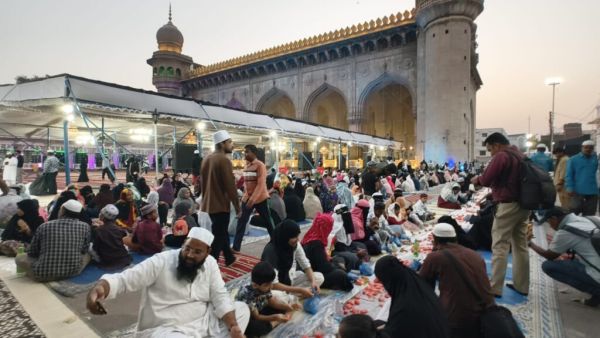
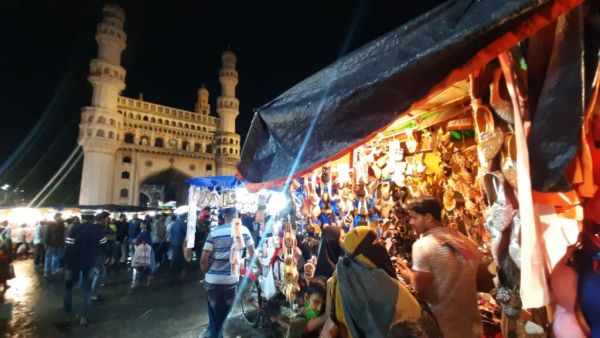
From day one, mosques and markets overflow with activity. As the days progress, the pace intensifies. Bazaars swell with people, and many worshippers appear to be in a tearing hurry to complete their taraweeh (nocturnal prayers) so they can join the bustling crowds outside. A walk through the historic surroundings of Charminar or the lively food hubs of Tolichowki can give the impression of a month-long culinary carnival. The aroma of rich delicacies fills the air, vendors compete for attention and the night pulses with energy.

Such scenes, though vibrant, raise an important question: are we preserving the essence of Ramzan or redefining it?
A month of discipline
At its essence, Ramzan is meant to discipline the self. The fast is not merely abstention from food and drink – it is a conscious effort to restrain desires, purify intentions and awaken spiritual awareness. Hunger becomes a teacher. It cultivates empathy for those who suffer deprivation, strengthens patience and redirects attention from bodily cravings to the nourishment of the soul.
Prophet Mohammed (PBUH) emphasised that fasting curbs impulses and cultivates self-control. It is meant to soften the heart, quiet the senses and elevate consciousness. Yet in practice, the evenings often become occasions for abundance rather than moderation. Lavish spreads, social gatherings and late-night indulgence can sometimes transform restraint into excess. The discipline of fasting by day is followed by indulgence by night – a reversal of the very purpose the fast was meant to serve.
Kitchen becomes a site of activity
The transformation is not confined to public spaces; it is even more pronounced within homes. Ramzan dramatically alters daily routines. Sleep schedules shift, meal timings change and household life begins to revolve around sehri and iftar. While families share the blessings of the month collectively, the physical demands of sustaining these routines fall disproportionately on women.
They are often the first to rise before dawn and the last to rest after night prayers. Between these moments, they prepare meals, manage the household and ensure that children’s routines continue uninterrupted. Their labour sustains the rhythm of the month, yet it frequently remains unnoticed and unacknowledged.
Many women themselves reflect on this imbalance. “Women are made to seek ‘martyrdom’ in the kitchen,” says Shabana Parveen, a devout worshipper. “They stand more before the stove than before Allah.” Her words capture a quiet reality – while the month is meant to bring believers closer to worship, many women find their time consumed by culinary expectations.
Elaborate iftar preparations often demand hours of effort. From rich traditional dishes to multiple varieties of snacks, the kitchen becomes a site of relentless activity. The intention may be hospitality or family joy, but the consequence is exhaustion. By the time the fast is broken, many are too drained to fully experience the spiritual serenity that the moment offers.
Commercial exploitation of Ramzan
Ramzan is not meant to be a season of overflowing tables. It is meant to be a school of patience, says Majid Parekh. It teaches endurance in hardship, restraint in desire and mindfulness in daily life. Scholars describe the month as one of “imaan and ihtisaab” – faith accompanied by conscious self-accountability. Worship is to be performed sincerely, with the hope that past shortcomings will be forgiven. This transformation is meant to manifest in behaviour, priorities and intention.
Modern trends, however, often move in a different direction. Even before the month begins, advertisements appear everywhere – promoting seasonal delicacies, festive collections and special shopping events. There is commercial exploitation of every aspect of Ramzan.
The message becomes subtle but powerful: Ramzan is not only a time to worship, it is also a time to spend, to display and to indulge.
Such commercialisation can blur the spiritual focus of the month. When menus take precedence over mindfulness and shopping lists overshadow self-reflection, the purpose of fasting risks being diluted.
Some voices gently urge a return to simplicity. “Ramzan is meant to discipline desires, not amplify them,” says Shabana Parveen. “The kitchen should not become a one-woman catering service.” She advocates a simple iftar – dates, water and fruits – reminding us that there is barakah in modesty. “Ramzan is the month of the Quran and tears. One should exhaust oneself in worship, not in the kitchen,” says Sabiha, a homemaker.
The moments before iftar are considered especially sacred – the golden hour for the acceptance of supplications. Yet, many women, after hours of labour, find themselves too exhausted to savour these moments. They are too drained for dua, too weary for reflection, too tired for extended prayer.
Nikhat and Faizunnisa offer a gentle alternative perspective. “Women need not prove their worth through food,” they say. “Cook one simple dish and share it with a distressed family. The reward is far greater.” Their message reflects the true spirit of generosity – compassion expressed through simplicity rather than abundance.
Classical wisdom supports this approach. Imam Ghazali advised moderation at iftar to preserve the spiritual benefits of fasting. Overeating, he warned, dulls awareness and weakens discipline. He also emphasised guarding one’s speech, reducing unnecessary socialising, and limiting sleep – so that more time and energy may be devoted to remembrance and reflection.
An opportunity to recalibrate
In a world filled with distraction, Ramzan offers an opportunity to recalibrate life’s priorities. It invites believers to withdraw from excess, to simplify habits and to cleanse not only the body but also the heart. Just as fasting detoxifies the physical self, it also offers a chance to purify intentions, speech, and conduct.
Making the most of the month requires conscious planning. It involves deciding not only what to do but also what to avoid. Less indulgence, less distraction, less excess. More sincerity, more gratitude, more presence.
When approached in this spirit, Ramzan becomes what it was always meant to be: a journey of transformation. Not a festival of abundance. Mighty words indeed. But if only we would pay heed, we will be able to spend quality time with Allah.
Contact to : xlf550402@gmail.com
Copyright © boyuanhulian 2020 - 2023. All Right Reserved.