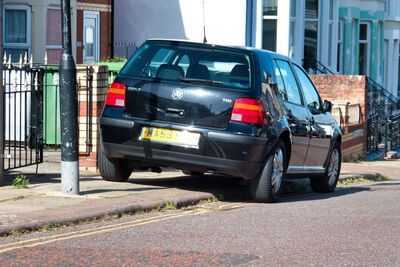
Discovering that you're unable to access your driveway due to someone else's vehicle blocking it can be a source of immense frustration, whether you're setting off for the day or returning home from work. It's likely to leave you feeling irate and your initial instinct might be to contact the police to rectify the situation.
However, reaching out to the police may not yield the desired results, reports the MEN. I sought advice from a number of legal and motoring experts on the appropriate course of action if you find yourself in such a predicament. Whilst their guidance wasn't entirely clear-cut, they were unanimous in their recommendations on what steps to take — and which ones to avoid.
Paul Britton, CEO of Britton and Time law firm with branches in London and Brighton, advised: "If someone blocks your drive with their car and you can't get in or out, don't clamp or tow it yourself. On private land, only certain authorised bodies can immobilise/remove vehicles. If you do it yourself you risk committing an offence and/or a civil claim against you. Call the police only if it's causing a real obstruction or danger on the highway. Blocking a driveway isn't automatically a police 'crime'. It's often treated as parking enforcement or obstruction and getting it moved can be slow unless it's dangerous or persistent.
- UK's most fuel-efficient car named by experts - and it's not a VW, Audi, or Toyota Prius
- 'I'm a police officer and there's only 1 instance you can use phone while driving'
"If the car is parked on the road blocking your dropped kerb or access, it may be dealt with as an obstruction, but police often treat it as a council matter unless it's serious. Call your local council parking enforcement if it's a parking contravention. If the vehicle is on the public road and parked across a dropped kerb in an enforceable area, the council can usually ticket and sometimes remove, but it depends on local enforcement. If you need urgent access (eg for a medical emergency) say so. That tends to change how quickly authorities respond.
"If it's a repeat problem, gather evidence [including] photos (showing location, number plate and that you're blocked), dates, times and report patterns to the council/police as appropriate."
The Metropolitan Police have made it clear that a blocked driveway isn't their jurisdiction: "If a vehicle is blocking the entrance and stopping you from driving onto your driveway, this is not a police matter. Your local council may be able to assist, but policies will vary depending on where you live. We'd always recommend having a polite word with the driver first, as there may have been a misunderstanding. If a person has blocked your driveway and is preventing you from getting your own vehicle out, we may be able to help."
What you should and shouldn't do if someone has blocked your drivewayIf someone has blocked your driveway, do:
- Try to find out whose car it is — they may have parked there by mistake
- Leave a polite note
- If it's persistent parking by the same driver, take photos
- Speak to the council — if the car is parked in front of a dropped kerb or otherwise causing obstruction the council may be able to issue a penalty notice or take other enforcement action
- If the person has blocked your driveway and preventing you from getting out, the police may be able to help — call 101, not 999.
If someone has blocked your driveway, do not:
- Try to move the car yourself
- Clamp, damage or interfere with the car in any way
- Assume the police or council will move the car for you.
Richard Evans, head of technical services at webuyanycar, elaborates: "The key issue is whether they are preventing access to the public highway. In the UK, blocking a dropped kerb so that a vehicle cannot enter or exit a driveway is a parking contravention. You can report this to your local council, which may issue a penalty charge notice or arrange for enforcement. However, leaving a polite note or speaking to the driver, if possible, is often the quickest way to resolve the situation."
George Penny, EV specialist at The Solar Co, stated: "Parking in front of a dropped kerb, such as one installed for driveway access or to assist wheelchair users violates Rule 243 of the Highway Code, unless stationary traffic forced the vehicle to stop. In these cases, councils can issue a penalty charge notice (PCN) if the vehicle is causing an obstruction or preventing access."

Benson Varghese, the founder and managing partner of Varghese Summersett law firm, commented: "If someone has parked their vehicle on the public road in front of your dropped kerb or driveway entrance, this could be a parking contravention under civil parking enforcement in your local authority. In this case, the local authority has the right to issue fines or penalties and even arrange for the vehicle to be moved, especially where there has been obstruction of access. Your first course of action in this case will be to contact the parking enforcement team of your local authority."
Benson further advised against meddling with another person's vehicle, whether that involves moving it, damaging it or any other form of interference: "Being blocked in or having your driveway used without your permission is incredibly frustrating, but the legally sound way of dealing with it is through calm communication and the appropriate enforcement authority - not through taking the law into your own hands."
Antony Fragola from Approved Motor Finance explained: "If someone is blocking your drive but you're still able to access the road, this is usually considered a civil matter rather than a criminal offence. You can try to locate the driver if they're nearby, leave a polite note asking them to move their vehicle, or contact your local council to check whether parking enforcement applies in your area. However, if a vehicle is preventing you from leaving your property, this may be considered an obstruction of the public highway. In that situation, you can contact your local police force via the non-emergency 101 number. They may attempt to contact the owner or arrange for the vehicle to be moved. It's important not to take matters into your own hands, as clamping, towing or damaging the vehicle could leave you legally liable."
Alicia Hempsted from MoneySuperMarket commented: "Few things are more frustrating than being ready to leave the house and discovering someone has blocked your driveway. Whilst it can feel tempting to take matters into your own hands, it's important to stay calm and avoid doing anything that could leave you out of pocket. In the UK, blocking access to the road may be considered an obstruction, and in many cases your local council or police force might might be able to help. However, trying to move the vehicle yourself or causing damage could leave you facing repair costs or even an insurance claim."
What do penalty charge notices (PCNs) cost?Costs differ across local authorities but generally speaking, beyond London PCNs are usually £50-£70, commonly halved if settled within a fortnight. In the capital, fines are steeper, most often £80-£130, based on the borough and seriousness of the violation. When left unpaid, charges may rise by as much as 50%.
What are the Highway Code rules on parking?Rule 243 of the Highway Code says "do not stop or park":
- near a school entrance
- anywhere you would prevent access for Emergency Services
- at or near a bus or tram stop or taxi rank
- on the approach to a level crossing/tramway crossing
- opposite or within 10 metres (32 feet) of a junction, except in an authorised parking space
- near the brow of a hill or hump bridge
- opposite a traffic island or (if this would cause an obstruction) another parked vehicle
- where you would force other traffic to enter a tram lane
- where the kerb has been lowered to help wheelchair users and powered mobility vehicles
- in front of an entrance to a property
- on a bend
- where you would obstruct cyclists’ use of cycle facilities.
Contact to : xlf550402@gmail.com
Copyright © boyuanhulian 2020 - 2023. All Right Reserved.