American semiconductor company Advanced Micro Devices (AMD) is positioning India at the heart of its global artificial intelligence strategy, with a new high-performance AI infrastructure platform and expanded partnerships, a senior executive said.
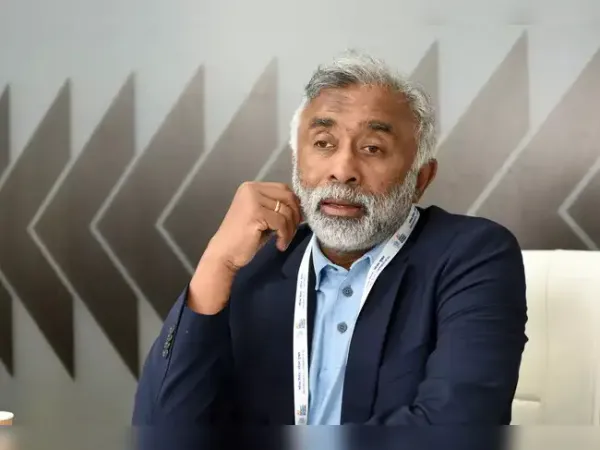
At the centre of AMD’s India push is Helios, said Thomas Zacharia, senior vice president for strategic technology partnerships and public policy. He described Helios, a high-density, or rack-scale, AI system, as a foundational building block for next-generation AI infrastructure.
Helios is a 72-GPU integrated system delivering 2.9 exaflops of compute performance within a single rack, consuming about 220 kilowatts of power. Built around AMD’s CPUs, GPUs and software, the platform is optimised for both high performance and energy efficiency.
“This is not just about GPUs,” Zacharia said. “It’s about the entire stack, hardware and software integrated at the rack level.”
Unlike earlier approaches where semiconductor firms delivered individual components, Helios represents AMD’s shift toward delivering fully integrated AI building blocks. The company said the system is designed around open standards.
In India, AMD has partnered with Tata Consultancy Service through the local IT company’s subsidiary, HyperVault AI Data Center Ltd, for a 200-megawatt data centre. Zacharia said AMD hopes to replicate such partnerships with other IT services firms.
OpenAI partnership
Globally, AMD is deepening its engagement with OpenAI, whose large-scale AI ambitions are driving demand for high-performance infrastructure.
In October, AMD announced a multi-year, multi-generation agreement with OpenAI to deploy 6 gigawatts of AMD GPUs starting the second half of this year.
“AI is moving at unprecedented speed,” he said, adding that usage has jumped from roughly a million users to over a billion in just two years. Zacharia expects that number to reach 5 billion in the next few years, which, he argued, will sustain infrastructure demand.
From exascale to zettascale
Drawing from AMD’s experience in deploying exascale systems, Zacharia suggested that India think beyond incremental compute gains and aspire to globally relevant scale.
AMD is already partnering with India’s Centre for Development of Advanced Computing (C-DAC) on supercomputing systems powered by AMD CPUs and GPUs. But Zacharia argued that simply procuring systems is not enough.
“Relevant scale is not achieved by buying systems,” he said. “It’s a journey.”
On February 6, C-DAC opened a pre-silicon validation facility in Bengaluru. It is designed to enable large-scale, near-silicon-speed prototyping and validation of advanced semiconductor designs, a critical requirement as chip complexity continues to rise.
While AMD currently operates in the exaflop regime, hyperscalers are already operating AI workloads at zettascale levels. Zacharia suggested India could consider how to participate in that evolution, not necessarily by manufacturing the most compute-intensive GPUs immediately, but by contributing other components of the AI and semiconductor supply chain.
India’s semiconductor mission, including packaging and fabrication ambitions, could serve as an entry point into globally relevant supply chains, he added.
Zacharia spoke about the importance of public-private partnerships, particularly in areas such as healthcare, energy and national security.
India investments
He welcomed recent US-India frameworks referencing GPUs and data centres as signals of intent between “two leading democracies” to collaborate on critical technologies. India’s scale, digital public infrastructure, and talent base make it a natural partner, he said.
In July 2023, AMD announced a multi-year plan to invest $400 million in India. Zacharia said the company is on track with its campus investments and staffing goals, which include building a 10,000-strong workforce in the country.
In 2023, the investment was focused on two aspects: building AMD's largest R&D centre in Bengaluru, and the second and final phase of that got completed in November 2024.
Second, adding 3,000 more employees by 2028 that would take AMD India's workforce to 10,000, including full time employees and contractors.
The company has reached the 10,000-mark this quarter.
“AMD India is a critical part of AMD,” he said, adding that every product AMD brings to market carries contributions from its India teams.
No bubble
On concerns about a potential AI bubble, Zacharia framed the debate in terms of demand fundamentals. If AI delivers even a 10% productivity boost to a $100 trillion global GDP, he argued, that would imply a $10 trillion economic impact, suggesting infrastructure investments are far from saturated.
“Could some business models fail? Possibly,” he said. “But globally, we believe demand will continue to grow.”
At the centre of AMD’s India push is Helios, said Thomas Zacharia, senior vice president for strategic technology partnerships and public policy. He described Helios, a high-density, or rack-scale, AI system, as a foundational building block for next-generation AI infrastructure.
Helios is a 72-GPU integrated system delivering 2.9 exaflops of compute performance within a single rack, consuming about 220 kilowatts of power. Built around AMD’s CPUs, GPUs and software, the platform is optimised for both high performance and energy efficiency.
“This is not just about GPUs,” Zacharia said. “It’s about the entire stack, hardware and software integrated at the rack level.”
Unlike earlier approaches where semiconductor firms delivered individual components, Helios represents AMD’s shift toward delivering fully integrated AI building blocks. The company said the system is designed around open standards.
In India, AMD has partnered with Tata Consultancy Service through the local IT company’s subsidiary, HyperVault AI Data Center Ltd, for a 200-megawatt data centre. Zacharia said AMD hopes to replicate such partnerships with other IT services firms.
OpenAI partnership
Globally, AMD is deepening its engagement with OpenAI, whose large-scale AI ambitions are driving demand for high-performance infrastructure.
In October, AMD announced a multi-year, multi-generation agreement with OpenAI to deploy 6 gigawatts of AMD GPUs starting the second half of this year.
“AI is moving at unprecedented speed,” he said, adding that usage has jumped from roughly a million users to over a billion in just two years. Zacharia expects that number to reach 5 billion in the next few years, which, he argued, will sustain infrastructure demand.
From exascale to zettascale
Drawing from AMD’s experience in deploying exascale systems, Zacharia suggested that India think beyond incremental compute gains and aspire to globally relevant scale.
AMD is already partnering with India’s Centre for Development of Advanced Computing (C-DAC) on supercomputing systems powered by AMD CPUs and GPUs. But Zacharia argued that simply procuring systems is not enough.
“Relevant scale is not achieved by buying systems,” he said. “It’s a journey.”
On February 6, C-DAC opened a pre-silicon validation facility in Bengaluru. It is designed to enable large-scale, near-silicon-speed prototyping and validation of advanced semiconductor designs, a critical requirement as chip complexity continues to rise.
While AMD currently operates in the exaflop regime, hyperscalers are already operating AI workloads at zettascale levels. Zacharia suggested India could consider how to participate in that evolution, not necessarily by manufacturing the most compute-intensive GPUs immediately, but by contributing other components of the AI and semiconductor supply chain.
India’s semiconductor mission, including packaging and fabrication ambitions, could serve as an entry point into globally relevant supply chains, he added.
Zacharia spoke about the importance of public-private partnerships, particularly in areas such as healthcare, energy and national security.
India investments
He welcomed recent US-India frameworks referencing GPUs and data centres as signals of intent between “two leading democracies” to collaborate on critical technologies. India’s scale, digital public infrastructure, and talent base make it a natural partner, he said.
In July 2023, AMD announced a multi-year plan to invest $400 million in India. Zacharia said the company is on track with its campus investments and staffing goals, which include building a 10,000-strong workforce in the country.
In 2023, the investment was focused on two aspects: building AMD's largest R&D centre in Bengaluru, and the second and final phase of that got completed in November 2024.
Second, adding 3,000 more employees by 2028 that would take AMD India's workforce to 10,000, including full time employees and contractors.
The company has reached the 10,000-mark this quarter.
“AMD India is a critical part of AMD,” he said, adding that every product AMD brings to market carries contributions from its India teams.
No bubble
On concerns about a potential AI bubble, Zacharia framed the debate in terms of demand fundamentals. If AI delivers even a 10% productivity boost to a $100 trillion global GDP, he argued, that would imply a $10 trillion economic impact, suggesting infrastructure investments are far from saturated.
“Could some business models fail? Possibly,” he said. “But globally, we believe demand will continue to grow.”